Most Cited Patents · AI & Machine Learning
Most cited ai & machine learning patents
Ranked by forward citations — the machine learning, neural networks, and artificial intelligence inventions that later patents built upon most.
Patents ranked
30
Total citations
4,658
Top patent
859 cit
1
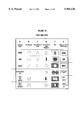
How to Build Complex Database Searches Using Venn Diagrams
A method for searching databases by visually connecting Venn diagrams to represent complex logical relationships between different sets of data.
2
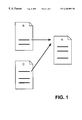
How Websites Get Ranked by Importance
This patent describes a computer method for scoring documents in a linked database, like the internet, by considering the importance of other documents that link to them, helping search engines find better results.
3
How Computers Find Hidden Connections Between Different Fields of Knowledge
A method for finding related ideas in completely different subjects by using math to map how words appear together, even when the subjects use different vocabulary.
4
How Websites Use Distorted Text Riddles to Stop Bots
This patent describes the original method for creating CAPTCHAs, using distorted text or audio riddles to distinguish human users from automated bots.
5
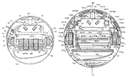
How the iRobot Roomba Automatically Cleans Floors Without Falling Down Stairs
A 2002 patent describing an autonomous floor-cleaning robot that uses sensors to navigate rooms, avoid cliffs like stairs, and sweep debris into a removable bin.
6
How a Digital Assistant Launches Apps Using Your Voice
This patent describes how a digital assistant like Siri uses your spoken words and understanding of your conversation to figure out what you want and launch the right app.
7
Google's System for Auto-Searching Text on Your Device
Google's 2015 patent describes a system that automatically finds and displays relevant information online based on text it detects on your device, even without you asking it to.
8
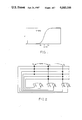
How Hopfield Networks Use Resistors to Mimic Brain-Like Memory
A foundational patent describing an electronic circuit that uses a grid of resistors to perform computations, effectively creating an artificial neural network that can store and recall patterns.
9
How Apps Automatically Switch Between Video Call Connection Methods
A system that automatically decides whether to connect video calls directly between users or through a central server based on the number of people and connection quality.
10
How Digital Images Hide Invisible Markers to Track Rotation and Scaling
A method for hiding invisible patterns in digital images that allow computers to detect if an image has been rotated or resized, even if the original version is missing.
11
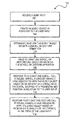
How Touchscreens Handle Scrolling and Rubber-Band Effects
This patent describes the software logic that allows touchscreens to distinguish between simple scrolling and multi-finger gestures, while also enabling the signature 'rubber-band' bounce effect when you reach the end of a page.
12
How a Smart System Verifies and Updates Customer Data
This patent describes an automated system that uses artificial intelligence to pick the best ways to check and update information about people or businesses, choosing from methods like web searches, phone calls, or direct mail.
13
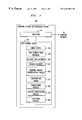
How Computers Automatically Label Different Speakers in Audio Recordings
A method for identifying and labeling speakers in audio recordings, even if the system has never heard the person speak before, by grouping similar voices and asking a user to name them.
14
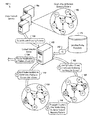
Predicting User Interests Based on Who Looks at Whose Profile
A method for predicting what a user might be interested in by analyzing the web of connections created when people view each other's social media profile pages.
15
How Google Distributed Machine Learning Across Many Computers
A 2003 Google patent describing a way to build machine learning models by splitting the work across a large network of computers rather than a single machine.
16
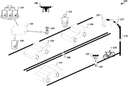
How Autonomous Cars Process Sensor Data for Driving
Intel's 2020 patent describes a system for autonomous vehicles that cleans and standardizes data from various sensors before using it to perceive the environment and make driving decisions.
17
How Facebook Ranks Search Results Based on Your Friends' Activity
A method for ranking search results by prioritizing links that your social network friends have clicked on previously.
18
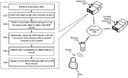
How Smart Speakers Know You're Talking to Them After a Command
This patent describes how a smart speaker system can tell if follow-up speech is meant for it, even without a "wake word," by analyzing voice activity and partial speech recognition results using an AI model.
19
How Touchscreen Gestures Use Physics to Feel Real
Google's patent on making touchscreen gestures feel natural by applying simulated physics, like friction or magnetism, to items on your screen.
20
Square's System for Predicting Orders and Guiding Couriers
This 2018 patent from Square describes a system that predicts which restaurants will get orders and tells delivery drivers where to wait to be ready.
21
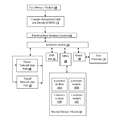
A Computer Chip for Training Many AI Agents at Once
This patent describes a specialized computer processor designed to quickly train multiple artificial intelligence agents simultaneously using a unique set of instructions, speeding up how AI learns.
22
Teaching Computers to Understand Document Similarity Using AI
This patent describes a way to train a computer program (a neural network) to understand how similar documents are to each other, by showing it examples and teaching it to group similar ones together and separate dissimilar ones.
23
How Digital Assistants Control Apps and Ask for More Information
This patent describes how a digital assistant on a device can understand what a user wants from a natural language command, find the right app, get a step-by-step guide from another device, and then ask the user for more details on the screen to complete the task with that app.
24
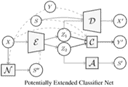
Automated AI for Adapting to New Data Without Retraining
This patent describes an automated system that builds artificial intelligence models capable of adapting to new, different data without needing full retraining, by learning to ignore irrelevant changes.
25
How Search Engines Rank Images Using User Ratings
A system that improves image search results by combining how well an image matches a search term with how highly users have rated that image elsewhere.
26
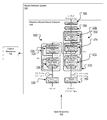
How AI Models Understand Language Using 'Attention'
This patent describes a neural network architecture, known as a Transformer, that uses a "self-attention" mechanism to process sequences of information, like words in a sentence, by weighing the importance of different parts of the input.
27
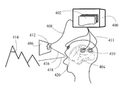
Headset That Shows Your Brain's Focus Level
A wearable device, like smart glasses, that measures your brain activity to understand your attention or mood, then shows you real-time feedback to help you train yourself.
28
How Amazon Optimizes Where to Store Products to Avoid Stockouts
A mathematical method for deciding how many items to stock in different warehouses to minimize the cost of running out of products.
29
How to Verify Anonymous Users Using Third-Party Identity Services
A method for a system to identify and authorize a user it doesn't know by asking a different, trusted service that already has the user's information.
30
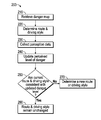
How Self-Driving Cars Use Danger Maps to Drive Safer
This patent describes how vehicles can use a 'danger map' of known hazardous locations to plan safer routes and automatically adjust their driving behavior, like speed or following distance, when approaching risky areas.
Most cited in other domains