Most Cited Patents · Semiconductors
Most cited semiconductors patents
Ranked by forward citations — the chip design, transistors, and integrated circuits inventions that later patents built upon most.
Patents ranked
30
Total citations
15,713
Top patent
2,641 cit
1
How a Multi-Touch Screen Detects Multiple Fingers and Palms
This patent describes the underlying electronic circuits and methods for a multi-touch surface that can track multiple fingers and palms simultaneously, even before they fully touch the screen.
2
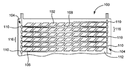
How Multi-Touch Screens Track Multiple Fingers at Once
Apple's 2010 patent describes a touch screen that uses two layers of transparent conductive lines to detect several fingers touching the screen simultaneously.
3
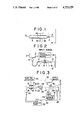
How Canon's Bubble Jet Printers Make Ink Droplets
Canon's 1988 patent on bubble jet printing uses a tiny heater to instantly vaporize ink, creating a bubble that pushes out a droplet of ink from the printer head.
4
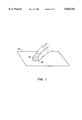
Logitech's Method for Using Two Fingers on a Touchpad
Logitech's 1998 patent describes how a touchpad can detect two fingers touching it in a specific sequence to perform actions like clicking or dragging, going beyond single-finger mouse emulation.
5
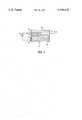
How Organic Diodes Make Light Using Special Molecules
Eastman Kodak's 1982 patent on creating light-emitting diodes (OLEDs) using organic materials, specifically a layer of porphyrinic compounds to help inject electrical charges.
6
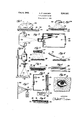
Chester Carlson's Original Xerography Patent
Chester Carlson's 1942 patent for xerography, the dry copying process that became the foundation for Xerox machines.
7
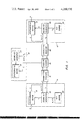
How to Create a Secret Code Key Without Meeting First
This 1980 patent describes a way for two people to create a secret code key over a public channel, like the internet, without ever meeting or sharing the key directly.
8
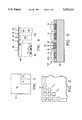
How a Modern Camera Sensor Captures Light and Converts It to Data
This patent describes a camera sensor technology that combines light-capturing elements with a special circuit to read out the image data quickly and efficiently, all on a single chip.
9
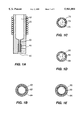
Tiny Capsules for Electronic Paper Displays
MIT's 1999 patent on a special ink made of tiny capsules that can change color when an electric field is applied, forming the basis for early e-readers.
10
How Scientists First Made DNA Replicate in New Cells
This 1980 patent describes a method for cutting and pasting DNA pieces in a lab to create new, self-replicating genetic material that can be inserted into bacteria, a foundational technique for genetic engineering.
11
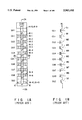
How Multi-Level Cell Memory Stores More Data in Less Space
Toshiba's 1999 patent describes a method for storing multiple bits of data in a single memory cell by precisely controlling voltage levels during programming.
12
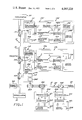
How Multiple Computers Share a Network Cable Without Crashing
This patent describes how multiple computers can share a single communication cable by listening for other transmissions and stopping their own if a collision occurs, then trying again later.
13
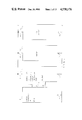
How Computers Use Hardware to Stop Software Piracy and Cracking
A 1982 hardware-based security system that prevents software from being copied or cracked by destroying sensitive data if the computer detects unauthorized access or execution.
14
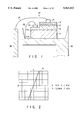
How Nichia Created the First Practical Blue LED Electrodes
A foundational patent describing the specific metal contacts needed to make gallium nitride LEDs efficient and commercially viable.
15
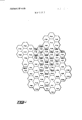
How Early Cell Phones Handled Calls Across Different Towers
This patent describes a system for early portable phones to automatically find the strongest signal from a base station and switch channels as the user moves, reducing battery drain and interference.
16
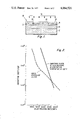
How Amorphous Silicon Changed Solar Power
This 1976 patent describes using a specific form of non-crystalline silicon to create cheap, thin semiconductor devices like solar cells.
17
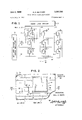
How Robert Dennard Invented the One-Transistor DRAM Memory Cell
IBM's 1967 patent for a memory cell using a single transistor and a capacitor, which became the foundation for all modern computer RAM.
18
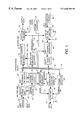
How Cable Modems Fix Signal Distortions Before Sending Data
A method for cable modems to pre-filter data so it arrives clearly at the central office, preventing signal errors caused by the messy physical wires between them.
19
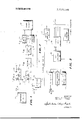
How Radio Frequency Identification (RFID) Tags Were Invented
A 1970 patent describing a remote tag that powers itself using incoming radio signals to read and write data, forming the foundation of modern RFID technology.
20
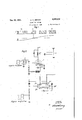
How Pulse Code Modulation Digitizes Analog Signals
A foundational 1938 patent describing how to convert continuous sound waves into a stream of digital numbers for transmission.
21
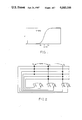
How Hopfield Networks Use Resistors to Mimic Brain-Like Memory
A foundational patent describing an electronic circuit that uses a grid of resistors to perform computations, effectively creating an artificial neural network that can store and recall patterns.
22
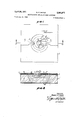
How Robert Noyce Invented the Modern Integrated Circuit
Robert Noyce's 1959 patent for a semiconductor device that uses evaporated metal leads to connect components directly on a single silicon chip.
23
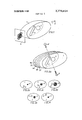
How Early CT Scans Created Detailed Body Images
This 1973 patent describes a method for using X-rays from many angles to build a detailed 2D image of the inside of a body, like a slice of a CT scan.
24
Using Heat-Resistant Enzymes to Read DNA Sequences Faster
This patent describes using a heat-stable enzyme from a bacterium that lives in hot springs to make the process of reading DNA code much more reliable and efficient.
25
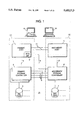
How IBM's Storage Controllers Keep Data Backups in the Right Order
A method for storage controllers to track and sequence data updates in a specific order, ensuring that remote backups remain consistent with the original data during a system failure.
26
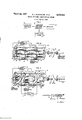
How the First Laser Was Invented
The foundational 1960 patent by Schawlow and Townes that describes how to amplify light waves to create a laser, moving beyond microwave technology.
27
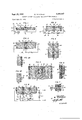
The Invention of the Junction Transistor
William Shockley's 1951 patent for the junction transistor, the fundamental building block of all modern digital electronics.
28
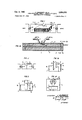
The Invention of the Transistor
Bell Labs' 1950 patent for the point-contact transistor, the fundamental electronic component that makes all modern computing possible.
29
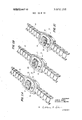
Hamilton's Early Digital Watch with LED Display
Hamilton's 1972 patent for a digital watch that uses electronic circuits and light-emitting diodes (LEDs) to show time, instead of gears and hands, powered by a rechargeable battery.
30
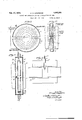
How Ernest Lawrence Invented the Cyclotron Particle Accelerator
This 1934 patent describes the cyclotron, a machine that uses magnetic and electric fields to whip particles into high speeds for scientific research.
Most cited in other domains