Most Cited Patents · Mechanical Engineering
Most cited mechanical engineering patents
Ranked by forward citations — the physical mechanisms and industrial machinery inventions that later patents built upon most.
Patents ranked
30
Total citations
10,286
Top patent
1,806 cit
1
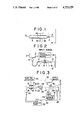
How Canon's Bubble Jet Printers Make Ink Droplets
Canon's 1988 patent on bubble jet printing uses a tiny heater to instantly vaporize ink, creating a bubble that pushes out a droplet of ink from the printer head.
2
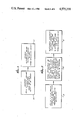
How 3D Printers Build Objects Layer by Layer from Liquid
This patent describes the foundational method for 3D printing, where a machine builds a three-dimensional object layer by layer by hardening a liquid material with light or other energy.
3
How to Make Pill Coatings That Keep Medicine Stable Over Time
A method for coating pills with a specific plasticized acrylic polymer that ensures the medicine releases at a steady, predictable rate, even after sitting on a shelf for months.
4
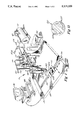
How Machines Build 3D Objects Layer by Layer from Melting Plastic
This patent describes a method and machine for creating three-dimensional objects by precisely depositing melted material, layer by layer, from a movable nozzle onto a base.
5
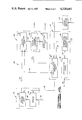
How Stores Make Custom Products On-Demand with Remote Approval
This patent describes a system where a store can make a custom product for a customer, but only after getting permission and the necessary design information from a central, remote office.
6
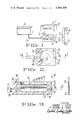
How Piezoelectric Inkjet Printing Works
A 1970 patent describing how to print images by using electrical pulses to bend a tiny crystal plate, squeezing individual ink drops out of a nozzle on demand.
7
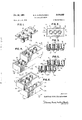
How the Modern LEGO Brick Design Works
The 1958 patent that defined the iconic LEGO brick with hollow tubes inside, allowing bricks to lock together firmly.
8
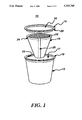
How Keurig's Original Single-Serve Coffee Pod System Works
This 1994 patent describes the original Keurig system for brewing single cups of coffee using a special filter pod that holds coffee grounds and separates them from the brewed liquid.
9
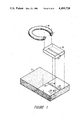
How Thermal Inkjet Printers Use Two-Step Heating to Shoot Ink
Hewlett-Packard's 1982 patent on a two-stage electrical pulse method that preheats ink before vaporizing it, allowing thermal inkjet printers to reliably eject precise droplets without clogging.
10
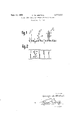
How George de Mestral Invented Velcro
A 1952 patent describing the creation of a hook-and-loop fastener by weaving synthetic loops into fabric and cutting them to create tiny, grippy hooks.
11
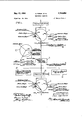
How the First Nuclear Reactor Works
The foundational 1955 patent by Enrico Fermi and Leo Szilard describing the design of the first nuclear reactor capable of a self-sustaining chain reaction.
12
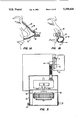
How CPAP Machines Gradually Increase Air Pressure for Sleeping Patients
A 1993 patent describing a CPAP machine that lets patients choose how slowly the air pressure ramps up to their therapeutic level, making it easier to fall asleep.
13
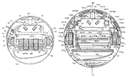
How the iRobot Roomba Automatically Cleans Floors Without Falling Down Stairs
A 2002 patent describing an autonomous floor-cleaning robot that uses sensors to navigate rooms, avoid cliffs like stairs, and sweep debris into a removable bin.
14
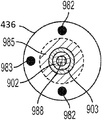
Surgical Tool with Flexible, Articulating, and Rotating End Effectors
This patent describes a surgical tool with a flexible tip that can bend in multiple directions and also twist, allowing surgeons to precisely control instruments like graspers and cutters inside the body.
15
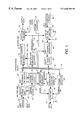
How Cable Modems Fix Signal Distortions Before Sending Data
A method for cable modems to pre-filter data so it arrives clearly at the central office, preventing signal errors caused by the messy physical wires between them.
16
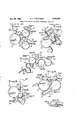
How Bubble Wrap Is Manufactured
A 1959 manufacturing process that creates cushioning material by trapping air between two layers of plastic film.
17
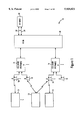
How Phones Automatically Find and Update Network Lists Using CDPD
A 1995 system for helping mobile phones automatically update their preferred network lists and find the best service provider using a data-only channel.
18
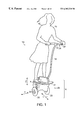
How Self-Balancing Vehicles Warn Users Before They Tip Over
A safety system for self-balancing vehicles that monitors how much 'room' the machine has left to accelerate before it loses its ability to stay upright.
19
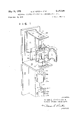
How Plastic Soda Bottles Are Made Stronger Using Stretched Molecules
A 1970s invention that describes how to make lightweight, clear plastic bottles strong enough to hold carbonated drinks without exploding.
20
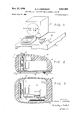
How Douglas Engelbart Invented the Computer Mouse
The 1970 patent for the X-Y position indicator, better known as the computer mouse, which allowed users to move a cursor across a screen for the first time.
21
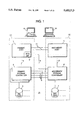
How IBM's Storage Controllers Keep Data Backups in the Right Order
A method for storage controllers to track and sequence data updates in a specific order, ensuring that remote backups remain consistent with the original data during a system failure.
22
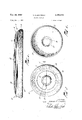
How the Modern Frisbee Design Works
A 1967 patent describing the specific aerodynamic shape and raised ribs that allow a plastic disc to fly straight and steady.
23
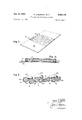
How Disposable Diapers Keep Skin Dry Using Porous Plastic Sheets
A 1970 patent by Procter and Gamble describing a specialized plastic top layer for diapers that allows liquid to pass through while keeping the baby's skin feeling dry.
24
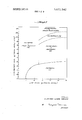
How Stephanie Kwolek Invented the Liquid Crystal Solution for Kevlar
A 1969 chemical discovery describing a specialized liquid mixture that allows for the creation of incredibly strong, high-performance synthetic fibers.
25
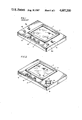
How the Nintendo D-Pad Works
A mechanical switch design that allows a user to control directional movement in video games using a single, tilting thumb-operated button.
26
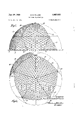
Buckminster Fuller's Geodesic Dome Building Design
A structural design for a spherical building made of interlocking triangular frames that distribute weight efficiently to create large, stable, and lightweight spaces.
27
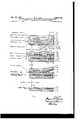
How Polaroid's Instant Film Pods Work
A 1951 invention by Edwin Land that enabled instant photography by packaging liquid developer inside a breakable pod attached to the film sheet.
28
How Earl Tupper Invented the Airtight Plastic Food Container
A 1947 patent for a flexible plastic container with a unique, airtight lid that seals by pressing down on the center, creating the foundation for Tupperware.
29
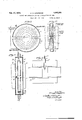
How Ernest Lawrence Invented the Cyclotron Particle Accelerator
This 1934 patent describes the cyclotron, a machine that uses magnetic and electric fields to whip particles into high speeds for scientific research.
30
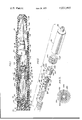
How Auto-Injectors Adjust Their Dose Using a Simple Spacer
A 1977 invention for auto-injectors that uses a physical spacer to adjust the amount of medicine inside the device before it is fired.
Most cited in other domains