Most Cited Patents · Clean Energy
Most cited clean energy patents
Ranked by forward citations — the solar, battery storage, and sustainable energy inventions that later patents built upon most.
Patents ranked
30
Total citations
1,849
Top patent
251 cit
1
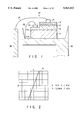
How Nichia Created the First Practical Blue LED Electrodes
A foundational patent describing the specific metal contacts needed to make gallium nitride LEDs efficient and commercially viable.
2
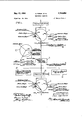
How the First Nuclear Reactor Works
The foundational 1955 patent by Enrico Fermi and Leo Szilard describing the design of the first nuclear reactor capable of a self-sustaining chain reaction.
3
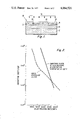
How Amorphous Silicon Changed Solar Power
This 1976 patent describes using a specific form of non-crystalline silicon to create cheap, thin semiconductor devices like solar cells.
4
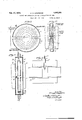
How Ernest Lawrence Invented the Cyclotron Particle Accelerator
This 1934 patent describes the cyclotron, a machine that uses magnetic and electric fields to whip particles into high speeds for scientific research.
5
Early Lithium-Ion Battery Design Using Chalcogenides
This 1977 patent describes an early rechargeable battery design using lithium as one electrode and titanium disulfide as the other, a key step towards modern lithium-ion technology.
6
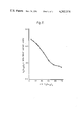
How Lithium-Cobalt Battery Cathodes Were Invented
This 1981 patent details the chemistry behind the lithium-cobalt oxide cathodes that power almost every modern smartphone, laptop, and electric vehicle.
7
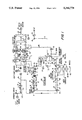
Boosting Fuel Cell Power for Vehicles Using Oxygen Injection
A system that boosts a vehicle's fuel cell power by injecting pure oxygen into the air supply when the engine needs extra energy.
8
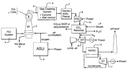
Making Iron More Efficiently and Generating Power with Oxygen
This patent describes an integrated system that uses extra oxygen in a blast furnace to make iron more efficiently, while also capturing the furnace's waste gases to generate electricity and reduce carbon dioxide emissions.
9
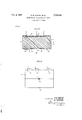
How the First Practical Silicon Solar Cell Works
A 1954 invention by Bell Labs researchers that created the first silicon-based solar cell capable of converting sunlight into enough electricity to power everyday devices.
10
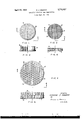
How Eugene Houdry Invented the Modern Catalytic Converter
A 1952 patent for a durable, thin-film catalyst structure that allows gases to flow freely over reactive surfaces, forming the foundation for modern vehicle exhaust systems.
11
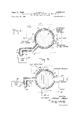
Gordon Gould's Early Concepts for High-Frequency Radiation Devices
A 1968 patent by Gordon Gould describing methods to generate and amplify radiation at frequencies exceeding visible light, building on his foundational laser work.
12
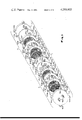
How a Special Carbon-Fluorine Catalyst Makes Chlorine and Caustic Soda
This patent describes using a unique carbon-fluorine compound as a catalyst in a special type of electrolysis cell to make chlorine and caustic soda more efficiently by preventing hydrogen gas from forming.
13
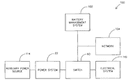
How Car Battery Modules Combine High and Low Voltage Systems
A self-contained battery module that houses both high and low voltage batteries, a power converter, and safety switches in a single unit designed for efficient heat management.
14
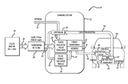
High-Power Electric Vehicle Charging with Pulsed Current from the Grid
This patent describes a system for rapidly charging electric vehicles using high-voltage grid power and a unique 'pulse current' method that can also automatically park the car.
15
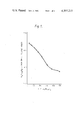
How Lithium-Ion Battery Cathodes Are Made
A foundational 1982 method for creating the materials used in rechargeable lithium-ion batteries by removing ions at low temperatures.
16
Electric or Natural Gas Blending and Pumping for Oil Wells
This patent describes a compact, modular system for mixing and pumping fluids used in oil and gas wells, powered by electricity or natural gas, using gravity to feed materials into a main blender.
17
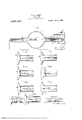
How William Coolidge Invented the Modern X-Ray Tube
A 1916 patent by William Coolidge for a high-vacuum X-ray tube that used a heated tungsten filament to control electron flow, replacing older, unreliable gas-filled tubes.
18
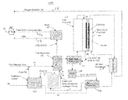
How Fuel Cells Reuse Exhaust Hydrogen for High Efficiency
This patent describes a fuel cell system that captures and recycles over 95% of the unused hydrogen from its exhaust stream using a special pump, significantly boosting efficiency.
19
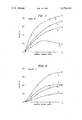
How Scientists Created Bacteria That Eat Oil Spills
A 1981 patent for genetically engineered bacteria capable of breaking down multiple types of oil, which became the first living organism ever patented.
20
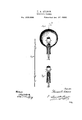
How Thomas Edison Invented the Practical Incandescent Light Bulb
Thomas Edison's 1880 patent for a carbon-filament electric lamp that made indoor lighting reliable and commercially viable for the first time.
21
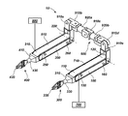
How a Snake Robot Uses Two Arms to Work Together
This patent describes a snake-like robot with at least two movable arms that work together to perform complex tasks, like inspecting pipes or lifting heavy objects.
22
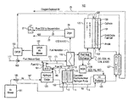
How a High-Temperature Fuel Cell System Starts, Stops, and Recycles Fuel
This patent describes a fuel cell system that uses a smaller, secondary fuel cell to power itself during startup and shutdown, and to recycle hydrogen from its exhaust during normal operation.
23
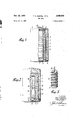
How the Modern Alkaline Battery Was Invented
A 1957 patent from Union Carbide that defined the construction of the long-lasting alkaline battery, replacing older zinc-carbon designs.
24
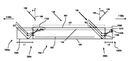
How to Make Solar Troughs Catch More Sunlight at Their Ends
This patent describes adding special reflective extensions and caps to the ends of a single-axis tracking solar trough to capture more sunlight that would otherwise be lost, making the collector more efficient.
25
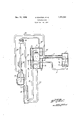
How Albert Einstein and Leo Szilard Designed a Silent Refrigerator
A 1930 patent by Albert Einstein and Leo Szilard for a refrigerator that uses electromagnetic pumps instead of moving mechanical parts to circulate coolant.
26
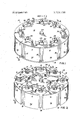
How a Single Coil Powers Multiple Motor Armatures Simultaneously
A 1973 design for an electric motor that uses a single central coil to power several separate armatures arranged in a circle.
27
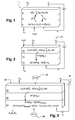
Making Chemicals from Carbon Dioxide and Steam Using Electricity
This patent describes a process that uses electricity to split steam and then reacts the resulting hydrogen with carbon dioxide or carbon monoxide to create various carbon-based compounds, like fuels or plastics.
28
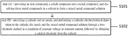
How to Make Big Electrodes for Splitting Water
This patent describes a simple, energy-saving way to create large, efficient catalyst electrodes using a mix of iron, cobalt, and nickel compounds through an electrical plating process.
29
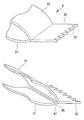
Wind Turbine Blades with Noise-Reducing Serrated Edges
This patent describes a wind turbine blade design that reduces noise by attaching a special serrated plate to its trailing edge, integrated directly into one of the blade's outer surfaces.
30
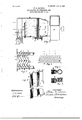
How Willis Carrier Invented the Modern Air Conditioner
Willis Carrier's 1906 patent for an apparatus to control humidity and temperature, forming the technical foundation for modern air conditioning systems.
Most cited in other domains