Most Cited Patents · Automotive
Most cited automotive patents
Ranked by forward citations — the vehicle systems, ADAS, and EV technology inventions that later patents built upon most.
Patents ranked
30
Total citations
3,750
Top patent
1,364 cit
1
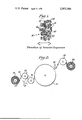
Making Strong, Porous PTFE: The Gore-Tex Process
This patent describes a specific process for rapidly stretching a highly crystalline form of PTFE plastic to create a strong, porous material with a unique internal structure, forming the basis for products like Gore-Tex.
2
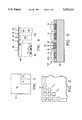
How a Modern Camera Sensor Captures Light and Converts It to Data
This patent describes a camera sensor technology that combines light-capturing elements with a special circuit to read out the image data quickly and efficiently, all on a single chip.
3
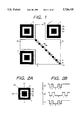
How the QR Code Works
The 1995 patent by Toyota Central R&D Labs that invented the QR code, using three distinct corner squares with a unique 1:1:3:1:1 pixel ratio to let scanners instantly find and read the code from any angle.
4
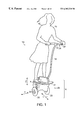
How Self-Balancing Vehicles Warn Users Before They Tip Over
A safety system for self-balancing vehicles that monitors how much 'room' the machine has left to accelerate before it loses its ability to stay upright.
5
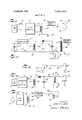
Weapon That Shoots Wires to Deliver Electric Shocks
This 1974 patent describes a weapon that fires projectiles carrying wires to deliver incapacitating electric shocks to a target from a distance.
6
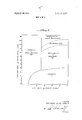
The Molecular Structure of Kevlar High-Strength Fiber
Stephanie Kwolek's 1971 patent for DuPont describing the molecular alignment and manufacturing of extremely strong, lightweight synthetic aramid fibers, which became famous as Kevlar.
7
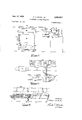
How George Devol Invented the First Industrial Robot Arm
The 1954 patent for the Unimate, the first digitally controlled robotic arm that could be programmed to move objects in a factory.
8
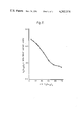
How Lithium-Cobalt Battery Cathodes Were Invented
This 1981 patent details the chemistry behind the lithium-cobalt oxide cathodes that power almost every modern smartphone, laptop, and electric vehicle.
9
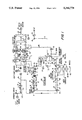
Boosting Fuel Cell Power for Vehicles Using Oxygen Injection
A system that boosts a vehicle's fuel cell power by injecting pure oxygen into the air supply when the engine needs extra energy.
10
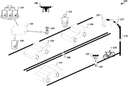
How Autonomous Cars Process Sensor Data for Driving
Intel's 2020 patent describes a system for autonomous vehicles that cleans and standardizes data from various sensors before using it to perceive the environment and make driving decisions.
11
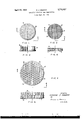
How Eugene Houdry Invented the Modern Catalytic Converter
A 1952 patent for a durable, thin-film catalyst structure that allows gases to flow freely over reactive surfaces, forming the foundation for modern vehicle exhaust systems.
12
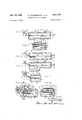
How the Float Glass Process Makes Perfectly Flat Window Panes
This 1954 patent describes the float glass process, a method for creating high-quality, perfectly flat glass by floating molten glass on a bath of liquid metal.
13
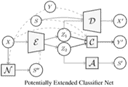
Automated AI for Adapting to New Data Without Retraining
This patent describes an automated system that builds artificial intelligence models capable of adapting to new, different data without needing full retraining, by learning to ignore irrelevant changes.
14
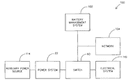
How Car Battery Modules Combine High and Low Voltage Systems
A self-contained battery module that houses both high and low voltage batteries, a power converter, and safety switches in a single unit designed for efficient heat management.
15
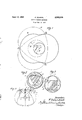
How the Wankel Rotary Engine Works
A 1957 invention by Felix Wankel that replaces heavy, moving pistons with a triangular rotor spinning inside a chamber to create power.
16
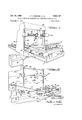
How Early Numerical Control Systems Automated Industrial Milling Machines
A 1952 invention by John Parsons that used punched cards to automatically guide machine tools, effectively launching the era of computer-aided manufacturing.
17
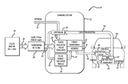
High-Power Electric Vehicle Charging with Pulsed Current from the Grid
This patent describes a system for rapidly charging electric vehicles using high-voltage grid power and a unique 'pulse current' method that can also automatically park the car.
18
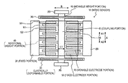
How a Tiny Sensor Uses an Extra Weight to Detect Motion
This patent describes a miniature sensor that detects movement or force by measuring changes in electrical signals between tiny plates, featuring a clever extra weight to make it more sensitive.
19
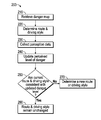
How Self-Driving Cars Use Danger Maps to Drive Safer
This patent describes how vehicles can use a 'danger map' of known hazardous locations to plan safer routes and automatically adjust their driving behavior, like speed or following distance, when approaching risky areas.
20
How Devices Predict Your Next Move Using Gestures and History
A patent for a smart interface that tracks your physical gestures and past habits to predict what you want to do next, showing custom options on a screen to save you time.
21
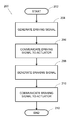
Precisely Stopping Device Vibrations for Better Touch Feedback
This patent describes a method for precisely stopping the tiny vibrations in a device, like a phone, by sending a special 'braking' signal to make touch feedback feel sharper and more controlled.
22
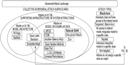
Improving AI Predictions by Factoring in How Much You Trust Each Model
This patent describes a method for making an AI system more accurate by combining several individual AI models and giving more weight to the ones considered more trustworthy.
23
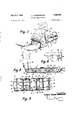
How Joseph-Armand Bombardier Designed the Modern Snowmobile
A 1962 patent by Joseph-Armand Bombardier describing a lightweight, engine-driven vehicle using an endless track system for travel over snow.
24
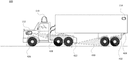
How Autonomous Trucks Predict and Handle Tire Blowouts
This patent describes how an autonomous vehicle uses real-time sensor data, road conditions, and a dynamic model to predict tire failure and take corrective actions like adjusting its path or pulling over.
25
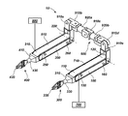
How a Snake Robot Uses Two Arms to Work Together
This patent describes a snake-like robot with at least two movable arms that work together to perform complex tasks, like inspecting pipes or lifting heavy objects.
26
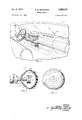
How Early Vehicle Airbag Safety Systems Work
A 1968 patent describing an early vehicle safety system that uses a rapidly inflating confinement to protect passengers during a collision.
27
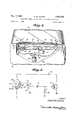
How Intermittent Windshield Wipers Work
Robert Kearns' 1967 patent for the first electronic intermittent windshield wiper system that mimics the human eye's blinking motion.
28
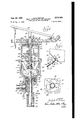
Ralph Teetor's Speed Control Device for Automobiles
A 1948 invention by Ralph Teetor that introduced the mechanical foundation for modern cruise control by creating a system to resist accelerator pedal movement at a set speed.
29
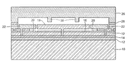
How a MEMS Sensor Uses a Reference to Improve Z-Axis Accuracy
This patent describes a tiny sensor that measures up-and-down motion more accurately by including a special surrounding structure that helps cancel out environmental interference.
30
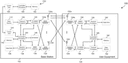
Managing and Updating AI on Many Smart Devices from the Cloud
This patent describes a system for remotely monitoring and updating artificial intelligence models running on a fleet of connected smart devices, like factory robots or smart cameras, all managed from a central cloud-based control panel.
Most cited in other domains