How Touchscreens Handle Scrolling and Rubber-Band Effects
This patent describes the software logic that allows touchscreens to distinguish between simple scrolling and multi-finger gestures, while also enabling the signature 'rubber-band' bounce effect when you reach the end of a page.
Original patent title: “Application programming interfaces for scrolling operations”
This patent describes the software logic that allows touchscreens to distinguish between simple scrolling and multi-finger gestures, while also enabling the signature 'rubber-band' bounce effect when you reach the end of a page. Granted to Apple Inc in 2010 with 24 claims and 132 forward citations, and it is expected to expire in 2027.
Coverage
What does this patent actually cover?
The patent defines a system that interprets touch inputs on a screen to decide whether a user wants to scroll a page or perform a gesture like zooming. It specifically creates an event object that distinguishes between a single touch point (scrolling) and two or more touch points (gestures like pinching). When scrolling reaches the edge of a document, the patent claimsclaimsThe numbered statements at the end of a patent that legally define what the inventor owns.Read more → a 'rubber-banding' mechanism that allows the content to stretch slightly and then snap back, providing visual feedback that the end of the content has been reached. This logic is handled through an application programming interface (API) that standardizes how software applications react to these specific touch interactions.
The gap
What does this patent NOT cover?
- Does not cover the physical hardware of the touchscreen itself.
- Does not cover non-touch input methods like mouse wheels or trackpads.
- Does not cover gestures that do not involve scaling or rotating, such as simple single-tap selection.
- Does not cover the specific visual design or color of the scroll indicators.
These exclusions are unique to PatentBrief — derived from the actual claim language, not patent-office boilerplate.
Key facts
What made this novel
The innovation lies in the 'rubber-banding' logic: by allowing the view to temporarily exceed the window edge and then snap back, the software provides a physical-world metaphor for a digital boundary that was previously just a hard, jarring stop.
The Patent Drawing
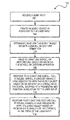
Schematic visualization of the patent's claim structure. Hand-drawn diagrams in progress for each landmark patent.
Where you've seen this
Real-world examples
iOS scrolling behavior in Safari
Rubber-band bounce effect in mobile email clients
Pinch-to-zoom gestures in photo gallery apps
Why it matters
The bigger picture
This patent was a cornerstone of the 'smartphone wars' in the early 2010s, particularly in litigationlitigationA lawsuit over patent infringement. Litigated patents often signal commercial importance.Read more → between Apple and Samsung. It defined the expected behavior of modern mobile interfaces, making the smooth, physics-based scrolling we take for granted a proprietary standard for years. It fundamentally changed how users perceive the responsiveness of a touch-based operating system.
Filed
January 7, 2007
Granted
November 30, 2010
Market context
Who's building on this
Companies in this space
Apple continues to refine these interaction models within iOS and iPadOS. Most major mobile OS developers, including Google for Android, have developed their own distinct implementations of these interactions to avoid infringing on the specific claimsclaimsThe numbered statements at the end of a patent that legally define what the inventor owns.Read more → outlined here.
Market impact
This patent helped establish the 'look and feel' of the modern smartphone, forcing competitors to innovate around the specific 'rubber-banding' and gesture-recognition methods Apple claimed. It became a significant bargaining chip in global patent litigationlitigationA lawsuit over patent infringement. Litigated patents often signal commercial importance.Read more →, effectively setting the standard for user interface expectations in the mobile era.
Claim 1 — Plain English
What this patent covers
The patent defines a system that interprets touch inputs on a screen to decide whether a user wants to scroll a page or perform a gesture like zooming. It specifically creates an event object that distinguishes between a single touch point (scrolling) and two or more touch points (gestures like pinching). When scrolling reaches the edge of a document, the patent claims a 'rubber-banding' mechanism that allows the content to stretch slightly and then snap back, providing visual feedback that the end of the content has been reached. This logic is handled through an application programming interface (API) that standardizes how software applications react to these specific touch interactions.
The clever bit
The innovation lies in the 'rubber-banding' logic: by allowing the view to temporarily exceed the window edge and then snap back, the software provides a physical-world metaphor for a digital boundary that was previously just a hard, jarring stop.
What it does not cover
- Does not cover the physical hardware of the touchscreen itself.
- Does not cover non-touch input methods like mouse wheels or trackpads.
- Does not cover gestures that do not involve scaling or rotating, such as simple single-tap selection.
- Does not cover the specific visual design or color of the scroll indicators.
Patent timeline
Application submitted to the patent office
Application published, typically 18 months after filing
Patent officially issued
Patent enters public domain
PatentBrief Score
Impact Score
High impact
Citation count
40/40
Highly cited
Claim breadth
16/20
Broad claimsclaimsThe numbered statements at the end of a patent that legally define what the inventor owns.Read more →
Recency
5/20
Granted 10–20 years ago
Assignee scale
20/20
Major company or institution
PatentBrief Impact Score — based on citation count, claim breadth, recency, and assignee scale. Not a legal assessment.
Heuristic Value Estimate
What this patent might be worth
$117K – $374K
Midpoint $234K · expired or expiring · industry ×1.6
Heuristic only — blends forward/backward citation counts, claim scope, time remaining, litigation history, and CPC-derived industry baseline. Real valuations need a professional appraisal.
Patent Claims
1 independent claim · 0 dependent
Claims are the legal boundaries of the patent. An independent claim stands alone. A dependent claim adds limitations to its parent, narrowing — but not broadening — the scope.
The original legal language
Original claims
24 claims as filed with the patent office.
Concepts involved
Citations
Patent lineage
Cite this patent
Platzer, A., & Herz, S. (2010). How Touchscreens Handle Scrolling and Rubber-Band Effects (U.S. Patent No. 7,844,915). U.S. Patent and Trademark Office. https://patentbrief.org/patent/us/7844915/application-programming-interfaces-for-scrolling-operations
Auto-generated from the patent record. Double-check author order and the issue date against the official USPTO document before submitting.
Embed
Add this patent to your site
Drop this plain-English patent card into any blog post or article — free, no signup. It always links back to the full breakdown here.
<div data-patentlens-widget data-patent-number="US7844915"></div>
<script src="https://patentbrief.org/embed.js" async></script>
Stay in the loop
Get a weekly digest of new patents.
One email per week. No spam. Unsubscribe anytime.
Keep exploring
Related patents you should know
US 4683195 · 1987
How to Make Billions of Copies of a DNA Segment
This patent describes the Polymerase Chain Reaction (PCR), a method to rapidly create many copies of a specific piece of DNA or RNA, enabling its detection and analysis.
Cetus Corp
US 8697359 · 2014
How to Edit Genes in Human Cells Using an Engineered CRISPR System
This patent describes an engineered CRISPR-Cas9 system for precisely cutting DNA in eukaryotic cells to change how genes work, opening the door for gene editing in complex organisms.
Massachusetts Institute of Technology
US 7657849 · 2010
How the iPhone's Slide-to-Unlock Gesture Works
Apple's 2010 patent describes unlocking a device by dragging a specific graphical image across the touchscreen along a predefined path, a gesture that became iconic with the original iPhone.
Apple Inc
US 4733665 · 1988
How Doctors Implant a Permanent Stent Using a Balloon
This patent describes the method for placing a permanent, expandable wire mesh tube inside a blood vessel or other body tube using a balloon-tipped catheter to widen it and keep it open.
Expandable Grafts Partnership
US 4965188 · 1990
How to Make Many Copies of a DNA Piece with Heat
This patent describes the Polymerase Chain Reaction (PCR) method, a technique to make millions of copies of a specific DNA segment using a heat-resistant enzyme and repeated temperature changes.
Cetus Corp
US 4235871 · 1980
How to Encapsulate Active Materials in Lipid Bubbles Efficiently
This patent describes a method for trapping biologically active substances inside tiny, multi-layered fat bubbles called liposomes, using a specific water-in-oil emulsion and gel-forming process to improve how much material gets captured.
Individual
Semantically similar
You might also find these interesting
US 7469381 · 2008 · Apple Inc
How Touchscreens Show and Snap Back When You Scroll Past an Edge
US 8683378 · 2014 · Apple Inc
How Smartphones Switch Between Slow and Fast Scrolling
US 7479949 · 2009 · Apple Inc
How Touchscreens Understand Your Finger Swipes and Scrolls
US 8429565 · 2013 · Google LLC
How Touchscreen Gestures Use Physics to Feel Real
More to explore
More in Consumer Electronics
US 7657849 · 2010 · Apple Inc
How the iPhone's Slide-to-Unlock Gesture Works
US 7479949 · 2009 · Apple Inc
How Touchscreens Understand Your Finger Swipes and Scrolls
US 4528643 · 1985 · FPDC Inc
How Stores Make Custom Products On-Demand with Remote Approval
US 7469381 · 2008 · Apple Inc
How Touchscreens Show and Snap Back When You Scroll Past an Edge
New to patents?
Common Questions
Frequently Asked Questions
What does How Touchscreens Handle Scrolling and Rubber-Band Effects cover?
This patent describes the software logic that allows touchscreens to distinguish between simple scrolling and multi-finger gestures, while also enabling the signature 'rubber-band' bounce effect when you reach the end of a page.
Who owns patent US 7844915?
Apple Inc owns this patent, granted in 2010.
When does this patent expire?
This patent is expected to expire on January 7, 2027, when the invention enters the public domain.
What is patent US 7844915 cited by?
This patent has been cited by 132 later patents that build on its ideas.
What problem does this patent solve?
This patent was a cornerstone of the 'smartphone wars' in the early 2010s, particularly in litigation between Apple and Samsung. It defined the expected behavior of modern mobile interfaces, making the smooth, physics-based scrolling we take for granted a proprietary standard for years. It fundamentally changed how users perceive the responsiveness of a touch-based operating system.
What does this patent NOT cover?
Does not cover the physical hardware of the touchscreen itself.
Related reading
Same assignee
More from Apple Inc
Patent monitoring