How Digital Assistants Control Apps and Ask for More Information
This patent describes how a digital assistant on a device can understand what a user wants from a natural language command, find the right app, get a step-by-step guide from another device, and then ask the user for more details on the screen to complete the task with that app.
Original patent title: “Application integration with a digital assistant”
This patent describes how a digital assistant on a device can understand what a user wants from a natural language command, find the right app, get a step-by-step guide from another device, and then ask the user for more details on the screen to complete the task with that app. Granted to Apple Inc in 2021 with 48 claims and 48 forward citations.
Coverage
What does this patent actually cover?
This patent details a system where an electronic device, like a smartphone, receives a natural-language voice command from a user. The device then figures out the user's 'intent' (what they want to do) and identifies a specific software application on the device that can perform that task. Uniquely, the device then receives a 'task flow'—a series of programmed steps—from a *second electronic device* (ClaimclaimA numbered sentence at the end of a patent that legally defines what the inventor owns. The most important section.Read more → 1). This task flow guides how the primary device interacts with the identified app. If the app needs more information to complete the task, it sends a request. The device then uses the touch-sensitive display to show a 'query' (a question) to the user, determined by the task flow. After the user provides a 'second user input' (the answer to the query), the device sends this response back to the app to help it finish the task. For example, if you tell your phone, "Order a pizza," the phone identifies a pizza ordering app, gets the steps for ordering from a server, and if the app needs to know the topping, it might display, "What toppings would you like?" on your screen.
The gap
What does this patent NOT cover?
- Does not cover scenarios where the 'task flow' (the step-by-step guide) is not received from a 'second electronic device' but is instead entirely pre-programmed or generated on the primary device itself (ClaimclaimA numbered sentence at the end of a patent that legally defines what the inventor owns. The most important section.Read more → 1).
- Does not cover situations where the digital assistant's 'query' for more information from the user is provided solely through voice, without using a 'touch-sensitive display' (ClaimclaimA numbered sentence at the end of a patent that legally defines what the inventor owns. The most important section.Read more → 1).
- Does not cover applications that are not 'stored on the electronic device' but run entirely in the cloud or on a remote server (ClaimclaimA numbered sentence at the end of a patent that legally defines what the inventor owns. The most important section.Read more → 1).
- Does not cover user inputs that are not 'natural-language user input,' such as direct button presses, gestures, or menu selections (ClaimclaimA numbered sentence at the end of a patent that legally defines what the inventor owns. The most important section.Read more → 1).
- Does not cover systems where the identified software application does not send a 'request' for additional information, meaning the task can be completed without further user interaction (ClaimclaimA numbered sentence at the end of a patent that legally defines what the inventor owns. The most important section.Read more → 1).
These exclusions are unique to PatentBrief — derived from the actual claim language, not patent-office boilerplate.
Key facts
What made this novel
The clever part is how the system dynamically fetches a 'task flow' from another device to guide interactions with an app, and then uses that flow to generate specific questions for the user on the display when the app needs more details, feeding those answers back to the app.
Schematic visualization of the patent's claim structure. Hand-drawn diagrams in progress for each landmark patent.
Where you've seen this
Real-world examples
Apple Siri interacting with third-party apps like Uber or DoorDash
Google Assistant fulfilling requests with installed apps
Amazon Alexa routines that involve multiple steps and user confirmation
Any modern smartphone digital assistant that can control other applications via voice.
Why it matters
The bigger picture
This patent is significant because it outlines a sophisticated way for digital assistants to interact with and control other applications, especially third-party ones. It allows assistants like Siri to handle more complex, multi-step tasks by dynamically asking the user for missing information. This capability is crucial for making digital assistants truly useful beyond simple, built-in commands, expanding their reach into a vast ecosystem of applications.
Filed
January 5, 2018
Granted
December 21, 2021
Market context
Who's building on this
Companies in this space
Apple Inc., the assigneeassigneeThe entity that owns the patent — usually the inventor's employer or a company.Read more →, continues to build on this technology through its SiriKit and Shortcuts frameworks, enabling deeper integration of third-party applications with its digital assistant. Other major technology companies like Google and Amazon also develop similar capabilities for their respective digital assistants, Google Assistant and Alexa, to enhance app interaction.
Market impact
This patent's concepts have contributed to the evolution of digital assistants from simple command interpreters to more capable agents that can interact dynamically with a wide range of applications. It helped expand the utility of voice assistants, making them more central to user experience on smartphones and other devices. This capability is now a standard expectation for modern digital assistants, enabling a broader ecosystem of services and applications to be controlled hands-free or with minimal interaction.
Claim 1 — Plain English
What this patent covers
This patent details a system where an electronic device, like a smartphone, receives a natural-language voice command from a user. The device then figures out the user's 'intent' (what they want to do) and identifies a specific software application on the device that can perform that task. Uniquely, the device then receives a 'task flow'—a series of programmed steps—from a *second electronic device* (Claim 1). This task flow guides how the primary device interacts with the identified app. If the app needs more information to complete the task, it sends a request. The device then uses the touch-sensitive display to show a 'query' (a question) to the user, determined by the task flow. After the user provides a 'second user input' (the answer to the query), the device sends this response back to the app to help it finish the task. For example, if you tell your phone, "Order a pizza," the phone identifies a pizza ordering app, gets the steps for ordering from a server, and if the app needs to know the topping, it might display, "What toppings would you like?" on your screen.
The clever bit
The clever part is how the system dynamically fetches a 'task flow' from another device to guide interactions with an app, and then uses that flow to generate specific questions for the user on the display when the app needs more details, feeding those answers back to the app.
What it does not cover
- Does not cover scenarios where the 'task flow' (the step-by-step guide) is not received from a 'second electronic device' but is instead entirely pre-programmed or generated on the primary device itself (Claim 1).
- Does not cover situations where the digital assistant's 'query' for more information from the user is provided solely through voice, without using a 'touch-sensitive display' (Claim 1).
- Does not cover applications that are not 'stored on the electronic device' but run entirely in the cloud or on a remote server (Claim 1).
- Does not cover user inputs that are not 'natural-language user input,' such as direct button presses, gestures, or menu selections (Claim 1).
- Does not cover systems where the identified software application does not send a 'request' for additional information, meaning the task can be completed without further user interaction (Claim 1).
Patent timeline
Application submitted to the patent office
Application published, typically 18 months after filing
Patent officially issued
PatentBrief Score
Impact Score
High impact
Citation count
34/40
Moderately cited
Claim breadth
20/20
Very broad protection
Recency
20/20
Granted within 5 years
Assignee scale
20/20
Major company or institution
PatentBrief Impact Score — based on citation count, claim breadth, recency, and assignee scale. Not a legal assessment.
Heuristic Value Estimate
What this patent might be worth
$288K – $922K
Midpoint $576K · 11.3 yr remaining · industry ×1.6
Heuristic only — blends forward/backward citation counts, claim scope, time remaining, litigation history, and CPC-derived industry baseline. Real valuations need a professional appraisal.
Claim text not yet imported for this patent
The original legal language
Original claims
48 claims as filed with the patent office.
Concepts involved
Citations
Patent lineage
Cite this patent
RADEBAUGH, C. E., DASARI, R., TRAN, T., Khosla, V., NEWENDORP, B. J., & PETERSON, C. J. (2021). How Digital Assistants Control Apps and Ask for More Information (U.S. Patent No. 11,204,787). U.S. Patent and Trademark Office. https://patentbrief.org/patent/us/11204787/github-copilot-code-generation-ai
Auto-generated from the patent record. Double-check author order and the issue date against the official USPTO document before submitting.
Embed
Add this patent to your site
Drop this plain-English patent card into any blog post or article — free, no signup. It always links back to the full breakdown here.
<div data-patentlens-widget data-patent-number="US11204787"></div>
<script src="https://patentbrief.org/embed.js" async></script>
Stay in the loop
Get a weekly digest of new patents.
One email per week. No spam. Unsubscribe anytime.
Keep exploring
Related patents you should know
US 4683195 · 1987
How to Make Billions of Copies of a DNA Segment
This patent describes the Polymerase Chain Reaction (PCR), a method to rapidly create many copies of a specific piece of DNA or RNA, enabling its detection and analysis.
Cetus Corp
US 8697359 · 2014
How to Edit Genes in Human Cells Using an Engineered CRISPR System
This patent describes an engineered CRISPR-Cas9 system for precisely cutting DNA in eukaryotic cells to change how genes work, opening the door for gene editing in complex organisms.
Massachusetts Institute of Technology
US 7657849 · 2010
How the iPhone's Slide-to-Unlock Gesture Works
Apple's 2010 patent describes unlocking a device by dragging a specific graphical image across the touchscreen along a predefined path, a gesture that became iconic with the original iPhone.
Apple Inc
US 4733665 · 1988
How Doctors Implant a Permanent Stent Using a Balloon
This patent describes the method for placing a permanent, expandable wire mesh tube inside a blood vessel or other body tube using a balloon-tipped catheter to widen it and keep it open.
Expandable Grafts Partnership
US 4965188 · 1990
How to Make Many Copies of a DNA Piece with Heat
This patent describes the Polymerase Chain Reaction (PCR) method, a technique to make millions of copies of a specific DNA segment using a heat-resistant enzyme and repeated temperature changes.
Cetus Corp
US 4235871 · 1980
How to Encapsulate Active Materials in Lipid Bubbles Efficiently
This patent describes a method for trapping biologically active substances inside tiny, multi-layered fat bubbles called liposomes, using a specific water-in-oil emulsion and gel-forming process to improve how much material gets captured.
Individual
Semantically similar
You might also find these interesting
US 9548050 · 2017 · Apple Inc
How a Digital Assistant Launches Apps Using Your Voice
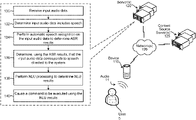
US 11361763 · 2022 · Amazon Technologies
How Smart Speakers Know You're Talking to Them After a Command
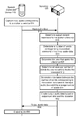
US 10276149 · 2019 · Amazon Technologies
How Voice Assistants Change Their Speech Based on How You Talk
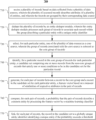
US 11704899 · 2023 · Meta Platforms
How Assistant Systems Combine Information About One Thing from Many Places
More to explore
More in Consumer Electronics
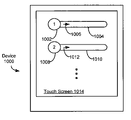
US 7657849 · 2010 · Apple Inc
How the iPhone's Slide-to-Unlock Gesture Works
US 7479949 · 2009 · Apple Inc
How Touchscreens Understand Your Finger Swipes and Scrolls
US 4528643 · 1985 · FPDC Inc
How Stores Make Custom Products On-Demand with Remote Approval
US 7469381 · 2008 · Apple Inc
How Touchscreens Show and Snap Back When You Scroll Past an Edge
New to patents?
Common Questions
Frequently Asked Questions
What does How Digital Assistants Control Apps and Ask for More Information cover?
This patent describes how a digital assistant on a device can understand what a user wants from a natural language command, find the right app, get a step-by-step guide from another device, and then ask the user for more details on the screen to complete the task with that app.
Who owns patent US 11204787?
Apple Inc owns this patent, granted in 2021.
When does this patent expire?
This patent is expected to expire on December 21, 2041, when the invention enters the public domain.
What is patent US 11204787 cited by?
This patent has been cited by 48 later patents that build on its ideas.
What problem does this patent solve?
This patent is significant because it outlines a sophisticated way for digital assistants to interact with and control other applications, especially third-party ones. It allows assistants like Siri to handle more complex, multi-step tasks by dynamically asking the user for missing information. This capability is crucial for making digital assistants truly useful beyond simple, built-in commands, expanding their reach into a vast ecosystem of applications.
What does this patent NOT cover?
Does not cover scenarios where the 'task flow' (the step-by-step guide) is not received from a 'second electronic device' but is instead entirely pre-programmed or generated on the primary device itself (Claim 1).
Same assignee
More from Apple Inc
Patent monitoring