How IBM Uses Resistive Memory Chips to Speed Up AI Training
A method for running AI neural networks directly on specialized hardware chips that store data as electrical resistance, making them faster and more energy-efficient than standard processors.
Original patent title: “Convolutional neural networks using resistive processing unit array”
A method for running AI neural networks directly on specialized hardware chips that store data as electrical resistance, making them faster and more energy-efficient than standard processors. Granted to International Business Machines in 2020 with 23 claims and 7 forward citations, and it is expected to expire in 2037.
Coverage
What does this patent actually cover?
This patent describes a way to perform the heavy math required for artificial intelligence (specifically convolutional neural networks) directly on a grid of resistive memory devices. Instead of moving data back and forth between a processor and memory, the system uses the physical properties of the memory cells themselves to perform calculations. By applying voltage pulses to these cells, the system can calculate forward passes, backward passes, and weight updates simultaneously across the entire array. This allows the hardware to handle complex image recognition tasks by using the flow of electricity through the grid to represent mathematical operations.
The gap
What does this patent NOT cover?
- Does not cover standard digital processors like CPUs or GPUs that rely on traditional binary logic gates
- Does not cover software-only implementations of neural networks that run on conventional computer architectures
- Does not cover non-resistive memory technologies like traditional DRAM or SRAM for performing these specific analog computations
These exclusions are unique to PatentBrief — derived from the actual claim language, not patent-office boilerplate.
Key facts
What made this novel
It treats the physical resistance of a memory cell as a mathematical weight, turning the entire memory array into a giant, parallel calculator that computes matrix multiplications using Ohm's Law.
The Patent Drawing
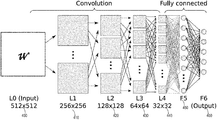
Schematic visualization of the patent's claim structure. Hand-drawn diagrams in progress for each landmark patent.
Where you've seen this
Real-world examples
Experimental IBM RPU (Resistive Processing Unit) chips
In-memory computing hardware prototypes
Analog AI accelerators
Why it matters
The bigger picture
Training large AI models is incredibly energy-intensive and slow on current hardware. By moving the computation into the memory itself, IBM's approach aims to drastically reduce the energy cost and time required to train AI. This is a significant step toward 'in-memory computing,' which is a major focus for companies trying to build more sustainable and powerful AI hardware.
Filed
April 6, 2017
Granted
August 11, 2020
Market context
Who's building on this
Companies in this space
IBM remains the primary developer of this specific RPU architecture. Other companies like Intel, Mythic, and various academic research groups are exploring similar in-memory computing concepts to bypass the 'memory wall' that limits current AI performance.
Market impact
This technology represents a shift toward specialized hardware for AI. It challenges the dominance of general-purpose GPUs by proposing a more efficient, domain-specific architecture that could eventually lower the barrier to entry for training massive AI models.
Claim 1 — Plain English
What this patent covers
This patent describes a way to perform the heavy math required for artificial intelligence (specifically convolutional neural networks) directly on a grid of resistive memory devices. Instead of moving data back and forth between a processor and memory, the system uses the physical properties of the memory cells themselves to perform calculations. By applying voltage pulses to these cells, the system can calculate forward passes, backward passes, and weight updates simultaneously across the entire array. This allows the hardware to handle complex image recognition tasks by using the flow of electricity through the grid to represent mathematical operations.
The clever bit
It treats the physical resistance of a memory cell as a mathematical weight, turning the entire memory array into a giant, parallel calculator that computes matrix multiplications using Ohm's Law.
What it does not cover
- Does not cover standard digital processors like CPUs or GPUs that rely on traditional binary logic gates
- Does not cover software-only implementations of neural networks that run on conventional computer architectures
- Does not cover non-resistive memory technologies like traditional DRAM or SRAM for performing these specific analog computations
Patent timeline
Application submitted to the patent office
Application published, typically 18 months after filing
Patent officially issued
Patent enters public domain
PatentBrief Score
Impact Score
Moderate
Citation count
18/40
Early citations
Claim breadth
15/20
Broad claimsclaimsThe numbered statements at the end of a patent that legally define what the inventor owns.Read more →
Recency
10/20
Granted 5–10 years ago
Assignee scale
0/20
Independent or smaller assigneeassigneeThe entity that owns the patent — usually the inventor's employer or a company.Read more →
PatentBrief Impact Score — based on citation count, claim breadth, recency, and assignee scale. Not a legal assessment.
Heuristic Value Estimate
What this patent might be worth
$125K – $399K
Midpoint $250K · 10.5 yr remaining · industry ×1.6
Heuristic only — blends forward/backward citation counts, claim scope, time remaining, litigation history, and CPC-derived industry baseline. Real valuations need a professional appraisal.
Claim text not yet imported for this patent
The original legal language
Original claims
23 claims as filed with the patent office.
Concepts involved
Citations
Patent lineage
Cite this patent
Gokmen, T. (2020). How IBM Uses Resistive Memory Chips to Speed Up AI Training (U.S. Patent No. 10,740,671). U.S. Patent and Trademark Office. https://patentbrief.org/patent/us/10740671/convolutional-neural-networks-using-resistive-processing-unit-array
Auto-generated from the patent record. Double-check author order and the issue date against the official USPTO document before submitting.
Embed
Add this patent to your site
Drop this plain-English patent card into any blog post or article — free, no signup. It always links back to the full breakdown here.
<div data-patentlens-widget data-patent-number="US10740671"></div>
<script src="https://patentbrief.org/embed.js" async></script>
Stay in the loop
Get a weekly digest of new patents.
One email per week. No spam. Unsubscribe anytime.
Keep exploring
Related patents you should know
US 4683195 · 1987
How to Make Billions of Copies of a DNA Segment
This patent describes the Polymerase Chain Reaction (PCR), a method to rapidly create many copies of a specific piece of DNA or RNA, enabling its detection and analysis.
Cetus Corp
US 8697359 · 2014
How to Edit Genes in Human Cells Using an Engineered CRISPR System
This patent describes an engineered CRISPR-Cas9 system for precisely cutting DNA in eukaryotic cells to change how genes work, opening the door for gene editing in complex organisms.
Massachusetts Institute of Technology
US 7657849 · 2010
How the iPhone's Slide-to-Unlock Gesture Works
Apple's 2010 patent describes unlocking a device by dragging a specific graphical image across the touchscreen along a predefined path, a gesture that became iconic with the original iPhone.
Apple Inc
US 4733665 · 1988
How Doctors Implant a Permanent Stent Using a Balloon
This patent describes the method for placing a permanent, expandable wire mesh tube inside a blood vessel or other body tube using a balloon-tipped catheter to widen it and keep it open.
Expandable Grafts Partnership
US 4965188 · 1990
How to Make Many Copies of a DNA Piece with Heat
This patent describes the Polymerase Chain Reaction (PCR) method, a technique to make millions of copies of a specific DNA segment using a heat-resistant enzyme and repeated temperature changes.
Cetus Corp
US 4235871 · 1980
How to Encapsulate Active Materials in Lipid Bubbles Efficiently
This patent describes a method for trapping biologically active substances inside tiny, multi-layered fat bubbles called liposomes, using a specific water-in-oil emulsion and gel-forming process to improve how much material gets captured.
Individual
Semantically similar
You might also find these interesting
US 10248907 · 2019 · International Business Machines
How a Single Electronic Component Can Learn and Process AI Data
US 10956815 · 2021 · International Business Machines
How to Fix Faulty Memory Cells in AI Chips
US 11507804 · 2022 · Commissariat a lEnergie Atomique et aux Energies Alternatives CEA
Efficient Hardware for Spiking Neural Network Calculations
US 11741188 · 2023 · Western Digital Technologies
How a Chip Uses Memory to Speed Up AI Calculations
More to explore
More in Semiconductors & Chips
US 5563422 · 1996 · Nichia Chemical Industries Ltd
How Nichia Created the First Practical Blue LED Electrodes
US 10373050 · 2019 · Qualcomm Inc
How to Make AI Run Faster on Smaller Computer Chips
US 2981877 · 1961 · Fairchild Semiconductor Corp
How Robert Noyce Invented the Modern Integrated Circuit
US 2569347 · 1951 · Bell Telephone Laboratories Inc
The Invention of the Junction Transistor
New to patents?
Common Questions
Frequently Asked Questions
What does How IBM Uses Resistive Memory Chips to Speed Up AI Training cover?
A method for running AI neural networks directly on specialized hardware chips that store data as electrical resistance, making them faster and more energy-efficient than standard processors.
Who owns patent US 10740671?
International Business Machines owns this patent, granted in 2020.
When does this patent expire?
This patent is expected to expire on April 6, 2037, when the invention enters the public domain.
What is patent US 10740671 cited by?
This patent has been cited by 7 later patents that build on its ideas.
What problem does this patent solve?
Training large AI models is incredibly energy-intensive and slow on current hardware. By moving the computation into the memory itself, IBM's approach aims to drastically reduce the energy cost and time required to train AI. This is a significant step toward 'in-memory computing,' which is a major focus for companies trying to build more sustainable and powerful AI hardware.
What does this patent NOT cover?
Does not cover standard digital processors like CPUs or GPUs that rely on traditional binary logic gates
Same assignee
More from International Business Machines
Patent monitoring