How to Make AI Run Faster on Smaller Computer Chips
A method to shrink complex AI models by converting their high-precision math into simpler, faster formats that run efficiently on mobile devices.
Original patent title: “Fixed point neural network based on floating point neural network quantization”
A method to shrink complex AI models by converting their high-precision math into simpler, faster formats that run efficiently on mobile devices. Granted to Qualcomm Inc in 2019 with 27 claims and 17 forward citations.
Coverage
What does this patent actually cover?
This patent describes a way to compress artificial intelligence models, specifically neural networks, so they can run on hardware with limited power, like smartphones. It works by converting 'floating point' numbers—which are very precise but computationally expensive—into 'fixed point' numbers, which are much simpler for a processor to handle. The core mechanism involves analyzing the statistical 'moments' (like the average or spread) of the data flowing through the network. By shifting these values to create a 'zero-mean distribution' and adjusting the math functions accordingly, the system ensures the model stays accurate even after it has been simplified.
The gap
What does this patent NOT cover?
- Does not cover general neural network training methods that do not involve quantization.
- Does not cover hardware-specific circuit designs for performing multiplication or addition.
- Does not cover techniques that use retraining or fine-tuning to recover accuracy after quantization.
- Does not cover non-neural network machine learning models like support vector machines.
These exclusions are unique to PatentBrief — derived from the actual claim language, not patent-office boilerplate.
Key facts
What made this novel
Instead of just rounding numbers, the patent shifts the entire distribution of data to be centered around zero, which minimizes the mathematical errors introduced when you switch from high-precision to low-precision math.
Schematic visualization of the patent's claim structure. Hand-drawn diagrams in progress for each landmark patent.
Where you've seen this
Real-world examples
Qualcomm Snapdragon mobile processors
On-device AI image processing
Mobile voice assistants
Edge computing AI accelerators
Why it matters
The bigger picture
As AI models grew larger, they became too heavy for mobile processors to run in real-time. This patent provides a standardized way for companies like Qualcomm to ensure their mobile chips can handle advanced AI tasks, such as image recognition or voice processing, without draining the battery or overheating the device.
Filed
October 22, 2015
Granted
August 6, 2019
Market context
Who's building on this
Companies in this space
Qualcomm remains a primary player, integrating these techniques into their Snapdragon series of system-on-chips. Major AI framework developers like Google (TensorFlow) and Meta (PyTorch) have also built extensive quantization toolkits that utilize similar statistical principles to optimize models for mobile deployment.
Market impact
This patent helped enable the transition of AI from massive cloud servers to local, on-device execution. It facilitated the widespread adoption of 'Edge AI,' allowing smartphones to perform sophisticated tasks like real-time object detection and natural language processing locally without needing a constant internet connection.
Claim 1 — Plain English
What this patent covers
This patent describes a way to compress artificial intelligence models, specifically neural networks, so they can run on hardware with limited power, like smartphones. It works by converting 'floating point' numbers—which are very precise but computationally expensive—into 'fixed point' numbers, which are much simpler for a processor to handle. The core mechanism involves analyzing the statistical 'moments' (like the average or spread) of the data flowing through the network. By shifting these values to create a 'zero-mean distribution' and adjusting the math functions accordingly, the system ensures the model stays accurate even after it has been simplified.
The clever bit
Instead of just rounding numbers, the patent shifts the entire distribution of data to be centered around zero, which minimizes the mathematical errors introduced when you switch from high-precision to low-precision math.
What it does not cover
- Does not cover general neural network training methods that do not involve quantization.
- Does not cover hardware-specific circuit designs for performing multiplication or addition.
- Does not cover techniques that use retraining or fine-tuning to recover accuracy after quantization.
- Does not cover non-neural network machine learning models like support vector machines.
Patent timeline
Application submitted to the patent office
Application published, typically 18 months after filing
Patent officially issued
PatentBrief Score
Impact Score
Strong
Citation count
25/40
Moderately cited
Claim breadth
18/20
Very broad protection
Recency
10/20
Granted 5–10 years ago
Assignee scale
20/20
Major company or institution
PatentBrief Impact Score — based on citation count, claim breadth, recency, and assignee scale. Not a legal assessment.
Heuristic Value Estimate
What this patent might be worth
$187K – $599K
Midpoint $374K · 9.1 yr remaining · industry ×1.6
Heuristic only — blends forward/backward citation counts, claim scope, time remaining, litigation history, and CPC-derived industry baseline. Real valuations need a professional appraisal.
Claim text not yet imported for this patent
The original legal language
Original claims
27 claims as filed with the patent office.
Concepts involved
Citations
Patent lineage
Cite this patent
Majumdar, S., HOWARD, D. E., Julian, D. J., ANNAPUREDDY, V. S. R., Lin, D., & BELL, I. W. R. (2019). How to Make AI Run Faster on Smaller Computer Chips (U.S. Patent No. 10,373,050). U.S. Patent and Trademark Office. https://patentbrief.org/patent/us/10373050/tensor-processing-unit-tpu
Auto-generated from the patent record. Double-check author order and the issue date against the official USPTO document before submitting.
Embed
Add this patent to your site
Drop this plain-English patent card into any blog post or article — free, no signup. It always links back to the full breakdown here.
<div data-patentlens-widget data-patent-number="US10373050"></div>
<script src="https://patentbrief.org/embed.js" async></script>
Stay in the loop
Get a weekly digest of new patents.
One email per week. No spam. Unsubscribe anytime.
Keep exploring
Related patents you should know
US 4683195 · 1987
How to Make Billions of Copies of a DNA Segment
This patent describes the Polymerase Chain Reaction (PCR), a method to rapidly create many copies of a specific piece of DNA or RNA, enabling its detection and analysis.
Cetus Corp
US 8697359 · 2014
How to Edit Genes in Human Cells Using an Engineered CRISPR System
This patent describes an engineered CRISPR-Cas9 system for precisely cutting DNA in eukaryotic cells to change how genes work, opening the door for gene editing in complex organisms.
Massachusetts Institute of Technology
US 7657849 · 2010
How the iPhone's Slide-to-Unlock Gesture Works
Apple's 2010 patent describes unlocking a device by dragging a specific graphical image across the touchscreen along a predefined path, a gesture that became iconic with the original iPhone.
Apple Inc
US 4733665 · 1988
How Doctors Implant a Permanent Stent Using a Balloon
This patent describes the method for placing a permanent, expandable wire mesh tube inside a blood vessel or other body tube using a balloon-tipped catheter to widen it and keep it open.
Expandable Grafts Partnership
US 4965188 · 1990
How to Make Many Copies of a DNA Piece with Heat
This patent describes the Polymerase Chain Reaction (PCR) method, a technique to make millions of copies of a specific DNA segment using a heat-resistant enzyme and repeated temperature changes.
Cetus Corp
US 4235871 · 1980
How to Encapsulate Active Materials in Lipid Bubbles Efficiently
This patent describes a method for trapping biologically active substances inside tiny, multi-layered fat bubbles called liposomes, using a specific water-in-oil emulsion and gel-forming process to improve how much material gets captured.
Individual
Semantically similar
You might also find these interesting
US 11544573 · 2023 · Google LLC
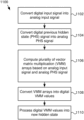
How Projection Neural Networks Speed Up AI Predictions
US 11741188 · 2023 · Western Digital Technologies
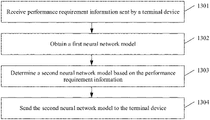
How a Chip Uses Memory to Speed Up AI Calculations
US 20220383078 · Huawei Technologies Co
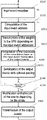
Adapting AI Models to Fit Device Resources
US 11507804 · 2022 · Commissariat a lEnergie Atomique et aux Energies Alternatives CEA
Efficient Hardware for Spiking Neural Network Calculations
More to explore
More in Semiconductors & Chips
US 5563422 · 1996 · Nichia Chemical Industries Ltd
How Nichia Created the First Practical Blue LED Electrodes
US 2981877 · 1961 · Fairchild Semiconductor Corp
How Robert Noyce Invented the Modern Integrated Circuit
US 2569347 · 1951 · Bell Telephone Laboratories Inc
The Invention of the Junction Transistor
US 2524035 · 1950 · Bell Telephone Laboratories Inc
The Invention of the Transistor
New to patents?
Common Questions
Frequently Asked Questions
What does How to Make AI Run Faster on Smaller Computer Chips cover?
A method to shrink complex AI models by converting their high-precision math into simpler, faster formats that run efficiently on mobile devices.
Who owns patent US 10373050?
Qualcomm Inc owns this patent, granted in 2019.
When does this patent expire?
This patent is expected to expire on August 6, 2039, when the invention enters the public domain.
What is patent US 10373050 cited by?
This patent has been cited by 17 later patents that build on its ideas.
What problem does this patent solve?
As AI models grew larger, they became too heavy for mobile processors to run in real-time. This patent provides a standardized way for companies like Qualcomm to ensure their mobile chips can handle advanced AI tasks, such as image recognition or voice processing, without draining the battery or overheating the device.
What does this patent NOT cover?
Does not cover general neural network training methods that do not involve quantization.
Patent monitoring