How Memory Chips Program Data More Accurately by Re-checking Cells
SanDisk's patent describes a method to program memory cells more precisely by re-testing cells that initially passed a data check, then adjusting their programming to prevent data errors.
Original patent title: “Efficient reprogramming method for tightening a threshold voltage distribution in a memory device”
SanDisk's patent describes a method to program memory cells more precisely by re-testing cells that initially passed a data check, then adjusting their programming to prevent data errors. Granted to SanDisk Technologies in 2015 with 22 claims and 12 forward citations, and it is expected to expire in 2034.
Coverage
What does this patent actually cover?
This patent details a method for programming memory cells, especially charge-trapping memory, to ensure data is stored accurately. It starts with an "initial number of program-verify iterations" where a programming voltage is applied and a check (verify test) is performed. Cells that pass this initial test enter a temporary lockout mode. Crucially, after these initial steps, a "checkpoint program-verify iteration" occurs where *all* memory cells for a target data state are re-tested, even those that passed before. If a cell that previously passed now fails this checkpoint test (due to an effect called detrapping), it is reprogrammed further during an "additional number of program-verify iterations." The patent specifies that the voltage on the "bit lines" connected to these re-failing cells can be set higher to program them more intensely, as described in claimclaimA numbered sentence at the end of a patent that legally defines what the inventor owns. The most important section.Read more → 2, helping to tighten the "threshold voltage distribution."
The gap
What does this patent NOT cover?
- Does not cover programming methods that do not include a specific 'checkpoint program-verify iteration' to re-test previously passed cells.
- Does not cover memory programming where the programming voltage does not increase in fixed steps during iterations, as described in claimclaimA numbered sentence at the end of a patent that legally defines what the inventor owns. The most important section.Read more → 4.
- Does not cover memory types other than charge-trapping memory cells, which are particularly susceptible to detrapping.
- Does not cover programming techniques that do not adjust bit line voltages differently for cells based on their prior verify test results.
- Does not cover programming methods that do not aim to tighten the threshold voltage distribution by reprogramming specific cell groups.
These exclusions are unique to PatentBrief — derived from the actual claim language, not patent-office boilerplate.
Key facts
What made this novel
The truly clever part is the introduction of a 'checkpoint program-verify iteration' that re-tests memory cells that had *already passed* an earlier verify test. This allows the system to catch and correct for 'detrapping' effects, where charge might leak out after initial programming, by giving those specific cells a more intense reprogramming boost.
The Patent Drawing
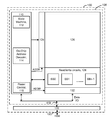
Schematic visualization of the patent's claim structure. Hand-drawn diagrams in progress for each landmark patent.
Where you've seen this
Real-world examples
Solid-state drives (SSDs)
USB flash drives
SD cards
eMMC storage in smartphones
3D NAND flash memory chips
Enterprise data center storage arrays
Why it matters
The bigger picture
In modern flash memory, especially 3D stacked non-volatile memory, storing multiple bits per cell requires extremely precise control over the electrical charge (threshold voltage). Detrapping, where charge leaks out, can cause a cell's voltage to drop, leading to data errors. This method helps prevent such errors by ensuring cells maintain their intended charge level, which is critical for the reliability and longevity of solid-state drives and other memory products.
Filed
May 8, 2014
Granted
October 20, 2015
Market context
Who's building on this
Companies in this space
SanDisk Technologies LLC, now part of Western Digital, continues to be a major player in flash memory development. Other leading memory manufacturers like Samsung, Kioxia, Micron Technology, and SK Hynix are also actively developing and implementing advanced programming techniques to improve the reliability and density of their 3D NAND flash products, building on similar principles of precise voltage control and error correction.
Market impact
This type of invention directly impacts the performance and reliability of flash memory products. By enabling more accurate and stable data storage, it allows for higher density memory chips (more data per chip) and longer-lasting solid-state drives. This has been crucial for the growth of the SSD market, the proliferation of smartphones with large storage capacities, and the expansion of cloud data centers, all of which rely heavily on robust non-volatile memory.
Claim 1 — Plain English
What this patent covers
This patent details a method for programming memory cells, especially charge-trapping memory, to ensure data is stored accurately. It starts with an "initial number of program-verify iterations" where a programming voltage is applied and a check (verify test) is performed. Cells that pass this initial test enter a temporary lockout mode. Crucially, after these initial steps, a "checkpoint program-verify iteration" occurs where *all* memory cells for a target data state are re-tested, even those that passed before. If a cell that previously passed now fails this checkpoint test (due to an effect called detrapping), it is reprogrammed further during an "additional number of program-verify iterations." The patent specifies that the voltage on the "bit lines" connected to these re-failing cells can be set higher to program them more intensely, as described in claim 2, helping to tighten the "threshold voltage distribution."
The clever bit
The truly clever part is the introduction of a 'checkpoint program-verify iteration' that re-tests memory cells that had *already passed* an earlier verify test. This allows the system to catch and correct for 'detrapping' effects, where charge might leak out after initial programming, by giving those specific cells a more intense reprogramming boost.
What it does not cover
- Does not cover programming methods that do not include a specific 'checkpoint program-verify iteration' to re-test previously passed cells.
- Does not cover memory programming where the programming voltage does not increase in fixed steps during iterations, as described in claim 4.
- Does not cover memory types other than charge-trapping memory cells, which are particularly susceptible to detrapping.
- Does not cover programming techniques that do not adjust bit line voltages differently for cells based on their prior verify test results.
- Does not cover programming methods that do not aim to tighten the threshold voltage distribution by reprogramming specific cell groups.
Patent timeline
Application submitted to the patent office
Application published, typically 18 months after filing
Patent officially issued
Patent enters public domain
PatentBrief Score
Impact Score
Moderate
Citation count
22/40
Moderately cited
Claim breadth
15/20
Broad claimsclaimsThe numbered statements at the end of a patent that legally define what the inventor owns.Read more →
Recency
5/20
Granted 10–20 years ago
Assignee scale
0/20
Independent or smaller assigneeassigneeThe entity that owns the patent — usually the inventor's employer or a company.Read more →
PatentBrief Impact Score — based on citation count, claim breadth, recency, and assignee scale. Not a legal assessment.
Heuristic Value Estimate
What this patent might be worth
$117K – $374K
Midpoint $234K · 7.4 yr remaining · industry ×1.5
Heuristic only — blends forward/backward citation counts, claim scope, time remaining, litigation history, and CPC-derived industry baseline. Real valuations need a professional appraisal.
Claim text not yet imported for this patent
The original legal language
Original claims
22 claims as filed with the patent office.
Concepts involved
Citations
Patent lineage
Cite this patent
Chen, H., Dong, Y., & Pang, L. (2015). How Memory Chips Program Data More Accurately by Re-checking Cells (U.S. Patent No. 9,165,659). U.S. Patent and Trademark Office. https://patentbrief.org/patent/us/9165659/efficient-reprogramming-method-for-tightening-a-threshold-voltage-distribution-i
Auto-generated from the patent record. Double-check author order and the issue date against the official USPTO document before submitting.
Embed
Add this patent to your site
Drop this plain-English patent card into any blog post or article — free, no signup. It always links back to the full breakdown here.
<div data-patentlens-widget data-patent-number="US9165659"></div>
<script src="https://patentbrief.org/embed.js" async></script>
Stay in the loop
Get a weekly digest of new patents.
One email per week. No spam. Unsubscribe anytime.
Keep exploring
Related patents you should know
US 4683195 · 1987
How to Make Billions of Copies of a DNA Segment
This patent describes the Polymerase Chain Reaction (PCR), a method to rapidly create many copies of a specific piece of DNA or RNA, enabling its detection and analysis.
Cetus Corp
US 8697359 · 2014
How to Edit Genes in Human Cells Using an Engineered CRISPR System
This patent describes an engineered CRISPR-Cas9 system for precisely cutting DNA in eukaryotic cells to change how genes work, opening the door for gene editing in complex organisms.
Massachusetts Institute of Technology
US 7657849 · 2010
How the iPhone's Slide-to-Unlock Gesture Works
Apple's 2010 patent describes unlocking a device by dragging a specific graphical image across the touchscreen along a predefined path, a gesture that became iconic with the original iPhone.
Apple Inc
US 4733665 · 1988
How Doctors Implant a Permanent Stent Using a Balloon
This patent describes the method for placing a permanent, expandable wire mesh tube inside a blood vessel or other body tube using a balloon-tipped catheter to widen it and keep it open.
Expandable Grafts Partnership
US 4965188 · 1990
How to Make Many Copies of a DNA Piece with Heat
This patent describes the Polymerase Chain Reaction (PCR) method, a technique to make millions of copies of a specific DNA segment using a heat-resistant enzyme and repeated temperature changes.
Cetus Corp
US 4235871 · 1980
How to Encapsulate Active Materials in Lipid Bubbles Efficiently
This patent describes a method for trapping biologically active substances inside tiny, multi-layered fat bubbles called liposomes, using a specific water-in-oil emulsion and gel-forming process to improve how much material gets captured.
Individual
Semantically similar
You might also find these interesting
US 9947413 · 2018 · Seoul National University R&DB Foundation
How to Program 3D Layered Memory Chips More Precisely
US 12142328 · 2024 · Yangtze Memory Technologies Co
How to Precisely Erase Data in 3D NAND Flash Memory

US 12380954 · 2025 · SanDisk Technologies
How 3D NAND Memory Cells Are Programmed More Efficiently
US 9685235 · 2017 · Seoul National University R&DB Foundation
How to Prepare 3D Flash Memory for Use
More to explore
More in Semiconductors & Chips
US 5563422 · 1996 · Nichia Chemical Industries Ltd
How Nichia Created the First Practical Blue LED Electrodes
US 10373050 · 2019 · Qualcomm Inc
How to Make AI Run Faster on Smaller Computer Chips
US 2981877 · 1961 · Fairchild Semiconductor Corp
How Robert Noyce Invented the Modern Integrated Circuit
US 2569347 · 1951 · Bell Telephone Laboratories Inc
The Invention of the Junction Transistor
New to patents?
Common Questions
Frequently Asked Questions
What does How Memory Chips Program Data More Accurately by Re-checking Cells cover?
SanDisk's patent describes a method to program memory cells more precisely by re-testing cells that initially passed a data check, then adjusting their programming to prevent data errors.
Who owns patent US 9165659?
SanDisk Technologies owns this patent, granted in 2015.
When does this patent expire?
This patent is expected to expire on May 8, 2034, when the invention enters the public domain.
What is patent US 9165659 cited by?
This patent has been cited by 12 later patents that build on its ideas.
What problem does this patent solve?
In modern flash memory, especially 3D stacked non-volatile memory, storing multiple bits per cell requires extremely precise control over the electrical charge (threshold voltage). Detrapping, where charge leaks out, can cause a cell's voltage to drop, leading to data errors. This method helps prevent such errors by ensuring cells maintain their intended charge level, which is critical for the reliability and longevity of solid-state drives and other memory products.
What does this patent NOT cover?
Does not cover programming methods that do not include a specific 'checkpoint program-verify iteration' to re-test previously passed cells.
Same assignee
More from SanDisk Technologies
Patent monitoring