How to Clean Files by Rebuilding Them Instead of Scanning Them
A security method that stops malware by rebuilding files from scratch based on strict format rules, rather than looking for known viruses.
Original patent title: “Resisting the spread of unwanted code and data”
A security method that stops malware by rebuilding files from scratch based on strict format rules, rather than looking for known viruses. Granted to Glasswall IP Ltd in 2016 with 54 claims and 7 forward citations.
Coverage
What does this patent actually cover?
This patent describes a file sanitization process that ignores the traditional 'detect and block' approach used by antivirus software. Instead of scanning for known malicious signatures, the system parses an incoming file to see if it matches a strict set of rules for its specific file type (like a PDF or Word doc). If the system finds data that doesn't fit the rules, it checks if that data is authorized; if so, it effectively 'rebuilds' the file from the ground up using only clean, verified data. This ensures the final output is a structurally perfect version of the original, leaving behind any hidden malicious code that might have been embedded in the non-conforming parts.
The gap
What does this patent NOT cover?
- Does not cover traditional antivirus methods that rely on signature-based scanning of files.
- Does not cover systems that simply delete non-conforming data without attempting to regenerate a valid file.
- Does not cover methods that do not perform a structural parse of the file's internal data format.
These exclusions are unique to PatentBrief — derived from the actual claim language, not patent-office boilerplate.
Key facts
What made this novel
The system treats the file as a set of rules rather than a static object, rebuilding it to be structurally compliant. By ignoring the 'content' and focusing on the 'format,' it makes it impossible for hidden malicious code to survive the reconstruction process.
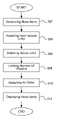
Schematic visualization of the patent's claim structure. Hand-drawn diagrams in progress for each landmark patent.
Where you've seen this
Real-world examples
Glasswall CDR technology
Email attachment sanitization gateways
Secure document upload portals
Why it matters
The bigger picture
This technology represents a shift toward 'Content Disarm and Reconstruction' (CDR). By focusing on the structure of a file rather than its reputation or signature, it can neutralize 'zero-day' threats—new viruses that antivirus software hasn't seen before. It is a critical component for high-security environments where the risk of an unknown file containing a hidden exploit is too high to ignore.
Filed
October 2, 2014
Granted
December 6, 2016
Market context
Who's building on this
Companies in this space
Glasswall IP Ltd remains the primary developer of this specific approach. The broader industry of Content Disarm and Reconstruction (CDR) is also populated by companies like OPSWAT and Deep Secure, who utilize similar structural validation techniques to protect enterprise networks.
Market impact
This patent helped formalize the CDR market as a distinct alternative to traditional antivirus. It shifted the industry focus from 'detecting bad things' to 'enforcing good structure,' which has become a standard requirement for protecting critical infrastructure against sophisticated, non-signature-based cyberattacks.
Claim 1 — Plain English
What this patent covers
This patent describes a file sanitization process that ignores the traditional 'detect and block' approach used by antivirus software. Instead of scanning for known malicious signatures, the system parses an incoming file to see if it matches a strict set of rules for its specific file type (like a PDF or Word doc). If the system finds data that doesn't fit the rules, it checks if that data is authorized; if so, it effectively 'rebuilds' the file from the ground up using only clean, verified data. This ensures the final output is a structurally perfect version of the original, leaving behind any hidden malicious code that might have been embedded in the non-conforming parts.
The clever bit
The system treats the file as a set of rules rather than a static object, rebuilding it to be structurally compliant. By ignoring the 'content' and focusing on the 'format,' it makes it impossible for hidden malicious code to survive the reconstruction process.
What it does not cover
- Does not cover traditional antivirus methods that rely on signature-based scanning of files.
- Does not cover systems that simply delete non-conforming data without attempting to regenerate a valid file.
- Does not cover methods that do not perform a structural parse of the file's internal data format.
Patent timeline
Application submitted to the patent office
Application published, typically 18 months after filing
Patent officially issued
PatentBrief Score
Impact Score
Moderate
Citation count
18/40
Early citations
Claim breadth
20/20
Very broad protection
Recency
10/20
Granted 5–10 years ago
Assignee scale
0/20
Independent or smaller assigneeassigneeThe entity that owns the patent — usually the inventor's employer or a company.Read more →
PatentBrief Impact Score — based on citation count, claim breadth, recency, and assignee scale. Not a legal assessment.
Heuristic Value Estimate
What this patent might be worth
$134K – $430K
Midpoint $269K · 8.1 yr remaining · industry ×1.4
Heuristic only — blends forward/backward citation counts, claim scope, time remaining, litigation history, and CPC-derived industry baseline. Real valuations need a professional appraisal.
Claim text not yet imported for this patent
The original legal language
Original claims
54 claims as filed with the patent office.
Concepts involved
Citations
Patent lineage
Cite this patent
Scales, N. J. (2016). How to Clean Files by Rebuilding Them Instead of Scanning Them (U.S. Patent No. 9,516,045). U.S. Patent and Trademark Office. https://patentbrief.org/patent/us/9516045/azure-active-directory
Auto-generated from the patent record. Double-check author order and the issue date against the official USPTO document before submitting.
Embed
Add this patent to your site
Drop this plain-English patent card into any blog post or article — free, no signup. It always links back to the full breakdown here.
<div data-patentlens-widget data-patent-number="US9516045"></div>
<script src="https://patentbrief.org/embed.js" async></script>
Stay in the loop
Get a weekly digest of new patents.
One email per week. No spam. Unsubscribe anytime.
Keep exploring
Related patents you should know
US 4683195 · 1987
How to Make Billions of Copies of a DNA Segment
This patent describes the Polymerase Chain Reaction (PCR), a method to rapidly create many copies of a specific piece of DNA or RNA, enabling its detection and analysis.
Cetus Corp
US 8697359 · 2014
How to Edit Genes in Human Cells Using an Engineered CRISPR System
This patent describes an engineered CRISPR-Cas9 system for precisely cutting DNA in eukaryotic cells to change how genes work, opening the door for gene editing in complex organisms.
Massachusetts Institute of Technology
US 7657849 · 2010
How the iPhone's Slide-to-Unlock Gesture Works
Apple's 2010 patent describes unlocking a device by dragging a specific graphical image across the touchscreen along a predefined path, a gesture that became iconic with the original iPhone.
Apple Inc
US 4733665 · 1988
How Doctors Implant a Permanent Stent Using a Balloon
This patent describes the method for placing a permanent, expandable wire mesh tube inside a blood vessel or other body tube using a balloon-tipped catheter to widen it and keep it open.
Expandable Grafts Partnership
US 4965188 · 1990
How to Make Many Copies of a DNA Piece with Heat
This patent describes the Polymerase Chain Reaction (PCR) method, a technique to make millions of copies of a specific DNA segment using a heat-resistant enzyme and repeated temperature changes.
Cetus Corp
US 4235871 · 1980
How to Encapsulate Active Materials in Lipid Bubbles Efficiently
This patent describes a method for trapping biologically active substances inside tiny, multi-layered fat bubbles called liposomes, using a specific water-in-oil emulsion and gel-forming process to improve how much material gets captured.
Individual
Semantically similar
You might also find these interesting
US 11606373 · 2023 · Darktrace Holdings
AI System That Learns Normal Email Use to Spot and Stop Cyber Threats
US 9934408 · 2018 · Wistaria Trading Ltd
How a Local Server Decides to Save or Degrade Digital Content
US 9276922 · 2016 · Palo Alto Research Center Inc
How to Securely Pass Data Packets Within a Trusted Network
US 10102356 · 2018 · EMC IP Holding Co LLC
Securing Data Storage Commands with Passcodes
More to explore
More in Software & Internet
US 4405829 · 1983 · Massachusetts Institute of Technology
How RSA Public-Key Encryption Keeps Digital Messages Secret
US 6285999 · 2001 · Leland Stanford Junior University
How Websites Get Ranked by Importance
US 5960411 · 1999 · Amazon com Inc
How Amazon's One-Click Ordering Works for Online Purchases
US 7669123 · 2010 · Facebook Inc
Displaying Friends' Activities in a Social Network Feed
New to patents?
Common Questions
Frequently Asked Questions
What does How to Clean Files by Rebuilding Them Instead of Scanning Them cover?
A security method that stops malware by rebuilding files from scratch based on strict format rules, rather than looking for known viruses.
Who owns patent US 9516045?
Glasswall IP Ltd owns this patent, granted in 2016.
When does this patent expire?
This patent is expected to expire on December 6, 2036, when the invention enters the public domain.
What is patent US 9516045 cited by?
This patent has been cited by 7 later patents that build on its ideas.
What problem does this patent solve?
This technology represents a shift toward 'Content Disarm and Reconstruction' (CDR). By focusing on the structure of a file rather than its reputation or signature, it can neutralize 'zero-day' threats—new viruses that antivirus software hasn't seen before. It is a critical component for high-security environments where the risk of an unknown file containing a hidden exploit is too high to ignore.
What does this patent NOT cover?
Does not cover traditional antivirus methods that rely on signature-based scanning of files.
Patent monitoring