Solving Complex Math Problems with Groups of Quantum Bits
This patent describes a system that uses multiple physical quantum bits, called qubits, grouped together to form 'logical qubits' to solve specific hard math problems known as Quadratic Unconstrained Binary Optimization problems.
Original patent title: “Systems, devices, and methods for analog processing”
This patent describes a system that uses multiple physical quantum bits, called qubits, grouped together to form 'logical qubits' to solve specific hard math problems known as Quadratic Unconstrained Binary Optimization problems. Granted to D Wave Systems in 2012 with 25 claims and 140 forward citations, and it is expected to expire in 2028.
Coverage
What does this patent actually cover?
The system is designed to solve Quadratic Unconstrained Binary Optimization (QUBO) problems by using a network of physical qubits. Each physical qubit has a 'bias' that controls its input, and they are connected by 'physical qubit couplers.' Some couplers act as 'intra-logical qubit couplers' to strongly link pairs of physical qubits, forming a single 'logical qubit' (ClaimclaimA numbered sentence at the end of a patent that legally defines what the inventor owns. The most important section.Read more → 1). Each logical qubit represents a variable in the QUBO problem. Other couplers, called 'inter-logical qubit couplers,' connect physical qubits from different logical qubits, representing the relationships between variables in the problem. By finding the lowest energy state of this physical system, the patent claimsclaimsThe numbered statements at the end of a patent that legally define what the inventor owns.Read more → a solution to the QUBO problem (Claim 18). For example, if you want to find the best way to assign tasks to workers, where some tasks must be done together and others have dependencies, this system could model and solve that problem.
The gap
What does this patent NOT cover?
- Does not cover solving optimization problems other than Quadratic Unconstrained Binary Optimization (QUBO) problems.
- Does not cover quantum computing architectures that do not group physical qubits into logical qubits for problem variables.
- Does not cover systems where the intra-logical qubit couplers do not ferromagnetically couple physical qubits.
- Does not cover purely classical computing systems or gate-based quantum computers that operate differently from this annealing approach.
- Does not cover systems where the physical qubits are not superconducting flux qubits, as specified in ClaimclaimA numbered sentence at the end of a patent that legally defines what the inventor owns. The most important section.Read more → 2 for one embodiment.
These exclusions are unique to PatentBrief — derived from the actual claim language, not patent-office boilerplate.
Key facts
What made this novel
The core innovation is using multiple physical qubits, strongly coupled together, to represent a single 'logical qubit' variable in an optimization problem. This allows for greater robustness and potentially error correction compared to using a single physical qubit for each variable, making the system more reliable in finding solutions to complex problems.
The Patent Drawing
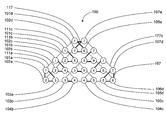
Schematic visualization of the patent's claim structure. Hand-drawn diagrams in progress for each landmark patent.
Where you've seen this
Real-world examples
D-Wave 2000Q quantum computer
D-Wave Advantage quantum computer
Quantum annealing systems for logistics optimization
Quantum annealing systems for financial modeling
Why it matters
The bigger picture
This patent is foundational for a specific type of quantum computer called a quantum annealer, which excels at solving optimization problems. These problems are common in fields like logistics, finance, and drug discovery, where finding the best solution among many possibilities can save significant time and resources. D-Wave Systems Inc. has commercialized this approach, building machines that implement these principles to tackle real-world computational challenges.
Filed
November 6, 2008
Granted
May 29, 2012
Market context
Who's building on this
Companies in this space
D-Wave Systems Inc., the assigneeassigneeThe entity that owns the patent — usually the inventor's employer or a company.Read more →, remains a leading company actively building and advancing quantum annealing systems based on these principles. They continue to develop new generations of quantum computers that implement and improve upon the architecture described in this patent, focusing on commercial applications for complex optimization problems.
Market impact
This patent contributed significantly to the development of the quantum annealing market, particularly by D-Wave Systems Inc. It helped establish a viable architecture for solving specific, hard optimization problems using quantum mechanics, distinct from the gate-based universal quantum computing paradigm. This enabled the creation of early commercial quantum computers, offering a new tool for industries facing computationally intensive challenges.
Claim 1 — Plain English
What this patent covers
The system is designed to solve Quadratic Unconstrained Binary Optimization (QUBO) problems by using a network of physical qubits. Each physical qubit has a 'bias' that controls its input, and they are connected by 'physical qubit couplers.' Some couplers act as 'intra-logical qubit couplers' to strongly link pairs of physical qubits, forming a single 'logical qubit' (Claim 1). Each logical qubit represents a variable in the QUBO problem. Other couplers, called 'inter-logical qubit couplers,' connect physical qubits from different logical qubits, representing the relationships between variables in the problem. By finding the lowest energy state of this physical system, the patent claims a solution to the QUBO problem (Claim 18). For example, if you want to find the best way to assign tasks to workers, where some tasks must be done together and others have dependencies, this system could model and solve that problem.
The clever bit
The core innovation is using multiple physical qubits, strongly coupled together, to represent a single 'logical qubit' variable in an optimization problem. This allows for greater robustness and potentially error correction compared to using a single physical qubit for each variable, making the system more reliable in finding solutions to complex problems.
What it does not cover
- Does not cover solving optimization problems other than Quadratic Unconstrained Binary Optimization (QUBO) problems.
- Does not cover quantum computing architectures that do not group physical qubits into logical qubits for problem variables.
- Does not cover systems where the intra-logical qubit couplers do not ferromagnetically couple physical qubits.
- Does not cover purely classical computing systems or gate-based quantum computers that operate differently from this annealing approach.
- Does not cover systems where the physical qubits are not superconducting flux qubits, as specified in Claim 2 for one embodiment.
Patent timeline
Application submitted to the patent office
Application published, typically 18 months after filing
Patent officially issued
Patent enters public domain
PatentBrief Score
Impact Score
Strong
Citation count
40/40
Highly cited
Claim breadth
17/20
Very broad protection
Recency
5/20
Granted 10–20 years ago
Assignee scale
0/20
Independent or smaller assigneeassigneeThe entity that owns the patent — usually the inventor's employer or a company.Read more →
PatentBrief Impact Score — based on citation count, claim breadth, recency, and assignee scale. Not a legal assessment.
Heuristic Value Estimate
What this patent might be worth
$250K – $799K
Midpoint $499K · 2.0 yr remaining · industry ×1.6
Heuristic only — blends forward/backward citation counts, claim scope, time remaining, litigation history, and CPC-derived industry baseline. Real valuations need a professional appraisal.
Patent Claims
0 independent claims · 1 dependent
Claims are the legal boundaries of the patent. An independent claim stands alone. A dependent claim adds limitations to its parent, narrowing — but not broadening — the scope.
The original legal language
Original claims
25 claims as filed with the patent office.
Concepts involved
Citations
Patent lineage
Cite this patent
Choi, V. (2012). Solving Complex Math Problems with Groups of Quantum Bits (U.S. Patent No. 8,190,548). U.S. Patent and Trademark Office. https://patentbrief.org/patent/us/8190548/systems-devices-and-methods-for-analog-processing
Auto-generated from the patent record. Double-check author order and the issue date against the official USPTO document before submitting.
Embed
Add this patent to your site
Drop this plain-English patent card into any blog post or article — free, no signup. It always links back to the full breakdown here.
<div data-patentlens-widget data-patent-number="US8190548"></div>
<script src="https://patentbrief.org/embed.js" async></script>
Stay in the loop
Get a weekly digest of new patents.
One email per week. No spam. Unsubscribe anytime.
Keep exploring
Related patents you should know
US 4683195 · 1987
How to Make Billions of Copies of a DNA Segment
This patent describes the Polymerase Chain Reaction (PCR), a method to rapidly create many copies of a specific piece of DNA or RNA, enabling its detection and analysis.
Cetus Corp
US 8697359 · 2014
How to Edit Genes in Human Cells Using an Engineered CRISPR System
This patent describes an engineered CRISPR-Cas9 system for precisely cutting DNA in eukaryotic cells to change how genes work, opening the door for gene editing in complex organisms.
Massachusetts Institute of Technology
US 7657849 · 2010
How the iPhone's Slide-to-Unlock Gesture Works
Apple's 2010 patent describes unlocking a device by dragging a specific graphical image across the touchscreen along a predefined path, a gesture that became iconic with the original iPhone.
Apple Inc
US 4733665 · 1988
How Doctors Implant a Permanent Stent Using a Balloon
This patent describes the method for placing a permanent, expandable wire mesh tube inside a blood vessel or other body tube using a balloon-tipped catheter to widen it and keep it open.
Expandable Grafts Partnership
US 4965188 · 1990
How to Make Many Copies of a DNA Piece with Heat
This patent describes the Polymerase Chain Reaction (PCR) method, a technique to make millions of copies of a specific DNA segment using a heat-resistant enzyme and repeated temperature changes.
Cetus Corp
US 4235871 · 1980
How to Encapsulate Active Materials in Lipid Bubbles Efficiently
This patent describes a method for trapping biologically active substances inside tiny, multi-layered fat bubbles called liposomes, using a specific water-in-oil emulsion and gel-forming process to improve how much material gets captured.
Individual
Semantically similar
You might also find these interesting
US 12008436 · 2024 · Quantum Computing
Solving Big Math Problems with Small Quantum Computers
US 8102185 · 2012 · D Wave Systems
How to Precisely Control Two Quantum Bits in a Superconducting Computer
US 20230229951 · Technologies Infinityq
How to Build a Room-Temperature Quantum-Like Computer with Regular Electronics
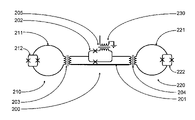
US 20080238531
How to Connect Quantum Computer Bits with a Superconducting Circuit
More to explore
More in Semiconductors & Chips
US 5563422 · 1996 · Nichia Chemical Industries Ltd
How Nichia Created the First Practical Blue LED Electrodes
US 10373050 · 2019 · Qualcomm Inc
How to Make AI Run Faster on Smaller Computer Chips
US 2981877 · 1961 · Fairchild Semiconductor Corp
How Robert Noyce Invented the Modern Integrated Circuit
US 2569347 · 1951 · Bell Telephone Laboratories Inc
The Invention of the Junction Transistor
New to patents?
Common Questions
Frequently Asked Questions
What does Solving Complex Math Problems with Groups of Quantum Bits cover?
This patent describes a system that uses multiple physical quantum bits, called qubits, grouped together to form 'logical qubits' to solve specific hard math problems known as Quadratic Unconstrained Binary Optimization problems.
Who owns patent US 8190548?
D Wave Systems owns this patent, granted in 2012.
When does this patent expire?
This patent is expected to expire on November 6, 2028, when the invention enters the public domain.
What is patent US 8190548 cited by?
This patent has been cited by 140 later patents that build on its ideas.
What problem does this patent solve?
This patent is foundational for a specific type of quantum computer called a quantum annealer, which excels at solving optimization problems. These problems are common in fields like logistics, finance, and drug discovery, where finding the best solution among many possibilities can save significant time and resources. D-Wave Systems Inc. has commercialized this approach, building machines that implement these principles to tackle real-world computational challenges.
What does this patent NOT cover?
Does not cover solving optimization problems other than Quadratic Unconstrained Binary Optimization (QUBO) problems.
Same assignee
More from D Wave Systems
Patent monitoring