AI System for Diagnosing Machines and Managing Data in Factories
This patent describes a system that uses artificial intelligence to detect problems in industrial machines while smartly adjusting how much data it collects and sends to avoid overwhelming the network.
Original patent title: “Methods and systems of diagnosing machine components using neural networks and having bandwidth allocation”
This patent describes a system that uses artificial intelligence to detect problems in industrial machines while smartly adjusting how much data it collects and sends to avoid overwhelming the network. Granted to Strong Force IoT Portfolio 2016 in 2021 with 20 claims and 3 forward citations, and it is expected to expire in 2038.
Coverage
What does this patent actually cover?
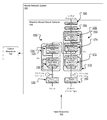
The system collects data from various sensors connected to industrial machines, like a robot's vibration sensors or a factory line's temperature gauges. A 'data collector' gathers this information from a selected group of these sensors, called 'input channels,' based on a specific routine (ClaimclaimA numbered sentence at the end of a patent that legally defines what the inventor owns. The most important section.Read more → 1). An 'expert system analysis circuit' then uses a type of artificial intelligence called a 'neural network' (which could be probabilistic, time delay, or convolutional, as per Claim 1) to analyze these data streams and identify 'fault conditions' or problems with the machine components (Claim 1). Crucially, the system also monitors the total amount of data being collected, called the 'aggregate rate' (Claim 1). If this rate goes over the network's current capacity, known as the 'bandwidth allocation rate,' the system automatically asks the network for more bandwidth (Claim 1). Until more bandwidth is available, it can temporarily increase data storage capacity (Claim 1), or it might reduce the data by eliminating some collected information (Claim 2), deactivating monitoring points (Claim 4), or reducing how often data is sampled or its detail level (Claim 6). For example, it could detect an unusual vibration pattern in a motor and, if the network is busy, temporarily reduce the sampling rate of less critical sensors to ensure the critical vibration data gets through.
The gap
What does this patent NOT cover?
- Does not cover systems that diagnose machine faults without using a neural network as part of their expert system analysis circuit.
- Does not cover general data collection systems that do not dynamically monitor and request changes to network bandwidth allocation rates.
- Does not cover systems that only detect faults but do not implement specific data reduction strategies like eliminating data, deactivating monitoring points, or modifying sampling parameters when bandwidth is exceeded.
- Does not cover systems operating outside of an industrial environment or not focused on machine components.
- Does not cover systems that simply drop data without first attempting to increase bandwidth allocation or manage data capacity.
These exclusions are unique to PatentBrief — derived from the actual claim language, not patent-office boilerplate.
Key facts
What made this novel
The truly clever part is combining AI-driven fault detection with an adaptive system that actively manages network bandwidth and data collection in real-time. It doesn't just detect issues; it also ensures the data needed for detection can actually get where it needs to go, even under network strain, by intelligently requesting more bandwidth or reducing less critical data.
The Patent Drawing
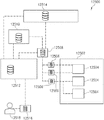
Schematic visualization of the patent's claim structure. Hand-drawn diagrams in progress for each landmark patent.
Where you've seen this
Real-world examples
Predictive maintenance systems in smart factories
Industrial IoT platforms for equipment monitoring
Condition monitoring systems for manufacturing robots
Sensor networks in power plants or refineries
Automated diagnostics for heavy machinery
Why it matters
The bigger picture
This technology is important because it helps factories prevent expensive machine breakdowns by catching problems early using AI. By intelligently managing data flow, it ensures that critical diagnostic information can be sent and analyzed even when network resources are limited, which is common in complex industrial settings. This capability can significantly reduce downtime and maintenance costs, making industrial operations more efficient and reliable.
Filed
December 21, 2018
Granted
September 21, 2021
Market context
Who's building on this
Companies in this space
Companies focused on Industrial IoT and predictive maintenance are actively developing and deploying similar technologies. Major players like Siemens, GE Digital, and PTC offer platforms that integrate AI for asset performance management and operational intelligence. Startups in the edge computing and industrial analytics space are also building solutions that incorporate intelligent data management for factory environments.
Market impact
This type of technology has driven the adoption of AI and machine learning in industrial settings, shifting maintenance from reactive repairs to proactive prediction. It enables more robust and reliable Industrial IoT deployments by addressing the practical challenges of network congestion and data overload. This has led to increased operational efficiency, reduced unplanned downtime, and a greater emphasis on data-driven decision-making in manufacturing and heavy industry.
Claim 1 — Plain English
What this patent covers
The system collects data from various sensors connected to industrial machines, like a robot's vibration sensors or a factory line's temperature gauges. A 'data collector' gathers this information from a selected group of these sensors, called 'input channels,' based on a specific routine (Claim 1). An 'expert system analysis circuit' then uses a type of artificial intelligence called a 'neural network' (which could be probabilistic, time delay, or convolutional, as per Claim 1) to analyze these data streams and identify 'fault conditions' or problems with the machine components (Claim 1). Crucially, the system also monitors the total amount of data being collected, called the 'aggregate rate' (Claim 1). If this rate goes over the network's current capacity, known as the 'bandwidth allocation rate,' the system automatically asks the network for more bandwidth (Claim 1). Until more bandwidth is available, it can temporarily increase data storage capacity (Claim 1), or it might reduce the data by eliminating some collected information (Claim 2), deactivating monitoring points (Claim 4), or reducing how often data is sampled or its detail level (Claim 6). For example, it could detect an unusual vibration pattern in a motor and, if the network is busy, temporarily reduce the sampling rate of less critical sensors to ensure the critical vibration data gets through.
The clever bit
The truly clever part is combining AI-driven fault detection with an adaptive system that actively manages network bandwidth and data collection in real-time. It doesn't just detect issues; it also ensures the data needed for detection can actually get where it needs to go, even under network strain, by intelligently requesting more bandwidth or reducing less critical data.
What it does not cover
- Does not cover systems that diagnose machine faults without using a neural network as part of their expert system analysis circuit.
- Does not cover general data collection systems that do not dynamically monitor and request changes to network bandwidth allocation rates.
- Does not cover systems that only detect faults but do not implement specific data reduction strategies like eliminating data, deactivating monitoring points, or modifying sampling parameters when bandwidth is exceeded.
- Does not cover systems operating outside of an industrial environment or not focused on machine components.
- Does not cover systems that simply drop data without first attempting to increase bandwidth allocation or manage data capacity.
Patent timeline
Application submitted to the patent office
Application published, typically 18 months after filing
Patent officially issued
Patent enters public domain
PatentBrief Score
Impact Score
Moderate
Citation count
12/40
Early citations
Claim breadth
13/20
Broad claimsclaimsThe numbered statements at the end of a patent that legally define what the inventor owns.Read more →
Recency
20/20
Granted within 5 years
Assignee scale
0/20
Independent or smaller assigneeassigneeThe entity that owns the patent — usually the inventor's employer or a company.Read more →
PatentBrief Impact Score — based on citation count, claim breadth, recency, and assignee scale. Not a legal assessment.
Heuristic Value Estimate
What this patent might be worth
$88K – $281K
Midpoint $176K · 12.3 yr remaining · industry ×1.5
Heuristic only — blends forward/backward citation counts, claim scope, time remaining, litigation history, and CPC-derived industry baseline. Real valuations need a professional appraisal.
Claim text not yet imported for this patent
The original legal language
Original claims
20 claims as filed with the patent office.
Concepts involved
Citations
Patent lineage
Cite this patent
JR., G. W. D., McGuckin, J. P., Cella, C. H., & Desai, M. (2021). AI System for Diagnosing Machines and Managing Data in Factories (U.S. Patent No. 11,126,171). U.S. Patent and Trademark Office. https://patentbrief.org/patent/us/11126171/methods-and-systems-of-diagnosing-machine-components-using-neural-networks-and-h
Auto-generated from the patent record. Double-check author order and the issue date against the official USPTO document before submitting.
Embed
Add this patent to your site
Drop this plain-English patent card into any blog post or article — free, no signup. It always links back to the full breakdown here.
<div data-patentlens-widget data-patent-number="US11126171"></div>
<script src="https://patentbrief.org/embed.js" async></script>
Stay in the loop
Get a weekly digest of new patents.
One email per week. No spam. Unsubscribe anytime.
Keep exploring
Related patents you should know
US 4683195 · 1987
How to Make Billions of Copies of a DNA Segment
This patent describes the Polymerase Chain Reaction (PCR), a method to rapidly create many copies of a specific piece of DNA or RNA, enabling its detection and analysis.
Cetus Corp
US 8697359 · 2014
How to Edit Genes in Human Cells Using an Engineered CRISPR System
This patent describes an engineered CRISPR-Cas9 system for precisely cutting DNA in eukaryotic cells to change how genes work, opening the door for gene editing in complex organisms.
Massachusetts Institute of Technology
US 7657849 · 2010
How the iPhone's Slide-to-Unlock Gesture Works
Apple's 2010 patent describes unlocking a device by dragging a specific graphical image across the touchscreen along a predefined path, a gesture that became iconic with the original iPhone.
Apple Inc
US 4733665 · 1988
How Doctors Implant a Permanent Stent Using a Balloon
This patent describes the method for placing a permanent, expandable wire mesh tube inside a blood vessel or other body tube using a balloon-tipped catheter to widen it and keep it open.
Expandable Grafts Partnership
US 4965188 · 1990
How to Make Many Copies of a DNA Piece with Heat
This patent describes the Polymerase Chain Reaction (PCR) method, a technique to make millions of copies of a specific DNA segment using a heat-resistant enzyme and repeated temperature changes.
Cetus Corp
US 4235871 · 1980
How to Encapsulate Active Materials in Lipid Bubbles Efficiently
This patent describes a method for trapping biologically active substances inside tiny, multi-layered fat bubbles called liposomes, using a specific water-in-oil emulsion and gel-forming process to improve how much material gets captured.
Individual
Semantically similar
You might also find these interesting
US 7664715 · 2010 · Caterpillar Japan Ltd
How Caterpillar Compresses Heavy Machinery Data Using Neural Networks

US 20250363357 · Ubotica Technologies
How to Update AI on Small Devices with Slow Internet
US 12243216 · 2025 · Musashi Auto Parts Canada
How AI Cameras Check Factory Parts for Flaws
US 9256823 · 2016 · Qualcomm Technologies
Efficiently Updating Connections in AI Brains
More to explore
More in AI & Machine Learning
US 10452978 · 2019 · Google LLC
How AI Models Understand Language Using 'Attention'
US 6523026 · 2003 · Huntsman International LLC
How Computers Find Hidden Connections Between Different Fields of Knowledge
US 11615208 · 2023 · Capital One Services LLC
How Cloud Systems Automatically Create and Train AI Data Models
US 10402750 · 2019 · Facebook Inc
How Facebook Uses Deep Learning to Predict What You Might Like
New to patents?
Common Questions
Frequently Asked Questions
What does AI System for Diagnosing Machines and Managing Data in Factories cover?
This patent describes a system that uses artificial intelligence to detect problems in industrial machines while smartly adjusting how much data it collects and sends to avoid overwhelming the network.
Who owns patent US 11126171?
Strong Force IoT Portfolio 2016 owns this patent, granted in 2021.
When does this patent expire?
This patent is expected to expire on December 21, 2038, when the invention enters the public domain.
What is patent US 11126171 cited by?
This patent has been cited by 3 later patents that build on its ideas.
What problem does this patent solve?
This technology is important because it helps factories prevent expensive machine breakdowns by catching problems early using AI. By intelligently managing data flow, it ensures that critical diagnostic information can be sent and analyzed even when network resources are limited, which is common in complex industrial settings. This capability can significantly reduce downtime and maintenance costs, making industrial operations more efficient and reliable.
What does this patent NOT cover?
Does not cover systems that diagnose machine faults without using a neural network as part of their expert system analysis circuit.
Patent monitoring