How AI and Blockchain Team Up to Predict What You'll Buy
This patent describes a system where different companies can privately share insights from their customer data using AI and blockchain to build a better model for predicting if a customer will buy a product.
Original patent title: “Methods and systems for imrpoving a product conversion rate based on federated learning and blockchain”
This patent describes a system where different companies can privately share insights from their customer data using AI and blockchain to build a better model for predicting if a customer will buy a product. Owned by Hangzhou Tonghuashun Data Processing Co with 23 claims and 12 forward citations, and it is expected to expire in 2043.
Coverage
What does this patent actually cover?
This system helps improve how well businesses can predict if a customer will buy a product. A central 'supervisor node' receives a request from an 'initiator node' (like an online store) that wants to build a better prediction model (ClaimclaimA numbered sentence at the end of a patent that legally defines what the inventor owns. The most important section.Read more → 1). The supervisor then broadcasts this request across a secure 'blockchain federation' to find other 'participant nodes' (other businesses) willing to contribute their data insights. Instead of sharing raw customer data, these nodes only share 'representation data' – a summary or pattern of their customer information. Based on this shared representation data, the supervisor decides the best way to combine their knowledge, choosing between a 'longitudinal' or 'horizontal' federated learning strategy (Claim 3). Finally, the supervisor coordinates the initiator and participant nodes to collaboratively train a 'conversion rate model' without any single party seeing all the raw data. For example, an e-commerce site could use this to predict if a user will purchase a specific item after viewing it, by combining its own data insights with those from other related businesses.
The gap
What does this patent NOT cover?
- Does not cover traditional machine learning systems where all raw user data is collected and processed in one central location.
- Does not cover federated learning systems that do not use a blockchain for coordination, broadcasting requests, or recording rewards.
- Does not cover predicting general user behaviors; it specifically focuses on predicting a 'product conversion rate' for a 'preset product'.
- Does not cover systems that directly share raw user data between nodes; it emphasizes sharing 'representation data' instead.
- Does not cover a system without a designated 'supervisor node' to coordinate the federated learning process.
These exclusions are unique to PatentBrief — derived from the actual claim language, not patent-office boilerplate.
Key facts
What made this novel
The clever part is the integration of blockchain for secure and transparent coordination of federated learning, especially the dynamic selection of a 'longitudinal' or 'horizontal' learning strategy based on how similar the participating datasets are.
The Patent Drawing
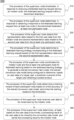
Schematic visualization of the patent's claim structure. Hand-drawn diagrams in progress for each landmark patent.
Where you've seen this
Real-world examples
Personalized product recommendations on e-commerce platforms
Targeted advertising campaigns in online retail
Fraud detection systems in financial services
Customer churn prediction in subscription services
Why it matters
The bigger picture
Predicting what customers will buy is crucial for businesses, but privacy concerns often limit how much data can be shared and used. This patent addresses that challenge by combining federated learning, which allows AI models to learn from decentralized data without direct sharing, with blockchain technology for secure and transparent coordination. This approach could enable more accurate prediction models by leveraging a wider range of data insights, while still protecting user privacy and complying with data regulations.
Filed
May 22, 2023
Market context
Who's building on this
Companies in this space
Companies like Google, NVIDIA, and IBM are actively developing federated learning technologies for various applications, including advertising and healthcare, to address data privacy concerns. Startups in the Web3 and AI space are also exploring how blockchain can enhance data security and collaboration in AI model training. Hangzhou Tonghuashun Data Processing Co., the assigneeassigneeThe entity that owns the patent — usually the inventor's employer or a company.Read more →, is a major financial information service provider in China, indicating its interest in leveraging these technologies for financial product conversion.
Market impact
This technology aims to overcome data silos and privacy regulations that hinder the development of highly accurate AI models. By enabling secure, privacy-preserving collaboration, it could lead to more effective advertising, personalized services, and risk assessment across industries. This approach could also reduce the need for companies to centralize sensitive user data, potentially lowering compliance costs and increasing consumer trust in AI-driven services.
Claim 1 — Plain English
What this patent covers
This system helps improve how well businesses can predict if a customer will buy a product. A central 'supervisor node' receives a request from an 'initiator node' (like an online store) that wants to build a better prediction model (Claim 1). The supervisor then broadcasts this request across a secure 'blockchain federation' to find other 'participant nodes' (other businesses) willing to contribute their data insights. Instead of sharing raw customer data, these nodes only share 'representation data' – a summary or pattern of their customer information. Based on this shared representation data, the supervisor decides the best way to combine their knowledge, choosing between a 'longitudinal' or 'horizontal' federated learning strategy (Claim 3). Finally, the supervisor coordinates the initiator and participant nodes to collaboratively train a 'conversion rate model' without any single party seeing all the raw data. For example, an e-commerce site could use this to predict if a user will purchase a specific item after viewing it, by combining its own data insights with those from other related businesses.
The clever bit
The clever part is the integration of blockchain for secure and transparent coordination of federated learning, especially the dynamic selection of a 'longitudinal' or 'horizontal' learning strategy based on how similar the participating datasets are.
What it does not cover
- Does not cover traditional machine learning systems where all raw user data is collected and processed in one central location.
- Does not cover federated learning systems that do not use a blockchain for coordination, broadcasting requests, or recording rewards.
- Does not cover predicting general user behaviors; it specifically focuses on predicting a 'product conversion rate' for a 'preset product'.
- Does not cover systems that directly share raw user data between nodes; it emphasizes sharing 'representation data' instead.
- Does not cover a system without a designated 'supervisor node' to coordinate the federated learning process.
Patent timeline
Application submitted to the patent office
Patent enters public domain
PatentBrief Score
Impact Score
Early stage
Citation count
22/40
Moderately cited
Claim breadth
15/20
Broad claimsclaimsThe numbered statements at the end of a patent that legally define what the inventor owns.Read more →
Recency
0/20
Older than 20 years
Assignee scale
0/20
Independent or smaller assigneeassigneeThe entity that owns the patent — usually the inventor's employer or a company.Read more →
PatentBrief Impact Score — based on citation count, claim breadth, recency, and assignee scale. Not a legal assessment.
Heuristic Value Estimate
What this patent might be worth
$105K – $335K
Midpoint $210K · 16.6 yr remaining · industry ×1.4
Heuristic only — blends forward/backward citation counts, claim scope, time remaining, litigation history, and CPC-derived industry baseline. Real valuations need a professional appraisal.
Claim text not yet imported for this patent
The original legal language
Original claims
23 claims as filed with the patent office.
Concepts involved
Citations
Patent lineage
Cite this patent
WEN, L., YAO, Y., Chen, M., MA, T., & BAO, Y. How AI and Blockchain Team Up to Predict What You'll Buy (U.S. Patent No. 20,230,419,182). U.S. Patent and Trademark Office. https://patentbrief.org/patent/us/20230419182/methods-and-systems-for-imrpoving-a-product-conversion-rate-based-on-federated-l
Auto-generated from the patent record. Double-check author order and the issue date against the official USPTO document before submitting.
Embed
Add this patent to your site
Drop this plain-English patent card into any blog post or article — free, no signup. It always links back to the full breakdown here.
<div data-patentlens-widget data-patent-number="US20230419182"></div>
<script src="https://patentbrief.org/embed.js" async></script>
Stay in the loop
Get a weekly digest of new patents.
One email per week. No spam. Unsubscribe anytime.
Keep exploring
Related patents you should know
US 4683195 · 1987
How to Make Billions of Copies of a DNA Segment
This patent describes the Polymerase Chain Reaction (PCR), a method to rapidly create many copies of a specific piece of DNA or RNA, enabling its detection and analysis.
Cetus Corp
US 8697359 · 2014
How to Edit Genes in Human Cells Using an Engineered CRISPR System
This patent describes an engineered CRISPR-Cas9 system for precisely cutting DNA in eukaryotic cells to change how genes work, opening the door for gene editing in complex organisms.
Massachusetts Institute of Technology
US 7657849 · 2010
How the iPhone's Slide-to-Unlock Gesture Works
Apple's 2010 patent describes unlocking a device by dragging a specific graphical image across the touchscreen along a predefined path, a gesture that became iconic with the original iPhone.
Apple Inc
US 4733665 · 1988
How Doctors Implant a Permanent Stent Using a Balloon
This patent describes the method for placing a permanent, expandable wire mesh tube inside a blood vessel or other body tube using a balloon-tipped catheter to widen it and keep it open.
Expandable Grafts Partnership
US 4965188 · 1990
How to Make Many Copies of a DNA Piece with Heat
This patent describes the Polymerase Chain Reaction (PCR) method, a technique to make millions of copies of a specific DNA segment using a heat-resistant enzyme and repeated temperature changes.
Cetus Corp
US 4235871 · 1980
How to Encapsulate Active Materials in Lipid Bubbles Efficiently
This patent describes a method for trapping biologically active substances inside tiny, multi-layered fat bubbles called liposomes, using a specific water-in-oil emulsion and gel-forming process to improve how much material gets captured.
Individual
Semantically similar
You might also find these interesting
US 11915111 · 2024 · CAE
How Training Systems Share AI Knowledge Without Sharing Private Student Data
US 12039012 · 2024 · Sharecare AI
Sharing AI Knowledge Between Private Datasets Using Synthetic Data

US 12518214 · 2026 · Nant Holdings IP
Training AI on Private Data Without Seeing It
US 20220012637 · Nokia Technologies Oy
Training AI Models Together with Unlabeled Data Using a Teacher
More to explore
More in Software & Internet
US 4405829 · 1983 · Massachusetts Institute of Technology
How RSA Public-Key Encryption Keeps Digital Messages Secret
US 6285999 · 2001 · Leland Stanford Junior University
How Websites Get Ranked by Importance
US 5960411 · 1999 · Amazon com Inc
How Amazon's One-Click Ordering Works for Online Purchases
US 7669123 · 2010 · Facebook Inc
Displaying Friends' Activities in a Social Network Feed
New to patents?
Common Questions
Frequently Asked Questions
What does How AI and Blockchain Team Up to Predict What You'll Buy cover?
This patent describes a system where different companies can privately share insights from their customer data using AI and blockchain to build a better model for predicting if a customer will buy a product.
Who owns patent US 20230419182?
This patent is owned by Hangzhou Tonghuashun Data Processing Co.
When does this patent expire?
This patent is expected to expire on May 22, 2043, when the invention enters the public domain.
What is patent US 20230419182 cited by?
This patent has been cited by 12 later patents that build on its ideas.
What problem does this patent solve?
Predicting what customers will buy is crucial for businesses, but privacy concerns often limit how much data can be shared and used. This patent addresses that challenge by combining federated learning, which allows AI models to learn from decentralized data without direct sharing, with blockchain technology for secure and transparent coordination. This approach could enable more accurate prediction models by leveraging a wider range of data insights, while still protecting user privacy and complying with data regulations.
What does this patent NOT cover?
Does not cover traditional machine learning systems where all raw user data is collected and processed in one central location.
Patent monitoring