How Farm Machines Stay Straight on Slopes for Different Tasks
This patent describes how a smart farm machine uses GPS and ground slope data to precisely adjust its tools sideways, ensuring follow-up tasks like fertilizing perfectly align with earlier tasks like seeding, even when working at different depths or heights.
Original patent title: “Guidance working depth compensation”
This patent describes how a smart farm machine uses GPS and ground slope data to precisely adjust its tools sideways, ensuring follow-up tasks like fertilizing perfectly align with earlier tasks like seeding, even when working at different depths or heights. Owned by AGCO International with 12 claims and 4 forward citations, and it is expected to expire in 2038.
Coverage
What does this patent actually cover?
The patent describes a mobile machine, like a tractor, that uses a receiver with an antenna to get its exact position (ClaimclaimA numbered sentence at the end of a patent that legally defines what the inventor owns. The most important section.Read more → 1). It records the machine's location and the depth a tool (implement) is working at during a first pass over a field (Claim 1). For a later pass, perhaps with a different tool or task, the machine's computing system calculates new "reference points" for a second path. These points consider the previously recorded data, the slope of the ground, and the desired working depth or height for the new task (Claim 1). Based on these calculated reference points, the machine then precisely shifts its implement sideways (adjusts its "lateral position") to ensure it follows the correct path relative to the first pass (Claim 1). For example, if a farmer first seeds deep in the soil, the system can then guide a sprayer to apply fertilizer directly above those seeds, even if the sprayer is working above ground and the field has a slope.
The gap
What does this patent NOT cover?
- Does not cover systems that adjust implement position only based on the current machine's path without considering a previously recorded path or ground slope.
- Does not cover systems that adjust implement position solely based on visual sensors without using position information and recorded working depth.
- Does not cover machines where the implement cannot be shifted laterally relative to the machine's forward movement.
- Does not cover single-stage farming operations that do not involve distinct functions over non-overlapping intervals of time.
- Does not cover systems that only adjust the working depth of an implement, rather than its lateral position.
These exclusions are unique to PatentBrief — derived from the actual claim language, not patent-office boilerplate.
Key facts
What made this novel
The cleverness lies in precisely calculating a second path's reference points by combining the first path's recorded position and depth with ground slope data and the second path's desired working depth or height. This allows for accurate alignment of different tasks, even when they occur at different vertical positions relative to the ground.
The Patent Drawing
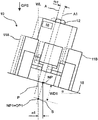
Schematic visualization of the patent's claim structure. Hand-drawn diagrams in progress for each landmark patent.
Where you've seen this
Real-world examples
AGCO Fendt VarioGuide systems
John Deere AutoTrac systems
Case IH AFS AccuGuide
Precision planting equipment
Automated fertilizer applicators
Why it matters
The bigger picture
This technology is crucial for precision agriculture, allowing farmers to perform multiple tasks on the same field with high accuracy. By compensating for ground slope and varying working depths, it ensures that subsequent operations, like fertilizing or weeding, are precisely aligned with initial operations like seeding. This precision can reduce waste of resources like seeds, fertilizer, and pesticides, leading to more efficient and environmentally friendly farming practices.
Filed
April 30, 2018
Market context
Who's building on this
Companies in this space
AGCO International GmbH, the assigneeassigneeThe entity that owns the patent — usually the inventor's employer or a company.Read more →, is a major player in agricultural machinery, owning brands like Fendt, Massey Ferguson, and Valtra. Other large agricultural equipment manufacturers like John Deere, CNH Industrial (Case IH, New Holland), and Kubota are also heavily invested in precision agriculture technologies that involve GPS guidance and implement control. Startups in agricultural robotics and automation are also developing similar systems for specialized tasks.
Market impact
This type of technology has significantly advanced precision agriculture, allowing for optimized resource use and increased yields. It enables farmers to apply inputs like seeds, fertilizers, and pesticides with much greater accuracy, reducing waste and environmental impact. This has led to the development of highly automated farming equipment and has driven the market for integrated farm management software and services.
Claim 1 — Plain English
What this patent covers
The patent describes a mobile machine, like a tractor, that uses a receiver with an antenna to get its exact position (Claim 1). It records the machine's location and the depth a tool (implement) is working at during a first pass over a field (Claim 1). For a later pass, perhaps with a different tool or task, the machine's computing system calculates new "reference points" for a second path. These points consider the previously recorded data, the slope of the ground, and the desired working depth or height for the new task (Claim 1). Based on these calculated reference points, the machine then precisely shifts its implement sideways (adjusts its "lateral position") to ensure it follows the correct path relative to the first pass (Claim 1). For example, if a farmer first seeds deep in the soil, the system can then guide a sprayer to apply fertilizer directly above those seeds, even if the sprayer is working above ground and the field has a slope.
The clever bit
The cleverness lies in precisely calculating a second path's reference points by combining the first path's recorded position and depth with ground slope data and the second path's desired working depth or height. This allows for accurate alignment of different tasks, even when they occur at different vertical positions relative to the ground.
What it does not cover
- Does not cover systems that adjust implement position only based on the current machine's path without considering a previously recorded path or ground slope.
- Does not cover systems that adjust implement position solely based on visual sensors without using position information and recorded working depth.
- Does not cover machines where the implement cannot be shifted laterally relative to the machine's forward movement.
- Does not cover single-stage farming operations that do not involve distinct functions over non-overlapping intervals of time.
- Does not cover systems that only adjust the working depth of an implement, rather than its lateral position.
Patent timeline
Application submitted to the patent office
Patent enters public domain
PatentBrief Score
Impact Score
Early stage
Citation count
14/40
Early citations
Claim breadth
8/20
Moderate scope
Recency
0/20
Older than 20 years
Assignee scale
0/20
Independent or smaller assigneeassigneeThe entity that owns the patent — usually the inventor's employer or a company.Read more →
PatentBrief Impact Score — based on citation count, claim breadth, recency, and assignee scale. Not a legal assessment.
Heuristic Value Estimate
What this patent might be worth
$55K – $176K
Midpoint $110K · 11.5 yr remaining · industry ×2.2
Heuristic only — blends forward/backward citation counts, claim scope, time remaining, litigation history, and CPC-derived industry baseline. Real valuations need a professional appraisal.
Claim text not yet imported for this patent
The original legal language
Original claims
12 claims as filed with the patent office.
Concepts involved
Citations
Patent lineage
Cite this patent
Kaufmann, O. How Farm Machines Stay Straight on Slopes for Different Tasks (U.S. Patent No. 20,210,161,059). U.S. Patent and Trademark Office. https://patentbrief.org/patent/us/20210161059/guidance-working-depth-compensation
Auto-generated from the patent record. Double-check author order and the issue date against the official USPTO document before submitting.
Embed
Add this patent to your site
Drop this plain-English patent card into any blog post or article — free, no signup. It always links back to the full breakdown here.
<div data-patentlens-widget data-patent-number="US20210161059"></div>
<script src="https://patentbrief.org/embed.js" async></script>
Stay in the loop
Get a weekly digest of new patents.
One email per week. No spam. Unsubscribe anytime.
Keep exploring
Related patents you should know
US 4683195 · 1987
How to Make Billions of Copies of a DNA Segment
This patent describes the Polymerase Chain Reaction (PCR), a method to rapidly create many copies of a specific piece of DNA or RNA, enabling its detection and analysis.
Cetus Corp
US 8697359 · 2014
How to Edit Genes in Human Cells Using an Engineered CRISPR System
This patent describes an engineered CRISPR-Cas9 system for precisely cutting DNA in eukaryotic cells to change how genes work, opening the door for gene editing in complex organisms.
Massachusetts Institute of Technology
US 7657849 · 2010
How the iPhone's Slide-to-Unlock Gesture Works
Apple's 2010 patent describes unlocking a device by dragging a specific graphical image across the touchscreen along a predefined path, a gesture that became iconic with the original iPhone.
Apple Inc
US 4733665 · 1988
How Doctors Implant a Permanent Stent Using a Balloon
This patent describes the method for placing a permanent, expandable wire mesh tube inside a blood vessel or other body tube using a balloon-tipped catheter to widen it and keep it open.
Expandable Grafts Partnership
US 4965188 · 1990
How to Make Many Copies of a DNA Piece with Heat
This patent describes the Polymerase Chain Reaction (PCR) method, a technique to make millions of copies of a specific DNA segment using a heat-resistant enzyme and repeated temperature changes.
Cetus Corp
US 4235871 · 1980
How to Encapsulate Active Materials in Lipid Bubbles Efficiently
This patent describes a method for trapping biologically active substances inside tiny, multi-layered fat bubbles called liposomes, using a specific water-in-oil emulsion and gel-forming process to improve how much material gets captured.
Individual
Semantically similar
You might also find these interesting
US 7747370 · 2010 · CNH Amercia
How Farm Tractors Automatically Turn at the End of a Row
US 8296052 · 2012 · CNH Amercia
How Farm Vehicles Plant Evenly in Odd-Shaped Fields
US 10133281 · 2018 · Pinnacle Vista
How a Drone Can Fly Ahead of a Moving Vehicle
US 10107627 · 2018 · Northrop Grumman Systems
How Vehicles and Drones Find Their Way Using Many Sensors
More to explore
More in Software & Internet
US 4405829 · 1983 · Massachusetts Institute of Technology
How RSA Public-Key Encryption Keeps Digital Messages Secret
US 6285999 · 2001 · Leland Stanford Junior University
How Websites Get Ranked by Importance
US 5960411 · 1999 · Amazon com Inc
How Amazon's One-Click Ordering Works for Online Purchases
US 7669123 · 2010 · Facebook Inc
Displaying Friends' Activities in a Social Network Feed
New to patents?
Common Questions
Frequently Asked Questions
What does How Farm Machines Stay Straight on Slopes for Different Tasks cover?
This patent describes how a smart farm machine uses GPS and ground slope data to precisely adjust its tools sideways, ensuring follow-up tasks like fertilizing perfectly align with earlier tasks like seeding, even when working at different depths or heights.
Who owns patent US 20210161059?
This patent is owned by AGCO International.
When does this patent expire?
This patent is expected to expire on April 30, 2038, when the invention enters the public domain.
What is patent US 20210161059 cited by?
This patent has been cited by 4 later patents that build on its ideas.
What problem does this patent solve?
This technology is crucial for precision agriculture, allowing farmers to perform multiple tasks on the same field with high accuracy. By compensating for ground slope and varying working depths, it ensures that subsequent operations, like fertilizing or weeding, are precisely aligned with initial operations like seeding. This precision can reduce waste of resources like seeds, fertilizer, and pesticides, leading to more efficient and environmentally friendly farming practices.
What does this patent NOT cover?
Does not cover systems that adjust implement position only based on the current machine's path without considering a previously recorded path or ground slope.
Patent monitoring