How an AI Learns to Recognize Objects by Generating Its Own Examples
This patent describes an enhanced artificial intelligence system that uses two competing networks, a generator and a discriminator, with special 'capsule layers' to create and recognize specific types of data, like images, even with limited initial examples.
Original patent title: “Enhanced generative adversarial network and target sample recognition method”
This patent describes an enhanced artificial intelligence system that uses two competing networks, a generator and a discriminator, with special 'capsule layers' to create and recognize specific types of data, like images, even with limited initial examples. Granted to Shenzhen Institutes of Advanced Technology in 2024 with 14 claims and 1 forward citation, and it is expected to expire in 2040.
Coverage
What does this patent actually cover?
This patent details an 'enhanced generative adversarial network' (GAN) and a method for recognizing specific 'target samples.' The system includes at least one 'enhanced generator' that creates new data from initial data, and at least one 'enhanced discriminator' that evaluates this generated data. The discriminator then provides feedback to the generator, helping it improve. A key feature of this enhanced discriminator, as described in claimclaimA numbered sentence at the end of a patent that legally defines what the inventor owns. The most important section.Read more → 1, is its structure: a 'convolution layer,' a 'basic capsule layer,' a 'convolution capsule layer,' and a 'classification capsule layer,' all connected in sequence. The number and setup of these layers can be adjusted based on the specific features of the 'target sample' being recognized. For example, to recognize a rare type of medical image, the system could generate many synthetic versions of that image, and the discriminator, with its capsule layers, would learn to distinguish them from other images, even if only a few real examples exist.
The gap
What does this patent NOT cover?
- Does not cover generative adversarial networks that do not include capsule layers within their discriminator component.
- Does not cover target sample recognition methods that do not use an enhanced generative adversarial network with the specified discriminator architecture.
- Does not cover GANs where the discriminator's convolution, basic capsule, convolution capsule, and classification capsule layers are not sequentially connected.
- Does not cover systems where the quantities and structure parameters of the discriminator's specific layers are not set according to the target sample's features.
These exclusions are unique to PatentBrief — derived from the actual claim language, not patent-office boilerplate.
Key facts
What made this novel
The truly clever part is the integration of capsule networks directly into the discriminator of a GAN. While GANs are good at generating and distinguishing data, capsule networks excel at understanding hierarchical relationships and orientations of features, allowing the discriminator to learn more robust and invariant representations of 'target samples' than traditional convolutional neural networks.
The Patent Drawing
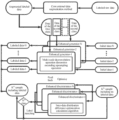
Schematic visualization of the patent's claim structure. Hand-drawn diagrams in progress for each landmark patent.
Where you've seen this
Real-world examples
Advanced medical image analysis for disease detection
High-fidelity synthetic data generation for training AI models
Facial recognition systems that need to identify faces from various angles
Quality control systems for manufacturing that detect subtle defects
Autonomous vehicle perception systems for recognizing specific objects
Why it matters
The bigger picture
Generative Adversarial Networks (GANs) are a powerful class of artificial intelligence models used for generating realistic data, like images, audio, or text. This patent enhances the discriminator part of a GAN by incorporating 'capsule layers,' which are known for better understanding spatial relationships and orientations in data, especially images. This improvement could lead to more robust and accurate recognition systems, particularly in fields where data is scarce or complex, such as medical diagnostics or specialized object detection.
Filed
August 21, 2020
Granted
November 26, 2024
Market context
Who's building on this
Companies in this space
Many research institutions and technology companies are actively developing and applying advanced generative adversarial networks and capsule networks. Companies like Google DeepMind, NVIDIA, and Meta AI are continuously pushing the boundaries of GAN research for content generation and data augmentation. Startups focused on AI for healthcare and industrial inspection are also exploring enhanced recognition methods for specialized data.
Market impact
The development of enhanced GANs, particularly with components like capsule networks, contributes to the broader advancement of artificial intelligence. This technology can enable more accurate and efficient data recognition, especially in scenarios with limited labeled data. It can impact industries requiring robust image analysis, such as medical imaging, security, and autonomous systems, by providing tools for better synthetic data generation and improved classification performance.
Claim 1 — Plain English
What this patent covers
This patent details an 'enhanced generative adversarial network' (GAN) and a method for recognizing specific 'target samples.' The system includes at least one 'enhanced generator' that creates new data from initial data, and at least one 'enhanced discriminator' that evaluates this generated data. The discriminator then provides feedback to the generator, helping it improve. A key feature of this enhanced discriminator, as described in claim 1, is its structure: a 'convolution layer,' a 'basic capsule layer,' a 'convolution capsule layer,' and a 'classification capsule layer,' all connected in sequence. The number and setup of these layers can be adjusted based on the specific features of the 'target sample' being recognized. For example, to recognize a rare type of medical image, the system could generate many synthetic versions of that image, and the discriminator, with its capsule layers, would learn to distinguish them from other images, even if only a few real examples exist.
The clever bit
The truly clever part is the integration of capsule networks directly into the discriminator of a GAN. While GANs are good at generating and distinguishing data, capsule networks excel at understanding hierarchical relationships and orientations of features, allowing the discriminator to learn more robust and invariant representations of 'target samples' than traditional convolutional neural networks.
What it does not cover
- Does not cover generative adversarial networks that do not include capsule layers within their discriminator component.
- Does not cover target sample recognition methods that do not use an enhanced generative adversarial network with the specified discriminator architecture.
- Does not cover GANs where the discriminator's convolution, basic capsule, convolution capsule, and classification capsule layers are not sequentially connected.
- Does not cover systems where the quantities and structure parameters of the discriminator's specific layers are not set according to the target sample's features.
Patent timeline
Application submitted to the patent office
Application published, typically 18 months after filing
Patent officially issued
Patent enters public domain
PatentBrief Score
Impact Score
Early stage
Citation count
6/40
Early citations
Claim breadth
9/20
Moderate scope
Recency
20/20
Granted within 5 years
Assignee scale
0/20
Independent or smaller assigneeassigneeThe entity that owns the patent — usually the inventor's employer or a company.Read more →
PatentBrief Impact Score — based on citation count, claim breadth, recency, and assignee scale. Not a legal assessment.
Heuristic Value Estimate
What this patent might be worth
$58K – $184K
Midpoint $115K · 13.8 yr remaining · industry ×1.6
Heuristic only — blends forward/backward citation counts, claim scope, time remaining, litigation history, and CPC-derived industry baseline. Real valuations need a professional appraisal.
Claim text not yet imported for this patent
The original legal language
Original claims
14 claims as filed with the patent office.
Concepts involved
Citations
Patent lineage
Cite this patent
Zhang, W., SHEN, Y., & Wang, S. (2024). How an AI Learns to Recognize Objects by Generating Its Own Examples (U.S. Patent No. 12,154,036). U.S. Patent and Trademark Office. https://patentbrief.org/patent/us/12154036/enhanced-generative-adversarial-network-and-target-sample-recognition-method
Auto-generated from the patent record. Double-check author order and the issue date against the official USPTO document before submitting.
Embed
Add this patent to your site
Drop this plain-English patent card into any blog post or article — free, no signup. It always links back to the full breakdown here.
<div data-patentlens-widget data-patent-number="US12154036"></div>
<script src="https://patentbrief.org/embed.js" async></script>
Stay in the loop
Get a weekly digest of new patents.
One email per week. No spam. Unsubscribe anytime.
Keep exploring
Related patents you should know
US 4683195 · 1987
How to Make Billions of Copies of a DNA Segment
This patent describes the Polymerase Chain Reaction (PCR), a method to rapidly create many copies of a specific piece of DNA or RNA, enabling its detection and analysis.
Cetus Corp
US 8697359 · 2014
How to Edit Genes in Human Cells Using an Engineered CRISPR System
This patent describes an engineered CRISPR-Cas9 system for precisely cutting DNA in eukaryotic cells to change how genes work, opening the door for gene editing in complex organisms.
Massachusetts Institute of Technology
US 7657849 · 2010
How the iPhone's Slide-to-Unlock Gesture Works
Apple's 2010 patent describes unlocking a device by dragging a specific graphical image across the touchscreen along a predefined path, a gesture that became iconic with the original iPhone.
Apple Inc
US 4733665 · 1988
How Doctors Implant a Permanent Stent Using a Balloon
This patent describes the method for placing a permanent, expandable wire mesh tube inside a blood vessel or other body tube using a balloon-tipped catheter to widen it and keep it open.
Expandable Grafts Partnership
US 4965188 · 1990
How to Make Many Copies of a DNA Piece with Heat
This patent describes the Polymerase Chain Reaction (PCR) method, a technique to make millions of copies of a specific DNA segment using a heat-resistant enzyme and repeated temperature changes.
Cetus Corp
US 4235871 · 1980
How to Encapsulate Active Materials in Lipid Bubbles Efficiently
This patent describes a method for trapping biologically active substances inside tiny, multi-layered fat bubbles called liposomes, using a specific water-in-oil emulsion and gel-forming process to improve how much material gets captured.
Individual
Semantically similar
You might also find these interesting
US 12141700 · 2024 · Naver
How AI Generates Images Based on Style and Content Cues
US 20230297446 · Capital One Services
How to Train AI Models with Fake Data Using Generative Networks
US 11756161 · 2023 · Shenzhen Institutes of Advanced Technology
AI Method for Sharpening Low-Dose PET Scans with Multi-Task Learning
US 11580646 · 2023 · Nanjing University of Posts and Telecommunications
Improving Medical Image Segmentation with AI and Fake Data
More to explore
More in AI & Machine Learning
US 10452978 · 2019 · Google LLC
How AI Models Understand Language Using 'Attention'
US 6523026 · 2003 · Huntsman International LLC
How Computers Find Hidden Connections Between Different Fields of Knowledge
US 11615208 · 2023 · Capital One Services LLC
How Cloud Systems Automatically Create and Train AI Data Models
US 10402750 · 2019 · Facebook Inc
How Facebook Uses Deep Learning to Predict What You Might Like
New to patents?
Common Questions
Frequently Asked Questions
What does How an AI Learns to Recognize Objects by Generating Its Own Examples cover?
This patent describes an enhanced artificial intelligence system that uses two competing networks, a generator and a discriminator, with special 'capsule layers' to create and recognize specific types of data, like images, even with limited initial examples.
Who owns patent US 12154036?
Shenzhen Institutes of Advanced Technology owns this patent, granted in 2024.
When does this patent expire?
This patent is expected to expire on August 21, 2040, when the invention enters the public domain.
What is patent US 12154036 cited by?
This patent has been cited by 1 later patents that build on its ideas.
What problem does this patent solve?
Generative Adversarial Networks (GANs) are a powerful class of artificial intelligence models used for generating realistic data, like images, audio, or text. This patent enhances the discriminator part of a GAN by incorporating 'capsule layers,' which are known for better understanding spatial relationships and orientations in data, especially images. This improvement could lead to more robust and accurate recognition systems, particularly in fields where data is scarce or complex, such as medical diagnostics or specialized object detection.
What does this patent NOT cover?
Does not cover generative adversarial networks that do not include capsule layers within their discriminator component.
Same assignee
More from Shenzhen Institutes of Advanced Technology
Patent monitoring