How to Make Meltdown-Proof Nuclear Fuel Pellets
This patent describes a method for making a new type of nuclear fuel called Dispersion Ceramic Micro-Encapsulated (DCM) fuel, which uses tiny, specially coated uranium particles embedded in a super-strong silicon carbide material to prevent meltdowns in nuclear reactors.
Original patent title: “Dispersion ceramic micro-encapsulated (DCM) nuclear fuel and related methods”
This patent describes a method for making a new type of nuclear fuel called Dispersion Ceramic Micro-Encapsulated (DCM) fuel, which uses tiny, specially coated uranium particles embedded in a super-strong silicon carbide material to prevent meltdowns in nuclear reactors. Granted to Ultra Safe Nuclear in 2019 with 20 claims and 12 forward citations, and it is expected to expire in 2037.
Coverage
What does this patent actually cover?
The patent outlines a method (ClaimclaimA numbered sentence at the end of a patent that legally defines what the inventor owns. The most important section.Read more → 1) for manufacturing Dispersion Ceramic Micro-Encapsulated (DCM) nuclear fuel. This process involves creating at least two different sizes of 'tristructural-isotropic (TRISO) fuel particles.' Each TRISO particle contains a fuel kernel surrounded by four protective layers: a porous carbon buffer, an inner pyrolytic carbon layer, a ceramic layer, and an outer pyrolytic carbon layer. These TRISO particles are then mixed with a silicon carbide powder and sintered (heated and pressed) using a specific 'nano infiltration transient eutectic phase' to embed them within a dense silicon carbide matrix. This forms a solid fuel compact, or pellet, designed for enhanced safety. For example, Claim 6 details forming the fuel kernel by dissolving material in nitric acid, creating droplets, gelling, calcining, and then coating them in a chemical vapor deposition furnace (Claim 7).
The gap
What does this patent NOT cover?
- Does not cover nuclear fuel that uses only a single size of TRISO fuel particles, as ClaimclaimA numbered sentence at the end of a patent that legally defines what the inventor owns. The most important section.Read more → 1 specifies "two or more different sizes."
- Does not cover fuel compacts where TRISO particles are not dispersed and embedded inside a silicon carbide matrix, as required by ClaimclaimA numbered sentence at the end of a patent that legally defines what the inventor owns. The most important section.Read more → 1.
- Does not cover manufacturing methods that do not utilize a "nano infiltration transient eutectic phase" for sintering, as specified in ClaimclaimA numbered sentence at the end of a patent that legally defines what the inventor owns. The most important section.Read more → 1.
- Does not cover TRISO fuel particles that lack any of the four specified layers: porous carbon buffer, inner pyrolytic carbon, ceramic, and outer pyrolytic carbon (ClaimclaimA numbered sentence at the end of a patent that legally defines what the inventor owns. The most important section.Read more → 1).
- Does not cover fuel compacts formed without pressing in a mold at a predetermined sintering pressure and temperature (ClaimclaimA numbered sentence at the end of a patent that legally defines what the inventor owns. The most important section.Read more → 1).
These exclusions are unique to PatentBrief — derived from the actual claim language, not patent-office boilerplate.
Key facts
What made this novel
The innovation lies in combining multiple, carefully sized TRISO fuel particles within a highly dense silicon carbide matrix, using a specialized sintering process. This creates a fuel pellet with exceptional structural integrity and multiple layers of containment, making it uniquely resistant to extreme conditions and preventing the release of radioactive materials even if the reactor core overheats.
The Patent Drawing
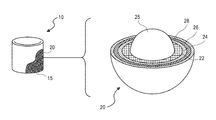
Schematic visualization of the patent's claim structure. Hand-drawn diagrams in progress for each landmark patent.
Where you've seen this
Real-world examples
Ultra Safe Nuclear Corporation's Fully Ceramic Micro-encapsulated (FCM) fuel
Advanced accident-tolerant nuclear fuels (ATF) for light water reactors
Next-generation nuclear reactor fuel designs
Why it matters
The bigger picture
This patent is significant because it describes a method for creating "meltdown-proof, accident-tolerant fuel" for existing light water reactors (LWRs). By replacing traditional uranium dioxide fuel with DCM fuel, the risk of radioactive material release during a severe accident is substantially reduced due to the multiple robust barriers around the fuel. This technology could enhance the safety of current nuclear power plants and potentially support the development of advanced reactor designs, addressing critical concerns about nuclear safety.
Filed
January 31, 2017
Granted
November 12, 2019
Market context
Who's building on this
Companies in this space
Ultra Safe Nuclear Corporation, the assigneeassigneeThe entity that owns the patent — usually the inventor's employer or a company.Read more → of this patent, is actively developing and commercializing advanced nuclear fuels, including their Fully Ceramic Micro-encapsulated (FCM) fuel, which directly aligns with the technology described here. Other companies and national laboratories involved in advanced nuclear reactor development are also researching and developing accident-tolerant fuels to enhance safety and performance.
Market impact
This patent contributes to the ongoing development of safer nuclear fuels, a critical factor for the future of nuclear energy. By offering a "meltdown-proof" alternative, it aims to address public safety concerns and could enable the broader adoption of new small modular reactors (SMRs) and the continued, safer operation of existing light water reactors. This technology seeks to mitigate the risk of catastrophic accidents, which has historically impacted the nuclear power industry's growth and public perception.
Claim 1 — Plain English
What this patent covers
The patent outlines a method (Claim 1) for manufacturing Dispersion Ceramic Micro-Encapsulated (DCM) nuclear fuel. This process involves creating at least two different sizes of 'tristructural-isotropic (TRISO) fuel particles.' Each TRISO particle contains a fuel kernel surrounded by four protective layers: a porous carbon buffer, an inner pyrolytic carbon layer, a ceramic layer, and an outer pyrolytic carbon layer. These TRISO particles are then mixed with a silicon carbide powder and sintered (heated and pressed) using a specific 'nano infiltration transient eutectic phase' to embed them within a dense silicon carbide matrix. This forms a solid fuel compact, or pellet, designed for enhanced safety. For example, Claim 6 details forming the fuel kernel by dissolving material in nitric acid, creating droplets, gelling, calcining, and then coating them in a chemical vapor deposition furnace (Claim 7).
The clever bit
The innovation lies in combining multiple, carefully sized TRISO fuel particles within a highly dense silicon carbide matrix, using a specialized sintering process. This creates a fuel pellet with exceptional structural integrity and multiple layers of containment, making it uniquely resistant to extreme conditions and preventing the release of radioactive materials even if the reactor core overheats.
What it does not cover
- Does not cover nuclear fuel that uses only a single size of TRISO fuel particles, as Claim 1 specifies "two or more different sizes."
- Does not cover fuel compacts where TRISO particles are not dispersed and embedded inside a silicon carbide matrix, as required by Claim 1.
- Does not cover manufacturing methods that do not utilize a "nano infiltration transient eutectic phase" for sintering, as specified in Claim 1.
- Does not cover TRISO fuel particles that lack any of the four specified layers: porous carbon buffer, inner pyrolytic carbon, ceramic, and outer pyrolytic carbon (Claim 1).
- Does not cover fuel compacts formed without pressing in a mold at a predetermined sintering pressure and temperature (Claim 1).
Patent timeline
Application submitted to the patent office
Application published, typically 18 months after filing
Patent officially issued
Patent enters public domain
PatentBrief Score
Impact Score
Moderate
Citation count
22/40
Moderately cited
Claim breadth
13/20
Broad claimsclaimsThe numbered statements at the end of a patent that legally define what the inventor owns.Read more →
Recency
10/20
Granted 5–10 years ago
Assignee scale
0/20
Independent or smaller assigneeassigneeThe entity that owns the patent — usually the inventor's employer or a company.Read more →
PatentBrief Impact Score — based on citation count, claim breadth, recency, and assignee scale. Not a legal assessment.
Heuristic Value Estimate
What this patent might be worth
$117K – $374K
Midpoint $234K · 10.3 yr remaining · industry ×1.5
Heuristic only — blends forward/backward citation counts, claim scope, time remaining, litigation history, and CPC-derived industry baseline. Real valuations need a professional appraisal.
Claim text not yet imported for this patent
The original legal language
Original claims
20 claims as filed with the patent office.
Concepts involved
Citations
Patent lineage
Cite this patent
Venneri, F. (2019). How to Make Meltdown-Proof Nuclear Fuel Pellets (U.S. Patent No. 10,475,543). U.S. Patent and Trademark Office. https://patentbrief.org/patent/us/10475543/dispersion-ceramic-micro-encapsulated-dcm-nuclear-fuel-and-related-methods
Auto-generated from the patent record. Double-check author order and the issue date against the official USPTO document before submitting.
Embed
Add this patent to your site
Drop this plain-English patent card into any blog post or article — free, no signup. It always links back to the full breakdown here.
<div data-patentlens-widget data-patent-number="US10475543"></div>
<script src="https://patentbrief.org/embed.js" async></script>
Stay in the loop
Get a weekly digest of new patents.
One email per week. No spam. Unsubscribe anytime.
Keep exploring
Related patents you should know
US 4683195 · 1987
How to Make Billions of Copies of a DNA Segment
This patent describes the Polymerase Chain Reaction (PCR), a method to rapidly create many copies of a specific piece of DNA or RNA, enabling its detection and analysis.
Cetus Corp
US 8697359 · 2014
How to Edit Genes in Human Cells Using an Engineered CRISPR System
This patent describes an engineered CRISPR-Cas9 system for precisely cutting DNA in eukaryotic cells to change how genes work, opening the door for gene editing in complex organisms.
Massachusetts Institute of Technology
US 7657849 · 2010
How the iPhone's Slide-to-Unlock Gesture Works
Apple's 2010 patent describes unlocking a device by dragging a specific graphical image across the touchscreen along a predefined path, a gesture that became iconic with the original iPhone.
Apple Inc
US 4733665 · 1988
How Doctors Implant a Permanent Stent Using a Balloon
This patent describes the method for placing a permanent, expandable wire mesh tube inside a blood vessel or other body tube using a balloon-tipped catheter to widen it and keep it open.
Expandable Grafts Partnership
US 4965188 · 1990
How to Make Many Copies of a DNA Piece with Heat
This patent describes the Polymerase Chain Reaction (PCR) method, a technique to make millions of copies of a specific DNA segment using a heat-resistant enzyme and repeated temperature changes.
Cetus Corp
US 4235871 · 1980
How to Encapsulate Active Materials in Lipid Bubbles Efficiently
This patent describes a method for trapping biologically active substances inside tiny, multi-layered fat bubbles called liposomes, using a specific water-in-oil emulsion and gel-forming process to improve how much material gets captured.
Individual
Semantically similar
You might also find these interesting
US 11942229 · 2024 · BWXT Advanced Technologies
How a Molten Metal Buffer Improves Heat Transfer in Nuclear Reactors
US 10818403 · 2020 · Nuscale Power
How Nuclear Power Plants Reuse Fuel Between Multiple Reactors
US 12073952 · 2024 · BWXT Technical Services Group
Using Gas Pressure to Safely Control Liquid Fuel Nuclear Reactors
US 9239385 · 2016 · General Electric
Making Special Materials Inside Commercial Nuclear Power Plants
More to explore
More in Materials & Manufacturing
US 4575330 · 1986 · UVP Inc
How 3D Printers Build Objects Layer by Layer from Liquid
US 3953566 · 1976 · WL Gore and Associates Inc
Making Strong, Porous PTFE: The Gore-Tex Process
US 5121329 · 1992 · Stratasys Inc
How Machines Build 3D Objects Layer by Layer from Melting Plastic
US 3691140 · 1972
Sticky, Tiny Plastic Balls Made from Acrylates
New to patents?
Common Questions
Frequently Asked Questions
What does How to Make Meltdown-Proof Nuclear Fuel Pellets cover?
This patent describes a method for making a new type of nuclear fuel called Dispersion Ceramic Micro-Encapsulated (DCM) fuel, which uses tiny, specially coated uranium particles embedded in a super-strong silicon carbide material to prevent meltdowns in nuclear reactors.
Who owns patent US 10475543?
Ultra Safe Nuclear owns this patent, granted in 2019.
When does this patent expire?
This patent is expected to expire on January 31, 2037, when the invention enters the public domain.
What is patent US 10475543 cited by?
This patent has been cited by 12 later patents that build on its ideas.
What problem does this patent solve?
This patent is significant because it describes a method for creating "meltdown-proof, accident-tolerant fuel" for existing light water reactors (LWRs). By replacing traditional uranium dioxide fuel with DCM fuel, the risk of radioactive material release during a severe accident is substantially reduced due to the multiple robust barriers around the fuel. This technology could enhance the safety of current nuclear power plants and potentially support the development of advanced reactor designs, addressing critical concerns about nuclear safety.
What does this patent NOT cover?
Does not cover nuclear fuel that uses only a single size of TRISO fuel particles, as Claim 1 specifies "two or more different sizes."
Patent monitoring