Multiple blocks per string in 3D NAND memory
Embodiments describe techniques and configurations for an apparatus including a three-dimensional (3D) memory array having a plurality of strings of memory cells, where individual strings may have memory cells that corre…
Original patent title: “Multiple blocks per string in 3D NAND memory”
Embodiments describe techniques and configurations for an apparatus including a three-dimensional (3D) memory array having a plurality of strings of memory cells, where individual strings may have memory cells that corre…. Granted to Intel in 2019 with 9 claims and 2 forward citations, and it is expected to expire in 2037.
Coverage
What does this patent actually cover?
Embodiments describe techniques and configurations for an apparatus including a three-dimensional (3D) memory array having a plurality of strings of memory cells, where individual strings may have memory cells that correspond to different memory blocks (e.g., multiple memory blocks per string). For example, a first set of memory cells of a string may be included in a first memory block, and a second set of memory cells of the string may be included in a second memory block. The memory device may include separator wordlines disposed between wordlines associated with the first memory block and wordlines associated with the second memory block. The separator wordlines may receive different bias voltages during various operations of the memory device. Additionally, a wordline biasing scheme may be selected to program the first memory block based on whether the second memory block is programmed. Other embodiments may be described and/or claimed.
The gap
What does this patent NOT cover?
These exclusions are unique to PatentBrief — derived from the actual claim language, not patent-office boilerplate.
Key facts
The Patent Drawing
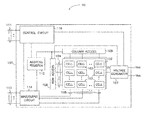
Schematic visualization of the patent's claim structure. Hand-drawn diagrams in progress for each landmark patent.
Patent Abstract
Patent abstract
Embodiments describe techniques and configurations for an apparatus including a three-dimensional (3D) memory array having a plurality of strings of memory cells, where individual strings may have memory cells that correspond to different memory blocks (e.g., multiple memory blocks per string). For example, a first set of memory cells of a string may be included in a first memory block, and a second set of memory cells of the string may be included in a second memory block. The memory device may include separator wordlines disposed between wordlines associated with the first memory block and wordlines associated with the second memory block. The separator wordlines may receive different bias voltages during various operations of the memory device. Additionally, a wordline biasing scheme may be selected to program the first memory block based on whether the second memory block is programmed. Other embodiments may be described and/or claimed.
Patent timeline
Application submitted to the patent office
Application published, typically 18 months after filing
Patent officially issued
Patent enters public domain
PatentBrief Score
Impact Score
Moderate
Citation count
10/40
Early citations
Claim breadth
6/20
Moderate scope
Recency
10/20
Granted 5–10 years ago
Assignee scale
20/20
Major company or institution
PatentBrief Impact Score — based on citation count, claim breadth, recency, and assignee scale. Not a legal assessment.
Heuristic Value Estimate
What this patent might be worth
$45K – $144K
Midpoint $90K · 10.9 yr remaining · industry ×1.5
Heuristic only — blends forward/backward citation counts, claim scope, time remaining, litigation history, and CPC-derived industry baseline. Real valuations need a professional appraisal.
Claim text not yet imported for this patent
The original legal language
Original claims
9 claims as filed with the patent office.
Concepts involved
Citations
Patent lineage
Cite this patent
Tanaka, T., Wolstenholme, G. R., & Goda, A. (2019). Multiple blocks per string in 3D NAND memory (U.S. Patent No. 10,381,086). U.S. Patent and Trademark Office. https://patentbrief.org/patent/us/10381086/multiple-blocks-per-string-in-3d-nand-memory
Auto-generated from the patent record. Double-check author order and the issue date against the official USPTO document before submitting.
Embed
Add this patent to your site
Drop this plain-English patent card into any blog post or article — free, no signup. It always links back to the full breakdown here.
<div data-patentlens-widget data-patent-number="US10381086"></div>
<script src="https://patentbrief.org/embed.js" async></script>
Stay in the loop
Get a weekly digest of new patents.
One email per week. No spam. Unsubscribe anytime.
Keep exploring
Related patents you should know
US 4683195 · 1987
How to Make Billions of Copies of a DNA Segment
This patent describes the Polymerase Chain Reaction (PCR), a method to rapidly create many copies of a specific piece of DNA or RNA, enabling its detection and analysis.
Cetus Corp
US 8697359 · 2014
How to Edit Genes in Human Cells Using an Engineered CRISPR System
This patent describes an engineered CRISPR-Cas9 system for precisely cutting DNA in eukaryotic cells to change how genes work, opening the door for gene editing in complex organisms.
Massachusetts Institute of Technology
US 7657849 · 2010
How the iPhone's Slide-to-Unlock Gesture Works
Apple's 2010 patent describes unlocking a device by dragging a specific graphical image across the touchscreen along a predefined path, a gesture that became iconic with the original iPhone.
Apple Inc
US 4733665 · 1988
How Doctors Implant a Permanent Stent Using a Balloon
This patent describes the method for placing a permanent, expandable wire mesh tube inside a blood vessel or other body tube using a balloon-tipped catheter to widen it and keep it open.
Expandable Grafts Partnership
US 4965188 · 1990
How to Make Many Copies of a DNA Piece with Heat
This patent describes the Polymerase Chain Reaction (PCR) method, a technique to make millions of copies of a specific DNA segment using a heat-resistant enzyme and repeated temperature changes.
Cetus Corp
US 4235871 · 1980
How to Encapsulate Active Materials in Lipid Bubbles Efficiently
This patent describes a method for trapping biologically active substances inside tiny, multi-layered fat bubbles called liposomes, using a specific water-in-oil emulsion and gel-forming process to improve how much material gets captured.
Individual
New to patents?
Common Questions
Frequently Asked Questions
Who owns patent US 10381086?
Intel owns this patent, granted in 2019.
When does this patent expire?
This patent is expected to expire on October 9, 2037, when the invention enters the public domain.
What is patent US 10381086 cited by?
This patent has been cited by 2 later patents that build on its ideas.
Same assignee
More from Intel
Patent monitoring