How to Build an Efficient, Wide-Bandwidth Radio Signal Amplifier
This patent describes a system for amplifying radio frequency signals that can handle a wide range of frequencies and power levels while staying very energy efficient, even with complex signal types.
Original patent title: “RF-input / RF-output outphasing amplifier”
This patent describes a system for amplifying radio frequency signals that can handle a wide range of frequencies and power levels while staying very energy efficient, even with complex signal types. Granted to Massachusetts Institute of Technology in 2018 with 22 claims and 8 forward citations, and it is expected to expire in 2035.
Coverage
What does this patent actually cover?
This patent details an outphasing amplification system designed for both wide-bandwidth and high efficiency. It uses a Radio-Frequency Signal Decomposition Network (RFSDN) that takes an RF input signal and splits it into multiple (N) paths, as described in ClaimclaimA numbered sentence at the end of a patent that legally defines what the inventor owns. The most important section.Read more → 1. Crucially, the RFSDN includes at least one nonlinear component (Claim 1) that is configured to turn amplitude changes in the input signal into phase changes at its output ports (Claim 4). These phase-modulated signals then go to N branch amplifiers, which operate efficiently, and their outputs are combined by a combiner network (Claim 1). For example, if your phone needs to send a strong signal over a wide frequency range, this system ensures the power amplifier doesn't waste a lot of battery power doing so.
The gap
What does this patent NOT cover?
- Does not cover amplification systems that do not use an RF Signal Decomposition Network (RFSDN) to split and phase-modulate the input signal.
- Does not cover systems where the relative phases at the RFSDN output ports change when the input signal's amplitude is below a certain threshold (ClaimclaimA numbered sentence at the end of a patent that legally defines what the inventor owns. The most important section.Read more → 5).
- Does not cover amplifiers that achieve efficiency without converting amplitude modulation into phase modulation via nonlinear components in the RFSDN (ClaimclaimA numbered sentence at the end of a patent that legally defines what the inventor owns. The most important section.Read more → 4).
- Does not cover power amplifiers that lack a separate combiner network to reassemble the amplified branch signals (ClaimclaimA numbered sentence at the end of a patent that legally defines what the inventor owns. The most important section.Read more → 1).
- Does not cover systems where the nonlinear component is not coupled to a respective branch signal path within the RFSDN (ClaimclaimA numbered sentence at the end of a patent that legally defines what the inventor owns. The most important section.Read more → 1).
These exclusions are unique to PatentBrief — derived from the actual claim language, not patent-office boilerplate.
Key facts
What made this novel
The core innovation is using a Radio-Frequency Signal Decomposition Network (RFSDN) with specific nonlinear components to convert an input signal's amplitude changes into phase changes across multiple output paths. This allows the subsequent branch amplifiers to operate at their most efficient power level, regardless of the input signal's varying strength, before their outputs are combined.
The Patent Drawing
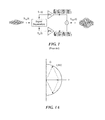
Schematic visualization of the patent's claim structure. Hand-drawn diagrams in progress for each landmark patent.
Where you've seen this
Real-world examples
5G cellular base stations
Wi-Fi 6/7 routers and access points
Satellite communication transceivers
High-efficiency broadcast transmitters
Radar systems
Why it matters
The bigger picture
Modern wireless communication, like 5G and Wi-Fi, uses complex signals that vary greatly in amplitude. Amplifying these signals efficiently is a huge challenge because traditional amplifiers waste a lot of power when the signal is not at its peak. This patent offers a way to maintain high efficiency across a wide range of output power levels, which means less heat, smaller devices, and longer battery life for anything that transmits radio signals.
Filed
August 11, 2015
Granted
March 6, 2018
Market context
Who's building on this
Companies in this space
Massachusetts Institute of Technology (MIT) is the assigneeassigneeThe entity that owns the patent — usually the inventor's employer or a company.Read more → of this patent, indicating its origin in academic research. Companies like NXP Semiconductors, Qorvo, Skyworks Solutions, and Analog Devices are active in developing and manufacturing advanced RF power amplifiers, and would be interested in technologies that improve efficiency and bandwidth for wireless communication infrastructure and devices.
Market impact
This technology aims to address a critical need in the wireless communication market: improving the energy efficiency of radio frequency power amplifiers. By enabling amplifiers to maintain high efficiency across a wide range of power levels and frequencies, it could lead to significant reductions in power consumption for cellular base stations, Wi-Fi access points, and other wireless devices. This could translate to lower operating costs for network providers and longer battery life for consumer electronics, potentially influencing the design and deployment of future wireless standards.
Claim 1 — Plain English
What this patent covers
This patent details an outphasing amplification system designed for both wide-bandwidth and high efficiency. It uses a Radio-Frequency Signal Decomposition Network (RFSDN) that takes an RF input signal and splits it into multiple (N) paths, as described in Claim 1. Crucially, the RFSDN includes at least one nonlinear component (Claim 1) that is configured to turn amplitude changes in the input signal into phase changes at its output ports (Claim 4). These phase-modulated signals then go to N branch amplifiers, which operate efficiently, and their outputs are combined by a combiner network (Claim 1). For example, if your phone needs to send a strong signal over a wide frequency range, this system ensures the power amplifier doesn't waste a lot of battery power doing so.
The clever bit
The core innovation is using a Radio-Frequency Signal Decomposition Network (RFSDN) with specific nonlinear components to convert an input signal's amplitude changes into phase changes across multiple output paths. This allows the subsequent branch amplifiers to operate at their most efficient power level, regardless of the input signal's varying strength, before their outputs are combined.
What it does not cover
- Does not cover amplification systems that do not use an RF Signal Decomposition Network (RFSDN) to split and phase-modulate the input signal.
- Does not cover systems where the relative phases at the RFSDN output ports change when the input signal's amplitude is below a certain threshold (Claim 5).
- Does not cover amplifiers that achieve efficiency without converting amplitude modulation into phase modulation via nonlinear components in the RFSDN (Claim 4).
- Does not cover power amplifiers that lack a separate combiner network to reassemble the amplified branch signals (Claim 1).
- Does not cover systems where the nonlinear component is not coupled to a respective branch signal path within the RFSDN (Claim 1).
Patent timeline
Application submitted to the patent office
Application published, typically 18 months after filing
Patent officially issued
Patent enters public domain
PatentBrief Score
Impact Score
Strong
Citation count
19/40
Early citations
Claim breadth
15/20
Broad claimsclaimsThe numbered statements at the end of a patent that legally define what the inventor owns.Read more →
Recency
10/20
Granted 5–10 years ago
Assignee scale
20/20
Major company or institution
PatentBrief Impact Score — based on citation count, claim breadth, recency, and assignee scale. Not a legal assessment.
Heuristic Value Estimate
What this patent might be worth
$109K – $349K
Midpoint $218K · 8.7 yr remaining · industry ×1.4
Heuristic only — blends forward/backward citation counts, claim scope, time remaining, litigation history, and CPC-derived industry baseline. Real valuations need a professional appraisal.
Claim text not yet imported for this patent
The original legal language
Original claims
22 claims as filed with the patent office.
Concepts involved
Citations
Patent lineage
Cite this patent
Perreault, D. J., & Barton, T. W. (2018). How to Build an Efficient, Wide-Bandwidth Radio Signal Amplifier (U.S. Patent No. 9,912,303). U.S. Patent and Trademark Office. https://patentbrief.org/patent/us/9912303/rf-input-rf-output-outphasing-amplifier
Auto-generated from the patent record. Double-check author order and the issue date against the official USPTO document before submitting.
Embed
Add this patent to your site
Drop this plain-English patent card into any blog post or article — free, no signup. It always links back to the full breakdown here.
<div data-patentlens-widget data-patent-number="US9912303"></div>
<script src="https://patentbrief.org/embed.js" async></script>
Stay in the loop
Get a weekly digest of new patents.
One email per week. No spam. Unsubscribe anytime.
Keep exploring
Related patents you should know
US 4683195 · 1987
How to Make Billions of Copies of a DNA Segment
This patent describes the Polymerase Chain Reaction (PCR), a method to rapidly create many copies of a specific piece of DNA or RNA, enabling its detection and analysis.
Cetus Corp
US 8697359 · 2014
How to Edit Genes in Human Cells Using an Engineered CRISPR System
This patent describes an engineered CRISPR-Cas9 system for precisely cutting DNA in eukaryotic cells to change how genes work, opening the door for gene editing in complex organisms.
Massachusetts Institute of Technology
US 7657849 · 2010
How the iPhone's Slide-to-Unlock Gesture Works
Apple's 2010 patent describes unlocking a device by dragging a specific graphical image across the touchscreen along a predefined path, a gesture that became iconic with the original iPhone.
Apple Inc
US 4733665 · 1988
How Doctors Implant a Permanent Stent Using a Balloon
This patent describes the method for placing a permanent, expandable wire mesh tube inside a blood vessel or other body tube using a balloon-tipped catheter to widen it and keep it open.
Expandable Grafts Partnership
US 4965188 · 1990
How to Make Many Copies of a DNA Piece with Heat
This patent describes the Polymerase Chain Reaction (PCR) method, a technique to make millions of copies of a specific DNA segment using a heat-resistant enzyme and repeated temperature changes.
Cetus Corp
US 4235871 · 1980
How to Encapsulate Active Materials in Lipid Bubbles Efficiently
This patent describes a method for trapping biologically active substances inside tiny, multi-layered fat bubbles called liposomes, using a specific water-in-oil emulsion and gel-forming process to improve how much material gets captured.
Individual
Semantically similar
You might also find these interesting
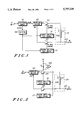
US 5757229 · 1998 · Motorola
How a Radio Amplifier Saves Energy by Sharing Work
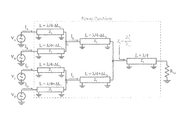
US 9141832 · 2015 · Massachusetts Institute of Technology
Combining Radio Signals Efficiently with Special Wires
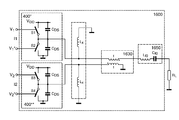
US 8269555 · 2012 · NXP BV
How to Make Radio Amplifiers More Efficient
US 6700444 · 2004 · Cree Microwave
How an RF Amplifier Boosts Signal Power Efficiently
More to explore
More in Telecom & Wireless
US 5347632 · 1994 · Prodigy Services Co
Prodigy's System for Interactive Online Information and Shopping
US 3906166 · 1975 · Motorola Inc
How Early Cell Phones Handled Calls Across Different Towers
US 4063220 · 1977 · Xerox Corp
How Multiple Computers Share a Network Cable Without Crashing
US 4200770 · 1980 · Leland Stanford Junior University
How to Create a Secret Code Key Without Meeting First
New to patents?
Common Questions
Frequently Asked Questions
What does How to Build an Efficient, Wide-Bandwidth Radio Signal Amplifier cover?
This patent describes a system for amplifying radio frequency signals that can handle a wide range of frequencies and power levels while staying very energy efficient, even with complex signal types.
Who owns patent US 9912303?
Massachusetts Institute of Technology owns this patent, granted in 2018.
When does this patent expire?
This patent is expected to expire on August 11, 2035, when the invention enters the public domain.
What is patent US 9912303 cited by?
This patent has been cited by 8 later patents that build on its ideas.
What problem does this patent solve?
Modern wireless communication, like 5G and Wi-Fi, uses complex signals that vary greatly in amplitude. Amplifying these signals efficiently is a huge challenge because traditional amplifiers waste a lot of power when the signal is not at its peak. This patent offers a way to maintain high efficiency across a wide range of output power levels, which means less heat, smaller devices, and longer battery life for anything that transmits radio signals.
What does this patent NOT cover?
Does not cover amplification systems that do not use an RF Signal Decomposition Network (RFSDN) to split and phase-modulate the input signal.
Same assignee
More from Massachusetts Institute of Technology
Patent monitoring