Targeted Platinum Drugs for Cancer Treatment
This patent describes a way to deliver platinum-based cancer drugs directly to tumor cells by attaching them to a special 'ligand' molecule that seeks out cancer cell markers.
Original patent title: “Ligand-targeted molecules and methods thereof”
This patent describes a way to deliver platinum-based cancer drugs directly to tumor cells by attaching them to a special 'ligand' molecule that seeks out cancer cell markers. Granted to INVICTUS ONCOLOGY PVT in 2018 with 13 claims and 3 forward citations, and it is expected to expire in 2033.
Coverage
What does this patent actually cover?
This patent describes a 'ligand drug conjugate' (LDC) designed to deliver chemotherapy drugs specifically to cancer cells. The LDC works by connecting a 'ligand' (a molecule that can find and stick to specific targets) to a 'functional moiety,' which is then linked to a 'coordination metal complex' containing platinum (II). This platinum complex is, in turn, connected to a drug. The ligand is designed to bind to a 'protein, receptor, or cell marker on a surface of a cancer cell' (claimsclaimsThe numbered statements at the end of a patent that legally define what the inventor owns.Read more → 2, 9), acting like a homing beacon. The connections between these parts are made by 'linkers,' which can be simple chains like hydrocarbons or more complex ones like polyethylene glycol (PEG), amino acids, or peptides (claims 3, 10). For example, a ligand might specifically recognize a unique protein found only on the surface of lung cancer cells, guiding the attached platinum drug directly to those cells to treat the cancer (claims 5, 11) while minimizing harm to healthy tissues.
The gap
What does this patent NOT cover?
- Does not cover non-targeted platinum drugs that distribute throughout the body without a specific cancer cell homing mechanism.
- Does not cover targeted drug conjugates that use metal complexes other than platinum (II) as the central coordination component.
- Does not cover targeted drug conjugates where the drug is not connected via a platinum (II) coordination complex.
- Does not cover methods of treating diseases other than cancer using these specific conjugates.
- Does not cover targeting mechanisms that do not involve a ligand binding to a protein, receptor, or cell marker on a cancer cell's surface.
These exclusions are unique to PatentBrief — derived from the actual claim language, not patent-office boilerplate.
Key facts
What made this novel
The clever part is the specific chemical architecture of the drug conjugate, particularly the inclusion of a platinum (II) coordination complex as a central, structured component that links the drug to the targeting ligand. This design allows for the precise, targeted delivery of platinum-based chemotherapy agents, aiming to improve their therapeutic index by localizing their activity.
The Patent Drawing
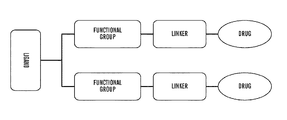
Schematic visualization of the patent's claim structure. Hand-drawn diagrams in progress for each landmark patent.
Where you've seen this
Real-world examples
Cisplatin (a non-targeted platinum drug)
Carboplatin (another non-targeted platinum drug)
Antibody-drug conjugates (ADCs) in cancer therapy
Targeted chemotherapy for solid tumors
Why it matters
The bigger picture
Traditional platinum-based chemotherapy drugs are effective against many cancers but often cause severe side effects because they harm healthy cells along with cancer cells. This patent addresses that problem by proposing a way to target these powerful drugs directly to tumors. By concentrating the drug at the cancer site, it aims to increase effectiveness while reducing harmful side effects, which is a major goal in modern oncology.
Filed
January 3, 2013
Granted
February 6, 2018
Market context
Who's building on this
Companies in this space
Invictus Oncology Pvt Ltd, the original assigneeassigneeThe entity that owns the patent — usually the inventor's employer or a company.Read more →, is focused on developing novel cancer therapies, including targeted approaches. Beyond the assignee, many major pharmaceutical and biotechnology companies are actively developing targeted cancer therapies, such as antibody-drug conjugates (ADCs), which share the core principle of using a targeting molecule to deliver a cytotoxic drug. Companies like Pfizer (which acquired Seagen), Genentech (a subsidiary of Roche), and AstraZeneca are prominent players in this space.
Market impact
This patent contributes to the ongoing shift in oncology towards more precise and targeted cancer treatments. The development of such ligand-drug conjugates aims to create therapies with improved efficacy and reduced systemic toxicity compared to traditional chemotherapy. This approach has spurred significant research and investment in the pharmaceutical market, creating a distinct segment focused on personalized medicine and advanced drug delivery systems for cancer patients.
Claim 1 — Plain English
What this patent covers
This patent describes a 'ligand drug conjugate' (LDC) designed to deliver chemotherapy drugs specifically to cancer cells. The LDC works by connecting a 'ligand' (a molecule that can find and stick to specific targets) to a 'functional moiety,' which is then linked to a 'coordination metal complex' containing platinum (II). This platinum complex is, in turn, connected to a drug. The ligand is designed to bind to a 'protein, receptor, or cell marker on a surface of a cancer cell' (claims 2, 9), acting like a homing beacon. The connections between these parts are made by 'linkers,' which can be simple chains like hydrocarbons or more complex ones like polyethylene glycol (PEG), amino acids, or peptides (claims 3, 10). For example, a ligand might specifically recognize a unique protein found only on the surface of lung cancer cells, guiding the attached platinum drug directly to those cells to treat the cancer (claims 5, 11) while minimizing harm to healthy tissues.
The clever bit
The clever part is the specific chemical architecture of the drug conjugate, particularly the inclusion of a platinum (II) coordination complex as a central, structured component that links the drug to the targeting ligand. This design allows for the precise, targeted delivery of platinum-based chemotherapy agents, aiming to improve their therapeutic index by localizing their activity.
What it does not cover
- Does not cover non-targeted platinum drugs that distribute throughout the body without a specific cancer cell homing mechanism.
- Does not cover targeted drug conjugates that use metal complexes other than platinum (II) as the central coordination component.
- Does not cover targeted drug conjugates where the drug is not connected via a platinum (II) coordination complex.
- Does not cover methods of treating diseases other than cancer using these specific conjugates.
- Does not cover targeting mechanisms that do not involve a ligand binding to a protein, receptor, or cell marker on a cancer cell's surface.
Patent timeline
Application submitted to the patent office
Application published, typically 18 months after filing
Patent officially issued
Patent enters public domain
PatentBrief Score
Impact Score
Early stage
Citation count
12/40
Early citations
Claim breadth
9/20
Moderate scope
Recency
10/20
Granted 5–10 years ago
Assignee scale
0/20
Independent or smaller assigneeassigneeThe entity that owns the patent — usually the inventor's employer or a company.Read more →
PatentBrief Impact Score — based on citation count, claim breadth, recency, and assignee scale. Not a legal assessment.
Heuristic Value Estimate
What this patent might be worth
$53K – $168K
Midpoint $105K · 6.2 yr remaining · industry ×3.0
Heuristic only — blends forward/backward citation counts, claim scope, time remaining, litigation history, and CPC-derived industry baseline. Real valuations need a professional appraisal.
Claim text not yet imported for this patent
The original legal language
Original claims
13 claims as filed with the patent office.
Concepts involved
Citations
Patent lineage
Cite this patent
Hussain, S., Roy, M., Pramanik, D., Hossain, S. S., & Sengupta, S. (2018). Targeted Platinum Drugs for Cancer Treatment (U.S. Patent No. 9,884,123). U.S. Patent and Trademark Office. https://patentbrief.org/patent/us/9884123/ligand-targeted-molecules-and-methods-thereof
Auto-generated from the patent record. Double-check author order and the issue date against the official USPTO document before submitting.
Embed
Add this patent to your site
Drop this plain-English patent card into any blog post or article — free, no signup. It always links back to the full breakdown here.
<div data-patentlens-widget data-patent-number="US9884123"></div>
<script src="https://patentbrief.org/embed.js" async></script>
Stay in the loop
Get a weekly digest of new patents.
One email per week. No spam. Unsubscribe anytime.
Keep exploring
Related patents you should know
US 4683195 · 1987
How to Make Billions of Copies of a DNA Segment
This patent describes the Polymerase Chain Reaction (PCR), a method to rapidly create many copies of a specific piece of DNA or RNA, enabling its detection and analysis.
Cetus Corp
US 8697359 · 2014
How to Edit Genes in Human Cells Using an Engineered CRISPR System
This patent describes an engineered CRISPR-Cas9 system for precisely cutting DNA in eukaryotic cells to change how genes work, opening the door for gene editing in complex organisms.
Massachusetts Institute of Technology
US 7657849 · 2010
How the iPhone's Slide-to-Unlock Gesture Works
Apple's 2010 patent describes unlocking a device by dragging a specific graphical image across the touchscreen along a predefined path, a gesture that became iconic with the original iPhone.
Apple Inc
US 4733665 · 1988
How Doctors Implant a Permanent Stent Using a Balloon
This patent describes the method for placing a permanent, expandable wire mesh tube inside a blood vessel or other body tube using a balloon-tipped catheter to widen it and keep it open.
Expandable Grafts Partnership
US 4965188 · 1990
How to Make Many Copies of a DNA Piece with Heat
This patent describes the Polymerase Chain Reaction (PCR) method, a technique to make millions of copies of a specific DNA segment using a heat-resistant enzyme and repeated temperature changes.
Cetus Corp
US 4235871 · 1980
How to Encapsulate Active Materials in Lipid Bubbles Efficiently
This patent describes a method for trapping biologically active substances inside tiny, multi-layered fat bubbles called liposomes, using a specific water-in-oil emulsion and gel-forming process to improve how much material gets captured.
Individual
Semantically similar
You might also find these interesting
US 20210301031 · Mersana Therapeutics
Targeted Cancer Drugs Using Antibodies and Polymer Scaffolds
US 20190046446 · Eriochem Usa
How Special Nanoparticles Deliver Cancer Drugs Directly to Tumors

US 12121527 · 2024 · NBE Therapeutics AG
Making Cancer-Fighting Antibody Drugs Safer with Precise Attachment
US 20250171803 · Purdue Research Foundation
Targeting Cancer with CAR T Cells Using Small Molecule 'Flags'
More to explore
More in Biotech & Medicine
US 4683195 · 1987 · Cetus Corp
How to Make Billions of Copies of a DNA Segment
US 8697359 · 2014 · Massachusetts Institute of Technology
How to Edit Genes in Human Cells Using an Engineered CRISPR System
US 4733665 · 1988 · Expandable Grafts Partnership
How Doctors Implant a Permanent Stent Using a Balloon
US 4965188 · 1990 · Cetus Corp
How to Make Many Copies of a DNA Piece with Heat
New to patents?
Common Questions
Frequently Asked Questions
What does Targeted Platinum Drugs for Cancer Treatment cover?
This patent describes a way to deliver platinum-based cancer drugs directly to tumor cells by attaching them to a special 'ligand' molecule that seeks out cancer cell markers.
Who owns patent US 9884123?
INVICTUS ONCOLOGY PVT owns this patent, granted in 2018.
When does this patent expire?
This patent is expected to expire on January 3, 2033, when the invention enters the public domain.
What is patent US 9884123 cited by?
This patent has been cited by 3 later patents that build on its ideas.
What problem does this patent solve?
Traditional platinum-based chemotherapy drugs are effective against many cancers but often cause severe side effects because they harm healthy cells along with cancer cells. This patent addresses that problem by proposing a way to target these powerful drugs directly to tumors. By concentrating the drug at the cancer site, it aims to increase effectiveness while reducing harmful side effects, which is a major goal in modern oncology.
What does this patent NOT cover?
Does not cover non-targeted platinum drugs that distribute throughout the body without a specific cancer cell homing mechanism.
Patent monitoring