Making Drug Proteins Last Longer and Target Diseases Better
This patent describes ways to make protein and peptide drugs stay in the body longer and target specific diseases like autoimmune conditions or cancer more precisely by linking them together or combining them with other molecules.
Original patent title: “Methods to Treat Diseases with Protein, Peptide and Antigen Modification”
This patent describes ways to make protein and peptide drugs stay in the body longer and target specific diseases like autoimmune conditions or cancer more precisely by linking them together or combining them with other molecules. Owned by Individual with 11 claims, and it is expected to expire in 2039.
Coverage
What does this patent actually cover?
This patent describes two main methods to improve drug treatments. First, it details how to extend the active life of peptide drugs in the body (their "half-life"). This is done by connecting at least three individual peptide units, called monomers, in a linear chain using a special "self-immolative linker" (ClaimclaimA numbered sentence at the end of a patent that legally defines what the inventor owns. The most important section.Read more → 1). This creates a larger molecule, an "oligomer," with a total molecular weight greater than 60,000 (Claim 1). The linker is designed to break apart inside the body, releasing the active peptides when needed. For example, this method could be applied to peptides like Exenatide (Claim 3) or CNP peptide (Claim 4). Second, the patent describes creating specialized combinations, or "conjugates," to treat autoimmune diseases, specifically systemic lupus erythematosus (Claim 6). These conjugates combine an "auto antigen" (a substance that causes the immune system to attack the body's own tissues, such as B cell antigen or DNA, as in ClaimsclaimsThe numbered statements at the end of a patent that legally define what the inventor owns.Read more → 7-8) with a "second antigen" that the body already has natural antibodies against (like alpha-gal or L-rhamnose, as in Claim 9). The goal is to redirect the body's immune response to treat the disease more effectively.
The gap
What does this patent NOT cover?
- Does not cover extending peptide half-life by connecting fewer than three peptide units.
- Does not cover peptide oligomers with a total molecular weight of 60,000 or less.
- Does not cover linkers that are not "self-immolative" or are not cleavable inside a living organism.
- Does not cover conjugates for autoimmune diseases other than systemic lupus erythematosus, unless additional claimsclaimsThe numbered statements at the end of a patent that legally define what the inventor owns.Read more → specify.
- Does not cover conjugates where the second antigen is not something the body already has natural antibodies against.
These exclusions are unique to PatentBrief — derived from the actual claim language, not patent-office boilerplate.
Key facts
What made this novel
The core innovation involves using a cleavable linker to temporarily increase the size of a peptide drug, which helps it stay in the body longer by preventing rapid breakdown, while still allowing the active drug to be released when and where it's needed. For autoimmune diseases, the cleverness lies in hijacking existing antibodies to deliver or redirect an immune response against specific disease targets.
The Patent Drawing
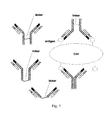
Schematic visualization of the patent's claim structure. Hand-drawn diagrams in progress for each landmark patent.
Where you've seen this
Real-world examples
Long-acting versions of Exenatide for type 2 diabetes
Other long-acting peptide drugs for chronic conditions
Experimental targeted therapies for systemic lupus erythematosus
Why it matters
The bigger picture
Many protein and peptide drugs break down quickly in the body, requiring frequent injections, which can be inconvenient for patients. This patent's methods could lead to drugs that last longer, meaning patients might need fewer doses. For autoimmune diseases, the targeted approach could reduce unwanted side effects by focusing the immune response more precisely on the disease-causing elements.
Filed
February 11, 2019
Market context
Who's building on this
Companies in this space
Major pharmaceutical companies like Novo Nordisk, Eli Lilly, and Amgen are heavily invested in developing long-acting peptide and protein therapeutics. Biotech startups also frequently explore novel drug delivery and targeting mechanisms for autoimmune and cancer therapies, building on similar principles of molecular modification and targeted delivery.
Market impact
The development of longer-acting biologics has significantly improved patient compliance and outcomes for chronic conditions like diabetes and autoimmune disorders by reducing dosing frequency. This patent contributes to the ongoing research into more efficient drug delivery and targeted therapies, aiming to enhance treatment specificity and potentially open new avenues for treating complex diseases with fewer side effects.
Claim 1 — Plain English
What this patent covers
This patent describes two main methods to improve drug treatments. First, it details how to extend the active life of peptide drugs in the body (their "half-life"). This is done by connecting at least three individual peptide units, called monomers, in a linear chain using a special "self-immolative linker" (Claim 1). This creates a larger molecule, an "oligomer," with a total molecular weight greater than 60,000 (Claim 1). The linker is designed to break apart inside the body, releasing the active peptides when needed. For example, this method could be applied to peptides like Exenatide (Claim 3) or CNP peptide (Claim 4). Second, the patent describes creating specialized combinations, or "conjugates," to treat autoimmune diseases, specifically systemic lupus erythematosus (Claim 6). These conjugates combine an "auto antigen" (a substance that causes the immune system to attack the body's own tissues, such as B cell antigen or DNA, as in Claims 7-8) with a "second antigen" that the body already has natural antibodies against (like alpha-gal or L-rhamnose, as in Claim 9). The goal is to redirect the body's immune response to treat the disease more effectively.
The clever bit
The core innovation involves using a cleavable linker to temporarily increase the size of a peptide drug, which helps it stay in the body longer by preventing rapid breakdown, while still allowing the active drug to be released when and where it's needed. For autoimmune diseases, the cleverness lies in hijacking existing antibodies to deliver or redirect an immune response against specific disease targets.
What it does not cover
- Does not cover extending peptide half-life by connecting fewer than three peptide units.
- Does not cover peptide oligomers with a total molecular weight of 60,000 or less.
- Does not cover linkers that are not "self-immolative" or are not cleavable inside a living organism.
- Does not cover conjugates for autoimmune diseases other than systemic lupus erythematosus, unless additional claims specify.
- Does not cover conjugates where the second antigen is not something the body already has natural antibodies against.
Patent timeline
Application submitted to the patent office
Patent enters public domain
PatentBrief Score
Impact Score
Limited data
Citation count
0/40
No citations yet
Claim breadth
7/20
Moderate scope
Recency
0/20
Older than 20 years
Assignee scale
0/20
Independent or smaller assigneeassigneeThe entity that owns the patent — usually the inventor's employer or a company.Read more →
PatentBrief Impact Score — based on citation count, claim breadth, recency, and assignee scale. Not a legal assessment.
Heuristic Value Estimate
What this patent might be worth
$45K – $144K
Midpoint $90K · 12.3 yr remaining · industry ×3.0
Heuristic only — blends forward/backward citation counts, claim scope, time remaining, litigation history, and CPC-derived industry baseline. Real valuations need a professional appraisal.
Claim text not yet imported for this patent
The original legal language
Original claims
11 claims as filed with the patent office.
Concepts involved
Cite this patent
Wang, T. Making Drug Proteins Last Longer and Target Diseases Better (U.S. Patent No. 20,190,160,160). U.S. Patent and Trademark Office. https://patentbrief.org/patent/us/20190160160/methods-to-treat-diseases-with-protein-peptide-and-antigen-modification
Auto-generated from the patent record. Double-check author order and the issue date against the official USPTO document before submitting.
Embed
Add this patent to your site
Drop this plain-English patent card into any blog post or article — free, no signup. It always links back to the full breakdown here.
<div data-patentlens-widget data-patent-number="US20190160160"></div>
<script src="https://patentbrief.org/embed.js" async></script>
Stay in the loop
Get a weekly digest of new patents.
One email per week. No spam. Unsubscribe anytime.
Keep exploring
Related patents you should know
US 4683195 · 1987
How to Make Billions of Copies of a DNA Segment
This patent describes the Polymerase Chain Reaction (PCR), a method to rapidly create many copies of a specific piece of DNA or RNA, enabling its detection and analysis.
Cetus Corp
US 8697359 · 2014
How to Edit Genes in Human Cells Using an Engineered CRISPR System
This patent describes an engineered CRISPR-Cas9 system for precisely cutting DNA in eukaryotic cells to change how genes work, opening the door for gene editing in complex organisms.
Massachusetts Institute of Technology
US 7657849 · 2010
How the iPhone's Slide-to-Unlock Gesture Works
Apple's 2010 patent describes unlocking a device by dragging a specific graphical image across the touchscreen along a predefined path, a gesture that became iconic with the original iPhone.
Apple Inc
US 4733665 · 1988
How Doctors Implant a Permanent Stent Using a Balloon
This patent describes the method for placing a permanent, expandable wire mesh tube inside a blood vessel or other body tube using a balloon-tipped catheter to widen it and keep it open.
Expandable Grafts Partnership
US 4965188 · 1990
How to Make Many Copies of a DNA Piece with Heat
This patent describes the Polymerase Chain Reaction (PCR) method, a technique to make millions of copies of a specific DNA segment using a heat-resistant enzyme and repeated temperature changes.
Cetus Corp
US 4235871 · 1980
How to Encapsulate Active Materials in Lipid Bubbles Efficiently
This patent describes a method for trapping biologically active substances inside tiny, multi-layered fat bubbles called liposomes, using a specific water-in-oil emulsion and gel-forming process to improve how much material gets captured.
Individual
Semantically similar
You might also find these interesting
US 5455030 · 1995 · Enzon Labs Inc
How to Build Smaller, Synthetic Antibody-Like Molecules for Medicine
US 10314897 · 2019 · Immatics Biotechnologies
How a Specific Protein Fragment Can Train Immune Cells to Fight Cancer
US 20210205465 · Apo T BV
Targeting Bad Cells with Toxic Antibodies for Cancer and Autoimmune Disease
US 10106579 · 2018 · Ra Pharmaceuticals Inc
How Synthetic Peptides Block Immune System Overreaction
More to explore
More in Biotech & Medicine
US 4683195 · 1987 · Cetus Corp
How to Make Billions of Copies of a DNA Segment
US 8697359 · 2014 · Massachusetts Institute of Technology
How to Edit Genes in Human Cells Using an Engineered CRISPR System
US 4733665 · 1988 · Expandable Grafts Partnership
How Doctors Implant a Permanent Stent Using a Balloon
US 4965188 · 1990 · Cetus Corp
How to Make Many Copies of a DNA Piece with Heat
New to patents?
Common Questions
Frequently Asked Questions
What does Making Drug Proteins Last Longer and Target Diseases Better cover?
This patent describes ways to make protein and peptide drugs stay in the body longer and target specific diseases like autoimmune conditions or cancer more precisely by linking them together or combining them with other molecules.
Who owns patent US 20190160160?
This patent is owned by Individual.
When does this patent expire?
This patent is expected to expire on February 11, 2039, when the invention enters the public domain.
What problem does this patent solve?
Many protein and peptide drugs break down quickly in the body, requiring frequent injections, which can be inconvenient for patients. This patent's methods could lead to drugs that last longer, meaning patients might need fewer doses. For autoimmune diseases, the targeted approach could reduce unwanted side effects by focusing the immune response more precisely on the disease-causing elements.
What does this patent NOT cover?
Does not cover extending peptide half-life by connecting fewer than three peptide units.
Same assignee
More from Individual
Patent monitoring