How Servers Combine Global and Local Content for Personalized Web Displays
A 1997 Microsoft patent describing how a server can mix general content with specific local details to create a personalized experience for users based on their location or demographics.
Original patent title: “Custom localized information in a networked server for display to an end user”
A 1997 Microsoft patent describing how a server can mix general content with specific local details to create a personalized experience for users based on their location or demographics. Granted to Microsoft Corp in 2000 with 30 claims and 111 forward citations, and it is now in the public domain.
Coverage
What does this patent actually cover?
The patent describes a system where a server acts as a hub to assemble a custom web page or media stream. It pulls 'global' content, such as a movie or a news feed, from a central source and mixes it with 'local' content, such as regional advertisements or language-specific subtitles, stored in a local database. The server then sends this combined package to the user's computer. For example, a user in Tokyo might receive the same global action movie as a user in New York, but the server would automatically inject Japanese subtitles or local store ads into the stream for the Tokyo user.
The gap
What does this patent NOT cover?
- Does not cover content personalization that happens entirely on the user's device (client-side rendering) without server-side integration.
- Does not cover real-time user tracking or behavioral profiling based on individual browsing history.
- Does not cover the specific algorithms used to select which local content is relevant to a user.
These exclusions are unique to PatentBrief — derived from the actual claim language, not patent-office boilerplate.
Key facts
What made this novel
The innovation was the server-side integration of disparate data sources—global and local—before delivery, rather than forcing the client computer to assemble the pieces, which was technically difficult for the hardware of 1997.
The Patent Drawing
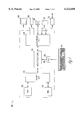
Schematic visualization of the patent's claim structure. Hand-drawn diagrams in progress for each landmark patent.
Where you've seen this
Real-world examples
Localized video streaming services
Regionalized news portals
Targeted web advertising networks
Content delivery networks (CDNs)
Why it matters
The bigger picture
This patent represents an early blueprint for the modern 'edge computing' and content delivery networks (CDNs) that power the web today. By offloading the combination of content to servers closer to the user, it helped solve the bandwidth and latency problems of the late 1990s internet. It laid the groundwork for how streaming services and global websites provide localized experiences today.
Filed
July 3, 1997
Granted
September 19, 2000
Market context
Who's building on this
Companies in this space
Major cloud infrastructure providers like Microsoft (Azure), Amazon (AWS), and Google Cloud have built extensive systems that refine the concepts of edge delivery and content integration described here. Modern streaming platforms like Netflix and YouTube also utilize these principles to serve localized content at scale.
Market impact
This patent helped formalize the architecture for localized web delivery, moving the industry away from static, one-size-fits-all websites. It enabled the rise of global digital platforms that could maintain a consistent brand identity while providing relevant, localized experiences to users worldwide.
Claim 1 — Plain English
What this patent covers
The patent describes a system where a server acts as a hub to assemble a custom web page or media stream. It pulls 'global' content, such as a movie or a news feed, from a central source and mixes it with 'local' content, such as regional advertisements or language-specific subtitles, stored in a local database. The server then sends this combined package to the user's computer. For example, a user in Tokyo might receive the same global action movie as a user in New York, but the server would automatically inject Japanese subtitles or local store ads into the stream for the Tokyo user.
The clever bit
The innovation was the server-side integration of disparate data sources—global and local—before delivery, rather than forcing the client computer to assemble the pieces, which was technically difficult for the hardware of 1997.
What it does not cover
- Does not cover content personalization that happens entirely on the user's device (client-side rendering) without server-side integration.
- Does not cover real-time user tracking or behavioral profiling based on individual browsing history.
- Does not cover the specific algorithms used to select which local content is relevant to a user.
Patent timeline
Application submitted to the patent office
Application published, typically 18 months after filing
Patent officially issued
Patent enters public domain
This patent is in the public domain
See the Freedom to Build guide — what is free to use, what is not, and how to cite this patent.
PatentBrief Score
Impact Score
High impact
Citation count
40/40
Highly cited
Claim breadth
20/20
Very broad protection
Recency
0/20
Older than 20 years
Assignee scale
20/20
Major company or institution
PatentBrief Impact Score — based on citation count, claim breadth, recency, and assignee scale. Not a legal assessment.
Heuristic Value Estimate
What this patent might be worth
$82K – $262K
Midpoint $164K · expired or expiring · industry ×1.4
Heuristic only — blends forward/backward citation counts, claim scope, time remaining, litigation history, and CPC-derived industry baseline. Real valuations need a professional appraisal.
Claim text not yet imported for this patent
The original legal language
Original claims
30 claims as filed with the patent office.
Concepts involved
Citations
Patent lineage
Cite this patent
Chaddha, N. (2000). How Servers Combine Global and Local Content for Personalized Web Displays (U.S. Patent No. 6,122,658). U.S. Patent and Trademark Office. https://patentbrief.org/patent/us/6122658/custom-localized-information-in-a-networked-server-for-display-to-an-end-user
Auto-generated from the patent record. Double-check author order and the issue date against the official USPTO document before submitting.
Embed
Add this patent to your site
Drop this plain-English patent card into any blog post or article — free, no signup. It always links back to the full breakdown here.
<div data-patentlens-widget data-patent-number="US6122658"></div>
<script src="https://patentbrief.org/embed.js" async></script>
Stay in the loop
Get a weekly digest of new patents.
One email per week. No spam. Unsubscribe anytime.
Keep exploring
Related patents you should know
US 4683195 · 1987
How to Make Billions of Copies of a DNA Segment
This patent describes the Polymerase Chain Reaction (PCR), a method to rapidly create many copies of a specific piece of DNA or RNA, enabling its detection and analysis.
Cetus Corp
US 8697359 · 2014
How to Edit Genes in Human Cells Using an Engineered CRISPR System
This patent describes an engineered CRISPR-Cas9 system for precisely cutting DNA in eukaryotic cells to change how genes work, opening the door for gene editing in complex organisms.
Massachusetts Institute of Technology
US 7657849 · 2010
How the iPhone's Slide-to-Unlock Gesture Works
Apple's 2010 patent describes unlocking a device by dragging a specific graphical image across the touchscreen along a predefined path, a gesture that became iconic with the original iPhone.
Apple Inc
US 4733665 · 1988
How Doctors Implant a Permanent Stent Using a Balloon
This patent describes the method for placing a permanent, expandable wire mesh tube inside a blood vessel or other body tube using a balloon-tipped catheter to widen it and keep it open.
Expandable Grafts Partnership
US 4965188 · 1990
How to Make Many Copies of a DNA Piece with Heat
This patent describes the Polymerase Chain Reaction (PCR) method, a technique to make millions of copies of a specific DNA segment using a heat-resistant enzyme and repeated temperature changes.
Cetus Corp
US 4235871 · 1980
How to Encapsulate Active Materials in Lipid Bubbles Efficiently
This patent describes a method for trapping biologically active substances inside tiny, multi-layered fat bubbles called liposomes, using a specific water-in-oil emulsion and gel-forming process to improve how much material gets captured.
Individual
Semantically similar
You might also find these interesting
US 9332078 · 2016 · Amazon Technologies Inc
How Amazon Delivers Content Faster Using Local Servers
US 10210529 · 2019 · Mediaport Entertainment Inc
Delivering Targeted Ads and Digital Content to Remote Kiosks
US 5774660 · 1998 · Resonate Inc
How Load Balancers Route Web Traffic Based on Specific Content
US 5347632 · 1994 · Prodigy Services Co
Prodigy's System for Interactive Online Information and Shopping
More to explore
More in Consumer Electronics
US 7657849 · 2010 · Apple Inc
How the iPhone's Slide-to-Unlock Gesture Works
US 7479949 · 2009 · Apple Inc
How Touchscreens Understand Your Finger Swipes and Scrolls
US 4528643 · 1985 · FPDC Inc
How Stores Make Custom Products On-Demand with Remote Approval
US 7469381 · 2008 · Apple Inc
How Touchscreens Show and Snap Back When You Scroll Past an Edge
New to patents?
Common Questions
Frequently Asked Questions
What does How Servers Combine Global and Local Content for Personalized Web Displays cover?
A 1997 Microsoft patent describing how a server can mix general content with specific local details to create a personalized experience for users based on their location or demographics.
Who owns patent US 6122658?
Microsoft Corp owns this patent, granted in 2000.
When does this patent expire?
This patent has expired and is now in the public domain — anyone can use the invention freely.
What is patent US 6122658 cited by?
This patent has been cited by 111 later patents that build on its ideas.
What problem does this patent solve?
This patent represents an early blueprint for the modern 'edge computing' and content delivery networks (CDNs) that power the web today. By offloading the combination of content to servers closer to the user, it helped solve the bandwidth and latency problems of the late 1990s internet. It laid the groundwork for how streaming services and global websites provide localized experiences today.
What does this patent NOT cover?
Does not cover content personalization that happens entirely on the user's device (client-side rendering) without server-side integration.
Same assignee
More from Microsoft Corp
Patent monitoring