How to Make AI Smarter by Secretly Adding Facts to Your Questions
This patent describes a system that automatically finds important words in your questions to an AI, then adds relevant facts from a knowledge base before the AI answers, making the AI's response more informed without you knowing the extra facts were added.
Original patent title: “Supplementation of large language model knowledge via prompt modification”
This patent describes a system that automatically finds important words in your questions to an AI, then adds relevant facts from a knowledge base before the AI answers, making the AI's response more informed without you knowing the extra facts were added. Owned by SAP SE with 23 claims and 12 forward citations, and it is expected to expire in 2043.
Coverage
What does this patent actually cover?
This system improves how large language models (LLMs) respond by automatically adding extra information to a user's question. First, it receives user input, like a question or statement (ClaimclaimA numbered sentence at the end of a patent that legally defines what the inventor owns. The most important section.Read more → 1). It then analyzes this input to find key 'entities' — specific people, places, or things mentioned (Claim 1). Using a 'semantic framework,' which is like a structured database of facts (Claim 4, e.g., a knowledge graph), it looks up information related to these entities. This information is often in the form of 'triples' (subject, predicate, object, like 'Apple Inc. designs iPhones') (Claim 1). These triples can be turned into plain sentences, called 'verbalized triples' (Claim 3). The system then adds these extra facts to the original user input, creating a 'modified user input' (Claim 1). This modified input is sent to the LLM, which uses the added facts to generate a more complete response. Crucially, the user only sees the original question and the LLM's final answer; the added facts are hidden (Claim 9). For example, if a user asks, 'Tell me about the CEO of Apple,' the system might secretly add facts like 'Tim Cook is the CEO of Apple Inc.' and 'Apple Inc. is a technology company' to the prompt before the LLM processes it.
The gap
What does this patent NOT cover?
- Does not cover systems where the user explicitly provides all the supplemental information to the large language model.
- Does not cover systems that only use a large language model without an external semantic framework or knowledge graph to find additional facts.
- Does not cover methods where the modified user input, including the added facts, is displayed to the user before being sent to the LLM.
- Does not cover systems that only identify entities in the user input without then using those entities to retrieve and add 'triples' or similar structured data.
- Does not cover general prompt engineering techniques that manually add context or instructions to an LLM prompt.
These exclusions are unique to PatentBrief — derived from the actual claim language, not patent-office boilerplate.
Key facts
What made this novel
The noveltynoveltyThe requirement that an invention be different from anything publicly known before its priority date.Read more → lies in the automated, hidden enrichment of user prompts with structured, factual data from a semantic framework, ensuring the LLM receives comprehensive context without user intervention or awareness of the modification.
The Patent Drawing
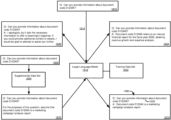
Schematic visualization of the patent's claim structure. Hand-drawn diagrams in progress for each landmark patent.
Where you've seen this
Real-world examples
Enterprise AI assistants using internal company knowledge bases
Customer support chatbots providing detailed product information
Research tools that augment user queries with academic or scientific data
Legal AI systems that inject case law or statute details into user questions
SAP's own AI offerings that integrate with business data
Why it matters
The bigger picture
This patent addresses a core challenge with large language models: their tendency to 'hallucinate' or provide incorrect information, especially on specific, up-to-date facts. By automatically injecting verified data from a knowledge graph, it aims to make LLM responses more accurate and reliable. This approach is vital for enterprise applications where factual correctness is paramount, such as in business intelligence, customer support, or legal research tools. It allows LLMs to leverage curated, external data without requiring users to manually provide extensive context.
Filed
September 15, 2023
Market context
Who's building on this
Companies in this space
SAP SE, the assigneeassigneeThe entity that owns the patent — usually the inventor's employer or a company.Read more →, is actively developing and integrating AI solutions into its enterprise software suite, likely leveraging this technology to enhance the factual accuracy and contextual relevance of its AI assistants and tools. Other major cloud providers like Google, Microsoft, and Amazon, along with numerous AI startups, are also working on similar 'retrieval-augmented generation' (RAG) techniques to ground LLMs in external data sources.
Market impact
This patent contributes to the growing field of retrieval-augmented generation (RAG), which has become a standard technique for improving the reliability and factual accuracy of large language models. Its adoption has enabled enterprises to deploy LLMs in critical business functions by connecting them to proprietary and verified data, thereby reducing the risk of 'hallucinations.' This approach has fostered a new category of AI solutions focused on enterprise knowledge management and intelligent automation, making LLMs more practical for real-world business applications.
Claim 1 — Plain English
What this patent covers
This system improves how large language models (LLMs) respond by automatically adding extra information to a user's question. First, it receives user input, like a question or statement (Claim 1). It then analyzes this input to find key 'entities' — specific people, places, or things mentioned (Claim 1). Using a 'semantic framework,' which is like a structured database of facts (Claim 4, e.g., a knowledge graph), it looks up information related to these entities. This information is often in the form of 'triples' (subject, predicate, object, like 'Apple Inc. designs iPhones') (Claim 1). These triples can be turned into plain sentences, called 'verbalized triples' (Claim 3). The system then adds these extra facts to the original user input, creating a 'modified user input' (Claim 1). This modified input is sent to the LLM, which uses the added facts to generate a more complete response. Crucially, the user only sees the original question and the LLM's final answer; the added facts are hidden (Claim 9). For example, if a user asks, 'Tell me about the CEO of Apple,' the system might secretly add facts like 'Tim Cook is the CEO of Apple Inc.' and 'Apple Inc. is a technology company' to the prompt before the LLM processes it.
The clever bit
The novelty lies in the automated, hidden enrichment of user prompts with structured, factual data from a semantic framework, ensuring the LLM receives comprehensive context without user intervention or awareness of the modification.
What it does not cover
- Does not cover systems where the user explicitly provides all the supplemental information to the large language model.
- Does not cover systems that only use a large language model without an external semantic framework or knowledge graph to find additional facts.
- Does not cover methods where the modified user input, including the added facts, is displayed to the user before being sent to the LLM.
- Does not cover systems that only identify entities in the user input without then using those entities to retrieve and add 'triples' or similar structured data.
- Does not cover general prompt engineering techniques that manually add context or instructions to an LLM prompt.
Patent timeline
Application submitted to the patent office
Patent enters public domain
PatentBrief Score
Impact Score
Moderate
Citation count
22/40
Moderately cited
Claim breadth
15/20
Broad claimsclaimsThe numbered statements at the end of a patent that legally define what the inventor owns.Read more →
Recency
0/20
Older than 20 years
Assignee scale
20/20
Major company or institution
PatentBrief Impact Score — based on citation count, claim breadth, recency, and assignee scale. Not a legal assessment.
Heuristic Value Estimate
What this patent might be worth
$150K – $479K
Midpoint $300K · 16.9 yr remaining · industry ×1.6
Heuristic only — blends forward/backward citation counts, claim scope, time remaining, litigation history, and CPC-derived industry baseline. Real valuations need a professional appraisal.
Claim text not yet imported for this patent
The original legal language
Original claims
23 claims as filed with the patent office.
Concepts involved
Citations
Patent lineage
Cite this patent
Portisch, J., Reitemeier, Y., Hladik, M., COSTA, G., & Sahu, D. How to Make AI Smarter by Secretly Adding Facts to Your Questions (U.S. Patent No. 20,250,094,707). U.S. Patent and Trademark Office. https://patentbrief.org/patent/us/20250094707/supplementation-of-large-language-model-knowledge-via-prompt-modification
Auto-generated from the patent record. Double-check author order and the issue date against the official USPTO document before submitting.
Embed
Add this patent to your site
Drop this plain-English patent card into any blog post or article — free, no signup. It always links back to the full breakdown here.
<div data-patentlens-widget data-patent-number="US20250094707"></div>
<script src="https://patentbrief.org/embed.js" async></script>
Stay in the loop
Get a weekly digest of new patents.
One email per week. No spam. Unsubscribe anytime.
Keep exploring
Related patents you should know
US 4683195 · 1987
How to Make Billions of Copies of a DNA Segment
This patent describes the Polymerase Chain Reaction (PCR), a method to rapidly create many copies of a specific piece of DNA or RNA, enabling its detection and analysis.
Cetus Corp
US 8697359 · 2014
How to Edit Genes in Human Cells Using an Engineered CRISPR System
This patent describes an engineered CRISPR-Cas9 system for precisely cutting DNA in eukaryotic cells to change how genes work, opening the door for gene editing in complex organisms.
Massachusetts Institute of Technology
US 7657849 · 2010
How the iPhone's Slide-to-Unlock Gesture Works
Apple's 2010 patent describes unlocking a device by dragging a specific graphical image across the touchscreen along a predefined path, a gesture that became iconic with the original iPhone.
Apple Inc
US 4733665 · 1988
How Doctors Implant a Permanent Stent Using a Balloon
This patent describes the method for placing a permanent, expandable wire mesh tube inside a blood vessel or other body tube using a balloon-tipped catheter to widen it and keep it open.
Expandable Grafts Partnership
US 4965188 · 1990
How to Make Many Copies of a DNA Piece with Heat
This patent describes the Polymerase Chain Reaction (PCR) method, a technique to make millions of copies of a specific DNA segment using a heat-resistant enzyme and repeated temperature changes.
Cetus Corp
US 4235871 · 1980
How to Encapsulate Active Materials in Lipid Bubbles Efficiently
This patent describes a method for trapping biologically active substances inside tiny, multi-layered fat bubbles called liposomes, using a specific water-in-oil emulsion and gel-forming process to improve how much material gets captured.
Individual
Semantically similar
You might also find these interesting

US 12531820 · 2026 · Amazon Technologies
How Chatbots Use AI and Fact Databases to Learn and Improve
US 12353827 · 2025 · Unlikely Artificial Intelligence
Using Non-AI Systems to Improve AI Text Generation
US 12073180 · 2024 · Unlikely Artificial Intelligence
How a Computer System Fact-Checks AI Language Models

US 11989527 · 2024 · Unlikely Artificial Intelligence
How a Computer System Checks and Improves AI Text
More to explore
More in Software & Internet
US 4405829 · 1983 · Massachusetts Institute of Technology
How RSA Public-Key Encryption Keeps Digital Messages Secret
US 6285999 · 2001 · Leland Stanford Junior University
How Websites Get Ranked by Importance
US 5960411 · 1999 · Amazon com Inc
How Amazon's One-Click Ordering Works for Online Purchases
US 7669123 · 2010 · Facebook Inc
Displaying Friends' Activities in a Social Network Feed
New to patents?
Common Questions
Frequently Asked Questions
What does How to Make AI Smarter by Secretly Adding Facts to Your Questions cover?
This patent describes a system that automatically finds important words in your questions to an AI, then adds relevant facts from a knowledge base before the AI answers, making the AI's response more informed without you knowing the extra facts were added.
Who owns patent US 20250094707?
This patent is owned by SAP SE.
When does this patent expire?
This patent is expected to expire on September 15, 2043, when the invention enters the public domain.
What is patent US 20250094707 cited by?
This patent has been cited by 12 later patents that build on its ideas.
What problem does this patent solve?
This patent addresses a core challenge with large language models: their tendency to 'hallucinate' or provide incorrect information, especially on specific, up-to-date facts. By automatically injecting verified data from a knowledge graph, it aims to make LLM responses more accurate and reliable. This approach is vital for enterprise applications where factual correctness is paramount, such as in business intelligence, customer support, or legal research tools. It allows LLMs to leverage curated, external data without requiring users to manually provide extensive context.
What does this patent NOT cover?
Does not cover systems where the user explicitly provides all the supplemental information to the large language model.
Patent monitoring