Tiny Drug Carriers for Better Brain Tumor Treatment
This patent describes super-small nanoparticle drug conjugates designed to sneak past barriers and spread evenly inside tough-to-treat tumors, especially in the brain, for more effective cancer therapy.
Original patent title: “Compositions and methods for targeted particle penetration, distribution, and response in malignant brain tumors”
This patent describes super-small nanoparticle drug conjugates designed to sneak past barriers and spread evenly inside tough-to-treat tumors, especially in the brain, for more effective cancer therapy. Owned by Cornell University with 23 claims, and it is expected to expire in 2043.
Coverage
What does this patent actually cover?
This patent describes a method for treating cancer using special tiny drug carriers called nanoparticle drug conjugates (NDCs). Each NDC has a nanoparticle, which is super small—no bigger than 20 nanometers in average diameter, and ideally between 3 to 8 nanometers (ClaimclaimA numbered sentence at the end of a patent that legally defines what the inventor owns. The most important section.Read more → 1, Claim 5). Attached to this nanoparticle is a 'linker-drug construct' where a drug is connected by a 'cleavable linker' (Claim 1). This linker can break apart, releasing the drug once it reaches the tumor (Claim 6). The key is that these NDCs are designed to easily spread and move around within the tumor tissue, called the 'tumor interstitium' (Claim 1). For example, these NDCs could carry a chemotherapy drug like gefitinib (Claim 9) directly into a glioblastoma multiforme (GBM) brain tumor (Claim 2), allowing the drug to reach more cancer cells effectively.
The gap
What does this patent NOT cover?
- Does not cover nanoparticle drug conjugates where the nanoparticle has an average diameter greater than 20 nanometers (ClaimclaimA numbered sentence at the end of a patent that legally defines what the inventor owns. The most important section.Read more → 1).
- Does not cover drug delivery systems where the drug is not attached to a nanoparticle via a cleavable linker (ClaimclaimA numbered sentence at the end of a patent that legally defines what the inventor owns. The most important section.Read more → 1).
- Does not cover methods of treating cancer that do not involve administering a nanoparticle drug conjugate designed to diffuse within tumor interstitium (ClaimclaimA numbered sentence at the end of a patent that legally defines what the inventor owns. The most important section.Read more → 1).
- Does not cover nanoparticles that are not specifically designed to carry a drug moiety (ClaimclaimA numbered sentence at the end of a patent that legally defines what the inventor owns. The most important section.Read more → 1).
- Does not cover treatments for conditions other than cancer (ClaimclaimA numbered sentence at the end of a patent that legally defines what the inventor owns. The most important section.Read more → 1).
These exclusions are unique to PatentBrief — derived from the actual claim language, not patent-office boilerplate.
Key facts
What made this novel
The truly clever part is the combination of extremely small nanoparticle size (under 20 nm, ideally 3-8 nm) with a cleavable drug linker, specifically designed to allow the entire drug-carrying nanoparticle to readily diffuse and spread widely within the dense, often difficult-to-penetrate tumor tissue (ClaimclaimA numbered sentence at the end of a patent that legally defines what the inventor owns. The most important section.Read more → 1, Claim 5). This ensures the drug reaches more cancer cells, rather than just the outer edges of the tumor.
The Patent Drawing
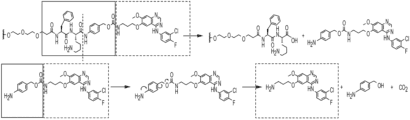
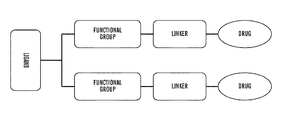
Schematic visualization of the patent's claim structure. Hand-drawn diagrams in progress for each landmark patent.
Where you've seen this
Real-world examples
Targeted chemotherapy for glioblastoma multiforme (GBM)
Drug delivery for metastatic brain tumors
Enhanced treatment for non-small cell lung carcinoma (NSCLC)
Theranostic agents combining diagnosis and therapy for brain cancer
Improved delivery of immunotherapies to tumor microenvironments
Why it matters
The bigger picture
Treating brain tumors is incredibly challenging because the brain has natural defenses, like the blood-brain barrier, that block most drugs. This patent addresses that problem by proposing extremely small nanoparticles that can potentially bypass these barriers and spread throughout the tumor more effectively (ClaimclaimA numbered sentence at the end of a patent that legally defines what the inventor owns. The most important section.Read more → 1). This improved distribution could mean that less drug is needed, and it reaches more cancer cells, leading to better outcomes for patients with aggressive cancers like glioblastoma (Claim 2). It also aims to treat 'leptomeningeal metastases,' which are cancers that spread to the fluid around the brain and spinal cord (Claim 4).
Filed
December 19, 2023
Market context
Who's building on this
Companies in this space
Cornell University, the assigneeassigneeThe entity that owns the patent — usually the inventor's employer or a company.Read more →, is actively involved in research and development in this area, particularly within its biomedical engineering and medical departments. Major pharmaceutical companies and biotech startups focused on oncology and drug delivery, such as AstraZeneca, Pfizer, and various nanomedicine companies, are also exploring similar targeted nanoparticle approaches for difficult-to-treat cancers. Academic research labs globally are also investigating novel nanoparticle designs for enhanced tumor penetration.
Market impact
This patent could significantly impact the market for cancer therapeutics, especially for brain tumors and other solid tumors that are hard to penetrate. If successful, it could lead to a new generation of drugs with improved efficacy and reduced side effects, potentially creating new product lines for pharmaceutical companies. The ability to deliver drugs more uniformly within tumor tissue could also shift treatment paradigms, making previously untreatable or poorly treated cancers more manageable. It could also spur further research and investment in nanomedicine for oncology.
Claim 1 — Plain English
What this patent covers
This patent describes a method for treating cancer using special tiny drug carriers called nanoparticle drug conjugates (NDCs). Each NDC has a nanoparticle, which is super small—no bigger than 20 nanometers in average diameter, and ideally between 3 to 8 nanometers (Claim 1, Claim 5). Attached to this nanoparticle is a 'linker-drug construct' where a drug is connected by a 'cleavable linker' (Claim 1). This linker can break apart, releasing the drug once it reaches the tumor (Claim 6). The key is that these NDCs are designed to easily spread and move around within the tumor tissue, called the 'tumor interstitium' (Claim 1). For example, these NDCs could carry a chemotherapy drug like gefitinib (Claim 9) directly into a glioblastoma multiforme (GBM) brain tumor (Claim 2), allowing the drug to reach more cancer cells effectively.
The clever bit
The truly clever part is the combination of extremely small nanoparticle size (under 20 nm, ideally 3-8 nm) with a cleavable drug linker, specifically designed to allow the entire drug-carrying nanoparticle to readily diffuse and spread widely within the dense, often difficult-to-penetrate tumor tissue (Claim 1, Claim 5). This ensures the drug reaches more cancer cells, rather than just the outer edges of the tumor.
What it does not cover
- Does not cover nanoparticle drug conjugates where the nanoparticle has an average diameter greater than 20 nanometers (Claim 1).
- Does not cover drug delivery systems where the drug is not attached to a nanoparticle via a cleavable linker (Claim 1).
- Does not cover methods of treating cancer that do not involve administering a nanoparticle drug conjugate designed to diffuse within tumor interstitium (Claim 1).
- Does not cover nanoparticles that are not specifically designed to carry a drug moiety (Claim 1).
- Does not cover treatments for conditions other than cancer (Claim 1).
Patent timeline
Application submitted to the patent office
Patent enters public domain
PatentBrief Score
Impact Score
Limited data
Citation count
0/40
No citations yet
Claim breadth
15/20
Broad claimsclaimsThe numbered statements at the end of a patent that legally define what the inventor owns.Read more →
Recency
0/20
Older than 20 years
Assignee scale
0/20
Independent or smaller assigneeassigneeThe entity that owns the patent — usually the inventor's employer or a company.Read more →
PatentBrief Impact Score — based on citation count, claim breadth, recency, and assignee scale. Not a legal assessment.
Heuristic Value Estimate
What this patent might be worth
$59K – $187K
Midpoint $117K · 17.1 yr remaining · industry ×3.0
Heuristic only — blends forward/backward citation counts, claim scope, time remaining, litigation history, and CPC-derived industry baseline. Real valuations need a professional appraisal.
Claim text not yet imported for this patent
The original legal language
Original claims
23 claims as filed with the patent office.
Concepts involved
Cite this patent
Wolchok, J. D., Brennan, C., Overholtzer, M., Wiesner, U., Bradbury, M. S., & Yoo, B. Tiny Drug Carriers for Better Brain Tumor Treatment (U.S. Patent No. 20,240,408,251). U.S. Patent and Trademark Office. https://patentbrief.org/patent/us/20240408251/compositions-and-methods-for-targeted-particle-penetration-distribution-and-resp
Auto-generated from the patent record. Double-check author order and the issue date against the official USPTO document before submitting.
Embed
Add this patent to your site
Drop this plain-English patent card into any blog post or article — free, no signup. It always links back to the full breakdown here.
<div data-patentlens-widget data-patent-number="US20240408251"></div>
<script src="https://patentbrief.org/embed.js" async></script>
Stay in the loop
Get a weekly digest of new patents.
One email per week. No spam. Unsubscribe anytime.
Keep exploring
Related patents you should know
US 4683195 · 1987
How to Make Billions of Copies of a DNA Segment
This patent describes the Polymerase Chain Reaction (PCR), a method to rapidly create many copies of a specific piece of DNA or RNA, enabling its detection and analysis.
Cetus Corp
US 8697359 · 2014
How to Edit Genes in Human Cells Using an Engineered CRISPR System
This patent describes an engineered CRISPR-Cas9 system for precisely cutting DNA in eukaryotic cells to change how genes work, opening the door for gene editing in complex organisms.
Massachusetts Institute of Technology
US 7657849 · 2010
How the iPhone's Slide-to-Unlock Gesture Works
Apple's 2010 patent describes unlocking a device by dragging a specific graphical image across the touchscreen along a predefined path, a gesture that became iconic with the original iPhone.
Apple Inc
US 4733665 · 1988
How Doctors Implant a Permanent Stent Using a Balloon
This patent describes the method for placing a permanent, expandable wire mesh tube inside a blood vessel or other body tube using a balloon-tipped catheter to widen it and keep it open.
Expandable Grafts Partnership
US 4965188 · 1990
How to Make Many Copies of a DNA Piece with Heat
This patent describes the Polymerase Chain Reaction (PCR) method, a technique to make millions of copies of a specific DNA segment using a heat-resistant enzyme and repeated temperature changes.
Cetus Corp
US 4235871 · 1980
How to Encapsulate Active Materials in Lipid Bubbles Efficiently
This patent describes a method for trapping biologically active substances inside tiny, multi-layered fat bubbles called liposomes, using a specific water-in-oil emulsion and gel-forming process to improve how much material gets captured.
Individual
Semantically similar
You might also find these interesting
US 20190046446 · Eriochem Usa
How Special Nanoparticles Deliver Cancer Drugs Directly to Tumors
US 20190307892 · Eriochem Usa
Targeting Drugs to Specific Body Tissues Using ApoE3-Coated Nanoparticles
US 10307490 · 2019 · The Ohio State University
Tiny Packages for Delivering Gene-Targeting Drugs to Specific Cells
US 9884123 · 2018 · INVICTUS ONCOLOGY PVT
Targeted Platinum Drugs for Cancer Treatment
More to explore
More in Biotech & Medicine
US 4683195 · 1987 · Cetus Corp
How to Make Billions of Copies of a DNA Segment
US 8697359 · 2014 · Massachusetts Institute of Technology
How to Edit Genes in Human Cells Using an Engineered CRISPR System
US 4733665 · 1988 · Expandable Grafts Partnership
How Doctors Implant a Permanent Stent Using a Balloon
US 4965188 · 1990 · Cetus Corp
How to Make Many Copies of a DNA Piece with Heat
New to patents?
Common Questions
Frequently Asked Questions
What does Tiny Drug Carriers for Better Brain Tumor Treatment cover?
This patent describes super-small nanoparticle drug conjugates designed to sneak past barriers and spread evenly inside tough-to-treat tumors, especially in the brain, for more effective cancer therapy.
Who owns patent US 20240408251?
This patent is owned by Cornell University.
When does this patent expire?
This patent is expected to expire on December 19, 2043, when the invention enters the public domain.
What problem does this patent solve?
Treating brain tumors is incredibly challenging because the brain has natural defenses, like the blood-brain barrier, that block most drugs. This patent addresses that problem by proposing extremely small nanoparticles that can potentially bypass these barriers and spread throughout the tumor more effectively (Claim 1). This improved distribution could mean that less drug is needed, and it reaches more cancer cells, leading to better outcomes for patients with aggressive cancers like glioblastoma (Claim 2). It also aims to treat 'leptomeningeal metastases,' which are cancers that spread to…
What does this patent NOT cover?
Does not cover nanoparticle drug conjugates where the nanoparticle has an average diameter greater than 20 nanometers (Claim 1).
Patent monitoring