How Special Molecules Boost Cancer-Fighting CAR-T Cells
This patent describes special molecules made of a CAR-T cell activator attached to a fat-like part, designed to make cancer-fighting CAR-T cells grow and work better inside a patient.
Original patent title: “Compositions for chimeric antigen receptor t cell therapy and uses thereof”
This patent describes special molecules made of a CAR-T cell activator attached to a fat-like part, designed to make cancer-fighting CAR-T cells grow and work better inside a patient. Owned by Massachusetts Institute of Technology with 29 claims and 2 forward citations, and it is expected to expire in 2043.
Coverage
What does this patent actually cover?
The patent describes a method (ClaimclaimA numbered sentence at the end of a patent that legally defines what the inventor owns. The most important section.Read more → 77) to make chimeric antigen receptor-T (CAR-T) cells more active and numerous in a patient. It does this by giving the patient an "amphiphilic ligand conjugate." This conjugate has two main parts: a "chimeric antigen receptor (CAR) ligand" and a "lipid" (Claim 77). The CAR ligand is like a key that specifically binds to the CAR "lock" on the CAR-T cells, telling them to multiply. The lipid part (Claim 78) helps the conjugate insert into cell membranes, like those of antigen-presenting cells in lymph nodes (Claim 92), and can also bind to albumin in the body. This delivery system helps the CAR-T cells get the signal they need to fight cancer more effectively (Claim 97). For example, a patient with cancer could be given these conjugates, potentially along with their CAR-T cells (Claim 96), to enhance the CAR-T cells' ability to attack tumor cells (Claim 101).
The gap
What does this patent NOT cover?
- Does not cover methods of activating CAR-T cells outside a living subject (e.g., in a lab dish), as ClaimclaimA numbered sentence at the end of a patent that legally defines what the inventor owns. The most important section.Read more → 77 specifies "in a subject."
- Does not cover CAR-T cell activation using a ligand that is not operably linked to a lipid to form an amphiphilic conjugate (ClaimclaimA numbered sentence at the end of a patent that legally defines what the inventor owns. The most important section.Read more → 77).
- Does not cover CAR-T cell activation where the lipid part does not insert into a cell membrane or bind albumin under physiological conditions (ClaimclaimA numbered sentence at the end of a patent that legally defines what the inventor owns. The most important section.Read more → 78).
- Does not cover methods where the CAR ligand is not designed to bind to the CAR of the CAR-T cells (ClaimclaimA numbered sentence at the end of a patent that legally defines what the inventor owns. The most important section.Read more → 77).
- Does not cover CAR-T cell therapies that do not involve administering an amphiphilic ligand conjugate to the subject.
These exclusions are unique to PatentBrief — derived from the actual claim language, not patent-office boilerplate.
Key facts
What made this novel
The noveltynoveltyThe requirement that an invention be different from anything publicly known before its priority date.Read more → lies in creating an "amphiphilic ligand conjugate" (ClaimclaimA numbered sentence at the end of a patent that legally defines what the inventor owns. The most important section.Read more → 77) that combines a CAR-T activating signal with a lipid. This lipid allows the conjugate to naturally insert into cell membranes and traffic to lymph nodes (Claim 91, 92), effectively delivering the activation signal to CAR-T cells where they are most needed.
The Patent Drawing
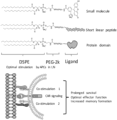
Schematic visualization of the patent's claim structure. Hand-drawn diagrams in progress for each landmark patent.
Where you've seen this
Real-world examples
CAR-T cell therapies for blood cancers (e.g., Kymriah, Yescarta)
Immunotherapy approaches for solid tumors
Drug delivery systems utilizing lipid conjugates
Lymph node targeting drug delivery
Why it matters
The bigger picture
CAR-T cell therapy is a powerful new way to fight certain cancers, but sometimes the CAR-T cells don't multiply enough or stay active long enough in the patient. This patent offers a way to boost their numbers and activity directly within the body (ClaimclaimA numbered sentence at the end of a patent that legally defines what the inventor owns. The most important section.Read more → 77). By making CAR-T cells more effective, this technology could improve treatment outcomes for patients with cancer (Claim 97) and potentially expand the types of cancers that can be treated.
Filed
June 21, 2023
Market context
Who's building on this
Companies in this space
Companies like Novartis, Kite Pharma (Gilead), Bristol Myers Squibb, and Johnson & Johnson are major players in CAR-T cell therapy development and are constantly researching ways to improve CAR-T cell persistence and efficacy. Academic institutions and biotech startups also actively explore next-generation CAR-T technologies to enhance treatment outcomes.
Market impact
This type of technology aims to improve the effectiveness and durability of existing CAR-T cell therapies, which could lead to better patient outcomes and broader application of these treatments. If successful, it could reduce the need for multiple CAR-T infusions or make the initial treatment more potent, potentially expanding the market for CAR-T therapies to more challenging cancers.
Claim 1 — Plain English
What this patent covers
The patent describes a method (Claim 77) to make chimeric antigen receptor-T (CAR-T) cells more active and numerous in a patient. It does this by giving the patient an "amphiphilic ligand conjugate." This conjugate has two main parts: a "chimeric antigen receptor (CAR) ligand" and a "lipid" (Claim 77). The CAR ligand is like a key that specifically binds to the CAR "lock" on the CAR-T cells, telling them to multiply. The lipid part (Claim 78) helps the conjugate insert into cell membranes, like those of antigen-presenting cells in lymph nodes (Claim 92), and can also bind to albumin in the body. This delivery system helps the CAR-T cells get the signal they need to fight cancer more effectively (Claim 97). For example, a patient with cancer could be given these conjugates, potentially along with their CAR-T cells (Claim 96), to enhance the CAR-T cells' ability to attack tumor cells (Claim 101).
The clever bit
The novelty lies in creating an "amphiphilic ligand conjugate" (Claim 77) that combines a CAR-T activating signal with a lipid. This lipid allows the conjugate to naturally insert into cell membranes and traffic to lymph nodes (Claim 91, 92), effectively delivering the activation signal to CAR-T cells where they are most needed.
What it does not cover
- Does not cover methods of activating CAR-T cells outside a living subject (e.g., in a lab dish), as Claim 77 specifies "in a subject."
- Does not cover CAR-T cell activation using a ligand that is not operably linked to a lipid to form an amphiphilic conjugate (Claim 77).
- Does not cover CAR-T cell activation where the lipid part does not insert into a cell membrane or bind albumin under physiological conditions (Claim 78).
- Does not cover methods where the CAR ligand is not designed to bind to the CAR of the CAR-T cells (Claim 77).
- Does not cover CAR-T cell therapies that do not involve administering an amphiphilic ligand conjugate to the subject.
Patent timeline
Application submitted to the patent office
Patent enters public domain
PatentBrief Score
Impact Score
Moderate
Citation count
10/40
Early citations
Claim breadth
19/20
Very broad protection
Recency
0/20
Older than 20 years
Assignee scale
20/20
Major company or institution
PatentBrief Impact Score — based on citation count, claim breadth, recency, and assignee scale. Not a legal assessment.
Heuristic Value Estimate
What this patent might be worth
$117K – $374K
Midpoint $234K · 16.7 yr remaining · industry ×3.0
Heuristic only — blends forward/backward citation counts, claim scope, time remaining, litigation history, and CPC-derived industry baseline. Real valuations need a professional appraisal.
Claim text not yet imported for this patent
The original legal language
Original claims
29 claims as filed with the patent office.
Concepts involved
Citations
Patent lineage
Cite this patent
Ma, L., & Irvine, D. J. How Special Molecules Boost Cancer-Fighting CAR-T Cells (U.S. Patent No. 20,240,082,373). U.S. Patent and Trademark Office. https://patentbrief.org/patent/us/20240082373/compositions-for-chimeric-antigen-receptor-t-cell-therapy-and-uses-thereof
Auto-generated from the patent record. Double-check author order and the issue date against the official USPTO document before submitting.
Embed
Add this patent to your site
Drop this plain-English patent card into any blog post or article — free, no signup. It always links back to the full breakdown here.
<div data-patentlens-widget data-patent-number="US20240082373"></div>
<script src="https://patentbrief.org/embed.js" async></script>
Stay in the loop
Get a weekly digest of new patents.
One email per week. No spam. Unsubscribe anytime.
Keep exploring
Related patents you should know
US 4683195 · 1987
How to Make Billions of Copies of a DNA Segment
This patent describes the Polymerase Chain Reaction (PCR), a method to rapidly create many copies of a specific piece of DNA or RNA, enabling its detection and analysis.
Cetus Corp
US 8697359 · 2014
How to Edit Genes in Human Cells Using an Engineered CRISPR System
This patent describes an engineered CRISPR-Cas9 system for precisely cutting DNA in eukaryotic cells to change how genes work, opening the door for gene editing in complex organisms.
Massachusetts Institute of Technology
US 7657849 · 2010
How the iPhone's Slide-to-Unlock Gesture Works
Apple's 2010 patent describes unlocking a device by dragging a specific graphical image across the touchscreen along a predefined path, a gesture that became iconic with the original iPhone.
Apple Inc
US 4733665 · 1988
How Doctors Implant a Permanent Stent Using a Balloon
This patent describes the method for placing a permanent, expandable wire mesh tube inside a blood vessel or other body tube using a balloon-tipped catheter to widen it and keep it open.
Expandable Grafts Partnership
US 4965188 · 1990
How to Make Many Copies of a DNA Piece with Heat
This patent describes the Polymerase Chain Reaction (PCR) method, a technique to make millions of copies of a specific DNA segment using a heat-resistant enzyme and repeated temperature changes.
Cetus Corp
US 4235871 · 1980
How to Encapsulate Active Materials in Lipid Bubbles Efficiently
This patent describes a method for trapping biologically active substances inside tiny, multi-layered fat bubbles called liposomes, using a specific water-in-oil emulsion and gel-forming process to improve how much material gets captured.
Individual
Semantically similar
You might also find these interesting
US 20250171803 · Purdue Research Foundation
Targeting Cancer with CAR T Cells Using Small Molecule 'Flags'
US 20240165159 · Purdue Research Foundation
Targeting Cancer with CAR T Cells Using a Chemical Tag
US 9328156 · 2016 · University of Pennsylvania Penn
How Genetically Modified T-Cells Attack Cancer

US 12600775 · 2026 · Kite Pharma
Treating a Specific Lymphoma with Modified T Cells
More to explore
More in Biotech & Medicine
US 4683195 · 1987 · Cetus Corp
How to Make Billions of Copies of a DNA Segment
US 8697359 · 2014 · Massachusetts Institute of Technology
How to Edit Genes in Human Cells Using an Engineered CRISPR System
US 4733665 · 1988 · Expandable Grafts Partnership
How Doctors Implant a Permanent Stent Using a Balloon
US 4965188 · 1990 · Cetus Corp
How to Make Many Copies of a DNA Piece with Heat
New to patents?
Common Questions
Frequently Asked Questions
What does How Special Molecules Boost Cancer-Fighting CAR-T Cells cover?
This patent describes special molecules made of a CAR-T cell activator attached to a fat-like part, designed to make cancer-fighting CAR-T cells grow and work better inside a patient.
Who owns patent US 20240082373?
This patent is owned by Massachusetts Institute of Technology.
When does this patent expire?
This patent is expected to expire on June 21, 2043, when the invention enters the public domain.
What is patent US 20240082373 cited by?
This patent has been cited by 2 later patents that build on its ideas.
What problem does this patent solve?
CAR-T cell therapy is a powerful new way to fight certain cancers, but sometimes the CAR-T cells don't multiply enough or stay active long enough in the patient. This patent offers a way to boost their numbers and activity directly within the body (Claim 77). By making CAR-T cells more effective, this technology could improve treatment outcomes for patients with cancer (Claim 97) and potentially expand the types of cancers that can be treated.
What does this patent NOT cover?
Does not cover methods of activating CAR-T cells outside a living subject (e.g., in a lab dish), as Claim 77 specifies "in a subject."
Same assignee
More from Massachusetts Institute of Technology
Patent monitoring