Tiny Epinephrine Particles for Fast-Dissolving Under-Tongue Tablets
This patent describes new compositions of extremely small epinephrine particles designed for fast-dissolving tablets that are absorbed under the tongue, aiming to treat severe allergic reactions or cardiac events more effectively with a lower dose.
Original patent title: “Epinephrine fine particles and methods for use thereof”
This patent describes new compositions of extremely small epinephrine particles designed for fast-dissolving tablets that are absorbed under the tongue, aiming to treat severe allergic reactions or cardiac events more effectively with a lower dose. Granted in 2026.
Coverage
What does this patent actually cover?
This patent describes compositions that include epinephrine in the form of very tiny particles, specifically nanoparticles or nanocrystals, and microparticles or microcrystals. These fine particles are incorporated into pharmaceutical formulations like orally-disintegrating and fast-disintegrating tablets. The primary mechanism is to significantly increase how much epinephrine is absorbed into the bloodstream when placed under the tongue, known as sublingual bioavailability. For example, a person experiencing anaphylaxis could place one of these tablets under their tongue, allowing the epinephrine to enter their system quickly and reduce the required dose compared to other methods.
The gap
What does this patent NOT cover?
- Does not cover epinephrine delivered by injection, such as through an auto-injector like an EpiPen.
- Does not cover epinephrine formulations that are not in the form of fine particles (nanoparticles, nanocrystals, microparticles, or microcrystals).
- Does not cover epinephrine delivered through traditional pills that are swallowed and absorbed in the digestive tract.
- Does not cover epinephrine delivery methods that do not specifically aim to increase sublingual bioavailability.
- Does not cover other active pharmaceutical ingredients besides epinephrine in these fine particle formulations.
These exclusions are unique to PatentBrief — derived from the actual claim language, not patent-office boilerplate.
Key facts
What made this novel
The noveltynoveltyThe requirement that an invention be different from anything publicly known before its priority date.Read more → lies in using epinephrine as extremely fine particles (nano- or micro-sized) within fast-dissolving tablets to dramatically improve its absorption directly into the bloodstream from under the tongue, allowing for a lower, more effective dose.
Schematic visualization of the patent's claim structure. Hand-drawn diagrams in progress for each landmark patent.
Where you've seen this
Real-world examples
Epinephrine auto-injectors (e.g., EpiPen, Auvi-Q) are the current standard, which this technology aims to complement or replace.
Sublingual drug delivery systems for other medications.
Why it matters
The bigger picture
Epinephrine is a life-saving medication for conditions like anaphylaxis, a severe allergic reaction. Current delivery methods, primarily auto-injectors, can be intimidating or difficult for some users. This patent aims to provide a more accessible and potentially less invasive way to administer epinephrine, which could improve patient compliance and speed of treatment in emergencies. Improving sublingual absorption could lead to faster action and less drug waste.
Filed
January 24, 2022
Granted
September 15, 2026
Market context
Who's building on this
Companies in this space
Pharmaceutical companies focused on drug delivery innovation, particularly those developing alternatives to injectable medications, are active in this space. Companies like Aquestive Therapeutics and ARS Pharmaceuticals are exploring sublingual or nasal epinephrine delivery, aiming to offer non-injectable options for anaphylaxis.
Market impact
If successful, this technology could significantly disrupt the market for emergency epinephrine delivery, which is currently dominated by auto-injectors. It could create a new product category for orally-disintegrating epinephrine tablets, potentially increasing patient access and reducing the psychological barrier associated with injections. This could lead to a shift in how first responders and individuals manage acute allergic reactions and cardiac events.
Claim 1 — Plain English
What this patent covers
This patent describes compositions that include epinephrine in the form of very tiny particles, specifically nanoparticles or nanocrystals, and microparticles or microcrystals. These fine particles are incorporated into pharmaceutical formulations like orally-disintegrating and fast-disintegrating tablets. The primary mechanism is to significantly increase how much epinephrine is absorbed into the bloodstream when placed under the tongue, known as sublingual bioavailability. For example, a person experiencing anaphylaxis could place one of these tablets under their tongue, allowing the epinephrine to enter their system quickly and reduce the required dose compared to other methods.
The clever bit
The novelty lies in using epinephrine as extremely fine particles (nano- or micro-sized) within fast-dissolving tablets to dramatically improve its absorption directly into the bloodstream from under the tongue, allowing for a lower, more effective dose.
What it does not cover
- Does not cover epinephrine delivered by injection, such as through an auto-injector like an EpiPen.
- Does not cover epinephrine formulations that are not in the form of fine particles (nanoparticles, nanocrystals, microparticles, or microcrystals).
- Does not cover epinephrine delivered through traditional pills that are swallowed and absorbed in the digestive tract.
- Does not cover epinephrine delivery methods that do not specifically aim to increase sublingual bioavailability.
- Does not cover other active pharmaceutical ingredients besides epinephrine in these fine particle formulations.
Patent timeline
Application submitted to the patent office
Patent officially issued
PatentBrief Score
Impact Score
Early stage
Citation count
0/40
No citations yet
Claim breadth
0/20
Narrow claimsclaimsThe numbered statements at the end of a patent that legally define what the inventor owns.Read more →
Recency
20/20
Granted within 5 years
Assignee scale
0/20
Independent or smaller assigneeassigneeThe entity that owns the patent — usually the inventor's employer or a company.Read more →
PatentBrief Impact Score — based on citation count, claim breadth, recency, and assignee scale. Not a legal assessment.
Heuristic Value Estimate
What this patent might be worth
$36K – $115K
Midpoint $72K · 15.3 yr remaining · industry ×3.0
Heuristic only — blends forward/backward citation counts, claim scope, time remaining, litigation history, and CPC-derived industry baseline. Real valuations need a professional appraisal.
Claim text not yet imported for this patent
Concepts involved
Cite this patent
(2026). Tiny Epinephrine Particles for Fast-Dissolving Under-Tongue Tablets (U.S. Patent No. 12,734,138). U.S. Patent and Trademark Office. https://patentbrief.org/patent/us/12734138/epinephrine-fine-particles-and-methods-for-use-thereof
Auto-generated from the patent record. Double-check author order and the issue date against the official USPTO document before submitting.
Embed
Add this patent to your site
Drop this plain-English patent card into any blog post or article — free, no signup. It always links back to the full breakdown here.
<div data-patentlens-widget data-patent-number="US12734138"></div>
<script src="https://patentbrief.org/embed.js" async></script>
Stay in the loop
Get a weekly digest of new patents.
One email per week. No spam. Unsubscribe anytime.
Keep exploring
Related patents you should know
US 4683195 · 1987
How to Make Billions of Copies of a DNA Segment
This patent describes the Polymerase Chain Reaction (PCR), a method to rapidly create many copies of a specific piece of DNA or RNA, enabling its detection and analysis.
Cetus Corp
US 8697359 · 2014
How to Edit Genes in Human Cells Using an Engineered CRISPR System
This patent describes an engineered CRISPR-Cas9 system for precisely cutting DNA in eukaryotic cells to change how genes work, opening the door for gene editing in complex organisms.
Massachusetts Institute of Technology
US 7657849 · 2010
How the iPhone's Slide-to-Unlock Gesture Works
Apple's 2010 patent describes unlocking a device by dragging a specific graphical image across the touchscreen along a predefined path, a gesture that became iconic with the original iPhone.
Apple Inc
US 4733665 · 1988
How Doctors Implant a Permanent Stent Using a Balloon
This patent describes the method for placing a permanent, expandable wire mesh tube inside a blood vessel or other body tube using a balloon-tipped catheter to widen it and keep it open.
Expandable Grafts Partnership
US 4965188 · 1990
How to Make Many Copies of a DNA Piece with Heat
This patent describes the Polymerase Chain Reaction (PCR) method, a technique to make millions of copies of a specific DNA segment using a heat-resistant enzyme and repeated temperature changes.
Cetus Corp
US 4235871 · 1980
How to Encapsulate Active Materials in Lipid Bubbles Efficiently
This patent describes a method for trapping biologically active substances inside tiny, multi-layered fat bubbles called liposomes, using a specific water-in-oil emulsion and gel-forming process to improve how much material gets captured.
Individual
Semantically similar
You might also find these interesting
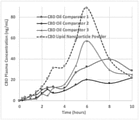
US 11260033 · 2022 · Disruption Labs
How Tiny Particles Make CBD Easier to Absorb
US 20220304938 · Nanosphere Health Sciences
Tiny Lipid Balls for Precise, Better-Absorbed Cannabinoid Medicine
US 12734300 · 2026
Precise Medicine Delivery Device with Priming Control
US 9925149 · 2018 · Nanosphere Health Sciences
How to Build Tiny Lipid Carriers for Delivering Nutrients
More to explore
More in Biotech & Medicine
US 4683195 · 1987 · Cetus Corp
How to Make Billions of Copies of a DNA Segment
US 8697359 · 2014 · Massachusetts Institute of Technology
How to Edit Genes in Human Cells Using an Engineered CRISPR System
US 4733665 · 1988 · Expandable Grafts Partnership
How Doctors Implant a Permanent Stent Using a Balloon
US 4965188 · 1990 · Cetus Corp
How to Make Many Copies of a DNA Piece with Heat
New to patents?
Common Questions
Frequently Asked Questions
What does Tiny Epinephrine Particles for Fast-Dissolving Under-Tongue Tablets cover?
This patent describes new compositions of extremely small epinephrine particles designed for fast-dissolving tablets that are absorbed under the tongue, aiming to treat severe allergic reactions or cardiac events more effectively with a lower dose.
When does this patent expire?
This patent is expected to expire on September 15, 2046, when the invention enters the public domain.
What problem does this patent solve?
Epinephrine is a life-saving medication for conditions like anaphylaxis, a severe allergic reaction. Current delivery methods, primarily auto-injectors, can be intimidating or difficult for some users. This patent aims to provide a more accessible and potentially less invasive way to administer epinephrine, which could improve patient compliance and speed of treatment in emergencies. Improving sublingual absorption could lead to faster action and less drug waste.
What does this patent NOT cover?
Does not cover epinephrine delivered by injection, such as through an auto-injector like an EpiPen.
Patent monitoring