Smart Clothing That Actively Heats or Cools Your Body
This patent describes a system for clothing that can actively heat or cool a person by using special electronic modules placed in a frame on the fabric.
Original patent title: “Apparel thermo-regulatory system”
This patent describes a system for clothing that can actively heat or cool a person by using special electronic modules placed in a frame on the fabric. Granted in 2026.
Coverage
What does this patent actually cover?
This apparel thermo-regulatory system actively heats or cools a person wearing it. It includes a piece of clothing, like a jacket or shirt, that has a sturdy frame attached to its outer surface at a specific spot. This frame has openings, and an absorbent material is placed on its exposed side. Inside these openings, there are special electronic parts called thermoelectric modules that can be easily put in or taken out. These modules are what actually generate the heat or cold, allowing the wearer to adjust their body temperature. For example, a hiker could use this system to stay warm in cold weather or cool down during a strenuous climb.
The gap
What does this patent NOT cover?
- Does not cover apparel that heats or cools using only passive methods, like special fabrics or phase-change materials, without active thermoelectric modules.
- Does not cover systems where the heating/cooling elements are permanently integrated into the fabric rather than being releasably positioned within a frame's aperture.
- Does not cover apparel where the thermoelectric modules are not housed within a dimensionally stable frame with an absorbent material.
- Does not cover systems that use resistive heating elements or fluid circulation for temperature regulation instead of thermoelectric modules.
- Does not cover apparel where the temperature regulation system is affixed to an inner-facing surface of the apparel item.
These exclusions are unique to PatentBrief — derived from the actual claim language, not patent-office boilerplate.
Key facts
What made this novel
The noveltynoveltyThe requirement that an invention be different from anything publicly known before its priority date.Read more → lies in the modular design, specifically using a dimensionally stable frame with apertures to releasably hold thermoelectric modules, combined with an absorbent material. This allows for easy insertion, removal, and potential replacement of the active heating/cooling components.
Schematic visualization of the patent's claim structure. Hand-drawn diagrams in progress for each landmark patent.
Where you've seen this
Real-world examples
Heated jackets for construction workers
Cooling vests for athletes
Personal climate control systems in outdoor gear
Smart uniforms for emergency responders
Temperature-regulating clothing for medical applications
Why it matters
The bigger picture
Maintaining a comfortable body temperature is important for health, performance, and energy efficiency. This technology could allow individuals to customize their thermal environment, potentially reducing the need to heat or cool entire buildings. It could be particularly useful for outdoor workers, athletes, or people in extreme climates, offering a personalized approach to thermal comfort.
Filed
November 14, 2022
Granted
September 15, 2026
Market context
Who's building on this
Companies in this space
Companies like Embr Labs and Omius are actively developing personal thermal regulation devices, often focusing on wearable form factors. Major apparel brands are also exploring smart clothing technologies, including those that integrate heating or cooling elements. Startups in the wearable tech space are continuously innovating in this area, seeking to provide more effective and comfortable personal climate control solutions.
Market impact
This type of technology aims to create a new category of 'smart apparel' focused on active thermal management. While still emerging, it could lead to products that offer significant comfort advantages over traditional clothing. If widely adopted, it could influence energy consumption patterns by enabling more localized heating and cooling, potentially reducing reliance on HVAC systems for individual comfort.
Claim 1 — Plain English
What this patent covers
This apparel thermo-regulatory system actively heats or cools a person wearing it. It includes a piece of clothing, like a jacket or shirt, that has a sturdy frame attached to its outer surface at a specific spot. This frame has openings, and an absorbent material is placed on its exposed side. Inside these openings, there are special electronic parts called thermoelectric modules that can be easily put in or taken out. These modules are what actually generate the heat or cold, allowing the wearer to adjust their body temperature. For example, a hiker could use this system to stay warm in cold weather or cool down during a strenuous climb.
The clever bit
The novelty lies in the modular design, specifically using a dimensionally stable frame with apertures to releasably hold thermoelectric modules, combined with an absorbent material. This allows for easy insertion, removal, and potential replacement of the active heating/cooling components.
What it does not cover
- Does not cover apparel that heats or cools using only passive methods, like special fabrics or phase-change materials, without active thermoelectric modules.
- Does not cover systems where the heating/cooling elements are permanently integrated into the fabric rather than being releasably positioned within a frame's aperture.
- Does not cover apparel where the thermoelectric modules are not housed within a dimensionally stable frame with an absorbent material.
- Does not cover systems that use resistive heating elements or fluid circulation for temperature regulation instead of thermoelectric modules.
- Does not cover apparel where the temperature regulation system is affixed to an inner-facing surface of the apparel item.
Patent timeline
Application submitted to the patent office
Patent officially issued
PatentBrief Score
Impact Score
Early stage
Citation count
0/40
No citations yet
Claim breadth
0/20
Narrow claimsclaimsThe numbered statements at the end of a patent that legally define what the inventor owns.Read more →
Recency
20/20
Granted within 5 years
Assignee scale
0/20
Independent or smaller assigneeassigneeThe entity that owns the patent — usually the inventor's employer or a company.Read more →
PatentBrief Impact Score — based on citation count, claim breadth, recency, and assignee scale. Not a legal assessment.
Heuristic Value Estimate
What this patent might be worth
$26K – $84K
Midpoint $53K · 16.1 yr remaining · industry ×2.2
Heuristic only — blends forward/backward citation counts, claim scope, time remaining, litigation history, and CPC-derived industry baseline. Real valuations need a professional appraisal.
Claim text not yet imported for this patent
Concepts involved
Cite this patent
(2026). Smart Clothing That Actively Heats or Cools Your Body (U.S. Patent No. 12,733,697). U.S. Patent and Trademark Office. https://patentbrief.org/patent/us/12733697/apparel-thermo-regulatory-system
Auto-generated from the patent record. Double-check author order and the issue date against the official USPTO document before submitting.
Embed
Add this patent to your site
Drop this plain-English patent card into any blog post or article — free, no signup. It always links back to the full breakdown here.
<div data-patentlens-widget data-patent-number="US12733697"></div>
<script src="https://patentbrief.org/embed.js" async></script>
Stay in the loop
Get a weekly digest of new patents.
One email per week. No spam. Unsubscribe anytime.
Keep exploring
Related patents you should know
US 4683195 · 1987
How to Make Billions of Copies of a DNA Segment
This patent describes the Polymerase Chain Reaction (PCR), a method to rapidly create many copies of a specific piece of DNA or RNA, enabling its detection and analysis.
Cetus Corp
US 8697359 · 2014
How to Edit Genes in Human Cells Using an Engineered CRISPR System
This patent describes an engineered CRISPR-Cas9 system for precisely cutting DNA in eukaryotic cells to change how genes work, opening the door for gene editing in complex organisms.
Massachusetts Institute of Technology
US 7657849 · 2010
How the iPhone's Slide-to-Unlock Gesture Works
Apple's 2010 patent describes unlocking a device by dragging a specific graphical image across the touchscreen along a predefined path, a gesture that became iconic with the original iPhone.
Apple Inc
US 4733665 · 1988
How Doctors Implant a Permanent Stent Using a Balloon
This patent describes the method for placing a permanent, expandable wire mesh tube inside a blood vessel or other body tube using a balloon-tipped catheter to widen it and keep it open.
Expandable Grafts Partnership
US 4965188 · 1990
How to Make Many Copies of a DNA Piece with Heat
This patent describes the Polymerase Chain Reaction (PCR) method, a technique to make millions of copies of a specific DNA segment using a heat-resistant enzyme and repeated temperature changes.
Cetus Corp
US 4235871 · 1980
How to Encapsulate Active Materials in Lipid Bubbles Efficiently
This patent describes a method for trapping biologically active substances inside tiny, multi-layered fat bubbles called liposomes, using a specific water-in-oil emulsion and gel-forming process to improve how much material gets captured.
Individual
Semantically similar
You might also find these interesting
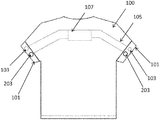
US 20200281484 · Well Being Digital
Smart Clothing That Compares Pulse Signals from Both Sides of Your Body
US 12734078 · 2026
How Special Underwear Wicks Away Sweat from the Lower Torso
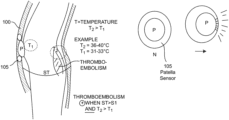
US 12011291 · 2024 · George Mason Research Foundation
Wearable Wrap Detects Blood Clots and Swelling in Joints
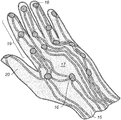
US 11137298 · 2021 · University of California San Diego UCSD
How Fabric Sensors Measure Pressure on Your Body
More to explore
More in Consumer Electronics
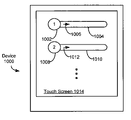
US 7657849 · 2010 · Apple Inc
How the iPhone's Slide-to-Unlock Gesture Works
US 7479949 · 2009 · Apple Inc
How Touchscreens Understand Your Finger Swipes and Scrolls
US 4528643 · 1985 · FPDC Inc
How Stores Make Custom Products On-Demand with Remote Approval
US 7469381 · 2008 · Apple Inc
How Touchscreens Show and Snap Back When You Scroll Past an Edge
New to patents?
Common Questions
Frequently Asked Questions
What does Smart Clothing That Actively Heats or Cools Your Body cover?
This patent describes a system for clothing that can actively heat or cool a person by using special electronic modules placed in a frame on the fabric.
When does this patent expire?
This patent is expected to expire on September 15, 2046, when the invention enters the public domain.
What problem does this patent solve?
Maintaining a comfortable body temperature is important for health, performance, and energy efficiency. This technology could allow individuals to customize their thermal environment, potentially reducing the need to heat or cool entire buildings. It could be particularly useful for outdoor workers, athletes, or people in extreme climates, offering a personalized approach to thermal comfort.
What does this patent NOT cover?
Does not cover apparel that heats or cools using only passive methods, like special fabrics or phase-change materials, without active thermoelectric modules.
Patent monitoring