How a Robotic Surgical Tool Clamps Tissue Manually and Automatically
This patent describes a surgical tool for robotic operations that can clamp tissue using a motor-driven yoke, but also allows a surgeon to manually control the clamping action.
Original patent title: “Ultrasonic robotic tool actuation”
This patent describes a surgical tool for robotic operations that can clamp tissue using a motor-driven yoke, but also allows a surgeon to manually control the clamping action. Granted to Cilag GmbH International in 2023 with 11 claims, and it is expected to expire in 2039.
Coverage
What does this patent actually cover?
The patent describes a surgical tool for clamping tissue during endoscopic surgery. It uses a "yoke" inside the tool's housing that slides back and forth along a "shaft assembly" (ClaimclaimA numbered sentence at the end of a patent that legally defines what the inventor owns. The most important section.Read more → 1). This movement, called "longitudinal translation," makes a "clamp arm" on the tool's end open and close against a "blade" to grab tissue. A motor on a surgical robot can move the yoke by pushing "first and second actuators" (Claim 1). Alternatively, a surgeon can directly grasp and move "at least one linear actuator" on the tool's housing to control the clamp manually (Claim 5). For example, a surgeon could use the robot to precisely clamp a blood vessel, then take manual control to adjust the clamping force if needed. The tool can also apply different clamping forces based on how far the yoke moves (Claim 4).
The gap
What does this patent NOT cover?
- Surgical tools that only use a rotational mechanism to open and close the clamp arm, rather than linear translation of a yoke.
- Clamping mechanisms that do not involve a specific "clamp arm" and a "blade" for engaging tissue.
- Surgical tools that are exclusively robotic or exclusively manual, without the ability to switch between both modes of actuation.
- Systems where the clamping force cannot be varied based on the distance the internal mechanism travels.
These exclusions are unique to PatentBrief — derived from the actual claim language, not patent-office boilerplate.
Key facts
What made this novel
The noveltynoveltyThe requirement that an invention be different from anything publicly known before its priority date.Read more → lies in creating a single surgical tool that can be actuated both robotically and manually through the same internal "yoke" mechanism and "linear actuators." This dual-mode operation provides surgeons with flexibility and control during delicate procedures.
The Patent Drawing
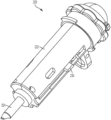
Schematic visualization of the patent's claim structure. Hand-drawn diagrams in progress for each landmark patent.
Where you've seen this
Real-world examples
Robotic surgical systems like da Vinci Surgical System
Endoscopic surgical instruments
Advanced laparoscopic tools
Why it matters
The bigger picture
This patent is important for advancing surgical robotics by offering a tool that combines the precision of a robot with the immediate control of a human surgeon. It allows for flexible operation in complex surgical environments, potentially improving safety and adaptability. The ability to precisely control clamping force (ClaimclaimA numbered sentence at the end of a patent that legally defines what the inventor owns. The most important section.Read more → 4) is crucial for delicate tissue manipulation and sealing.
Filed
October 31, 2019
Granted
October 17, 2023
Market context
Who's building on this
Companies in this space
Companies like Intuitive Surgical, Johnson & Johnson (Cilag GmbH International is part of J&J), Medtronic, and Stryker are actively developing and refining robotic surgical systems and their specialized tools. These companies continuously innovate in instrument design for minimally invasive and robotic procedures.
Market impact
This patent contributes to the evolution of robotic surgical tools by enabling more versatile and adaptable instruments. It could influence the design of future end effectors, allowing surgeons greater control and flexibility during complex operations. This dual-mode capability could expand the types of procedures where robotic assistance is feasible, potentially improving patient outcomes and surgeon efficiency.
Claim 1 — Plain English
What this patent covers
The patent describes a surgical tool for clamping tissue during endoscopic surgery. It uses a "yoke" inside the tool's housing that slides back and forth along a "shaft assembly" (Claim 1). This movement, called "longitudinal translation," makes a "clamp arm" on the tool's end open and close against a "blade" to grab tissue. A motor on a surgical robot can move the yoke by pushing "first and second actuators" (Claim 1). Alternatively, a surgeon can directly grasp and move "at least one linear actuator" on the tool's housing to control the clamp manually (Claim 5). For example, a surgeon could use the robot to precisely clamp a blood vessel, then take manual control to adjust the clamping force if needed. The tool can also apply different clamping forces based on how far the yoke moves (Claim 4).
The clever bit
The novelty lies in creating a single surgical tool that can be actuated both robotically and manually through the same internal "yoke" mechanism and "linear actuators." This dual-mode operation provides surgeons with flexibility and control during delicate procedures.
What it does not cover
- Surgical tools that only use a rotational mechanism to open and close the clamp arm, rather than linear translation of a yoke.
- Clamping mechanisms that do not involve a specific "clamp arm" and a "blade" for engaging tissue.
- Surgical tools that are exclusively robotic or exclusively manual, without the ability to switch between both modes of actuation.
- Systems where the clamping force cannot be varied based on the distance the internal mechanism travels.
Patent timeline
Application submitted to the patent office
Application published, typically 18 months after filing
Patent officially issued
Patent enters public domain
PatentBrief Score
Impact Score
Early stage
Citation count
0/40
No citations yet
Claim breadth
7/20
Moderate scope
Recency
20/20
Granted within 5 years
Assignee scale
0/20
Independent or smaller assigneeassigneeThe entity that owns the patent — usually the inventor's employer or a company.Read more →
PatentBrief Impact Score — based on citation count, claim breadth, recency, and assignee scale. Not a legal assessment.
Heuristic Value Estimate
What this patent might be worth
$50K – $158K
Midpoint $99K · 13.1 yr remaining · industry ×2.2
Heuristic only — blends forward/backward citation counts, claim scope, time remaining, litigation history, and CPC-derived industry baseline. Real valuations need a professional appraisal.
Claim text not yet imported for this patent
The original legal language
Original claims
11 claims as filed with the patent office.
Concepts involved
Citations
Patent lineage
Cite this patent
Kirk, J., & Felder, K. D. (2023). How a Robotic Surgical Tool Clamps Tissue Manually and Automatically (U.S. Patent No. 11,786,761). U.S. Patent and Trademark Office. https://patentbrief.org/patent/us/11786761/ultrasonic-robotic-tool-actuation
Auto-generated from the patent record. Double-check author order and the issue date against the official USPTO document before submitting.
Embed
Add this patent to your site
Drop this plain-English patent card into any blog post or article — free, no signup. It always links back to the full breakdown here.
<div data-patentlens-widget data-patent-number="US11786761"></div>
<script src="https://patentbrief.org/embed.js" async></script>
Stay in the loop
Get a weekly digest of new patents.
One email per week. No spam. Unsubscribe anytime.
Keep exploring
Related patents you should know
US 4683195 · 1987
How to Make Billions of Copies of a DNA Segment
This patent describes the Polymerase Chain Reaction (PCR), a method to rapidly create many copies of a specific piece of DNA or RNA, enabling its detection and analysis.
Cetus Corp
US 8697359 · 2014
How to Edit Genes in Human Cells Using an Engineered CRISPR System
This patent describes an engineered CRISPR-Cas9 system for precisely cutting DNA in eukaryotic cells to change how genes work, opening the door for gene editing in complex organisms.
Massachusetts Institute of Technology
US 7657849 · 2010
How the iPhone's Slide-to-Unlock Gesture Works
Apple's 2010 patent describes unlocking a device by dragging a specific graphical image across the touchscreen along a predefined path, a gesture that became iconic with the original iPhone.
Apple Inc
US 4733665 · 1988
How Doctors Implant a Permanent Stent Using a Balloon
This patent describes the method for placing a permanent, expandable wire mesh tube inside a blood vessel or other body tube using a balloon-tipped catheter to widen it and keep it open.
Expandable Grafts Partnership
US 4965188 · 1990
How to Make Many Copies of a DNA Piece with Heat
This patent describes the Polymerase Chain Reaction (PCR) method, a technique to make millions of copies of a specific DNA segment using a heat-resistant enzyme and repeated temperature changes.
Cetus Corp
US 4235871 · 1980
How to Encapsulate Active Materials in Lipid Bubbles Efficiently
This patent describes a method for trapping biologically active substances inside tiny, multi-layered fat bubbles called liposomes, using a specific water-in-oil emulsion and gel-forming process to improve how much material gets captured.
Individual
Semantically similar
You might also find these interesting
US 10736702 · 2020 · Ethicon
Surgical Tool with Flexible, Articulating, and Rotating End Effectors

US 12402879 · 2025 · Cilag GmbH International
How Surgical Tools Give Haptic Feedback Near Operation Limits

US 12414825 · 2025 · CMR Surgical
How a Surgical Robot Arm's Wrist Moves Instruments
US 12127807 · 2024 · Intuitive Surgical Operations
How a Surgical Robot Attaches Tools and Stays Sterile
More to explore
More in Biotech & Medicine
US 4683195 · 1987 · Cetus Corp
How to Make Billions of Copies of a DNA Segment
US 8697359 · 2014 · Massachusetts Institute of Technology
How to Edit Genes in Human Cells Using an Engineered CRISPR System
US 4733665 · 1988 · Expandable Grafts Partnership
How Doctors Implant a Permanent Stent Using a Balloon
US 4965188 · 1990 · Cetus Corp
How to Make Many Copies of a DNA Piece with Heat
New to patents?
Common Questions
Frequently Asked Questions
What does How a Robotic Surgical Tool Clamps Tissue Manually and Automatically cover?
This patent describes a surgical tool for robotic operations that can clamp tissue using a motor-driven yoke, but also allows a surgeon to manually control the clamping action.
Who owns patent US 11786761?
Cilag GmbH International owns this patent, granted in 2023.
When does this patent expire?
This patent is expected to expire on October 31, 2039, when the invention enters the public domain.
What problem does this patent solve?
This patent is important for advancing surgical robotics by offering a tool that combines the precision of a robot with the immediate control of a human surgeon. It allows for flexible operation in complex surgical environments, potentially improving safety and adaptability. The ability to precisely control clamping force (Claim 4) is crucial for delicate tissue manipulation and sealing.
What does this patent NOT cover?
Surgical tools that only use a rotational mechanism to open and close the clamp arm, rather than linear translation of a yoke.
Same assignee
More from Cilag GmbH International
Patent monitoring