How Margaret Knight's Machine Made Flat-Bottom Paper Bags
This 1871 patent by Margaret Knight describes a machine that automatically folds and glues paper to create flat-bottom bags, a major improvement over earlier V-shaped designs.
Original patent title: “Improvement in paper-bag machines”
This 1871 patent by Margaret Knight describes a machine that automatically folds and glues paper to create flat-bottom bags, a major improvement over earlier V-shaped designs. Granted to Margaret E. Knight in 1871.
Coverage
What does this patent actually cover?
Based on the patent title, this invention describes a machine designed to improve the manufacturing of paper bags. Historically, Margaret Knight's work focused on creating machinery that could automatically produce flat-bottom paper bags, a significant advancement over earlier V-shaped bags or those requiring manual finishing. While specific claimclaimA numbered sentence at the end of a patent that legally defines what the inventor owns. The most important section.Read more → details are unavailable for this patent (US 116842), the core mechanism likely involved a system for folding and gluing paper to form a stable, rectangular bottom. This allowed bags to stand upright and hold more contents efficiently. For example, a grocery store could use bags from this machine to pack items, knowing they wouldn't tip over easily.
The gap
What does this patent NOT cover?
- Does not cover machines that produce V-shaped or pointed-bottom paper bags.
- Does not cover methods for manually constructing paper bags.
- Does not cover machines for making bags from materials other than paper, such as plastic or cloth.
- Does not cover machines that only print on paper bags without forming them.
- Does not cover machines for making bags with handles, as the focus is on the bottom-forming mechanism.
These exclusions are unique to PatentBrief — derived from the actual claim language, not patent-office boilerplate.
Key facts
What made this novel
The clever bit was automating the creation of a flat, square bottom for paper bags. Before this, bags often had V-shaped bottoms or required tedious hand-folding to stand upright. Knight's machine made the flat bottom efficiently, making bags far more practical for carrying goods.
The Patent Drawing
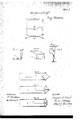
Schematic visualization of the patent's claim structure. Hand-drawn diagrams in progress for each landmark patent.
Where you've seen this
Real-world examples
Most modern paper grocery bags
Paper bags used in retail stores
Lunch bags
Takeout food bags
Why it matters
The bigger picture
This patent is historically significant as it represents a key invention by Margaret Knight, a pioneering female inventorinventorThe person who actually conceived the invention. Listed on the patent regardless of who owns it.Read more →. Her machine revolutionized the paper bag industry by enabling the mass production of flat-bottom bags. These bags were far more practical and durable than previous designs, making them essential for retail and grocery stores and changing how goods were packaged and carried.
Granted
July 11, 1871
Market context
Who's building on this
Companies in this space
Modern packaging companies and manufacturers of industrial machinery continue to build on the principles of automated bag production. Companies like Windmöller & Hölscher, B&B-Maschinenbau, and Newlong Industrial manufacture sophisticated paper bag making machines that incorporate advanced versions of the fundamental mechanisms for forming, folding, and gluing.
Market impact
This patent's invention created the foundation for the modern paper bag industry. It enabled the mass production of a highly functional and practical item, directly impacting retail and grocery sectors. The ability to efficiently produce flat-bottom bags allowed stores to package goods more effectively, contributing to the growth of consumer commerce and setting a standard for packaging that persists today.
Claim 1 — Plain English
What this patent covers
Based on the patent title, this invention describes a machine designed to improve the manufacturing of paper bags. Historically, Margaret Knight's work focused on creating machinery that could automatically produce flat-bottom paper bags, a significant advancement over earlier V-shaped bags or those requiring manual finishing. While specific claim details are unavailable for this patent (US 116842), the core mechanism likely involved a system for folding and gluing paper to form a stable, rectangular bottom. This allowed bags to stand upright and hold more contents efficiently. For example, a grocery store could use bags from this machine to pack items, knowing they wouldn't tip over easily.
The clever bit
The clever bit was automating the creation of a flat, square bottom for paper bags. Before this, bags often had V-shaped bottoms or required tedious hand-folding to stand upright. Knight's machine made the flat bottom efficiently, making bags far more practical for carrying goods.
What it does not cover
- Does not cover machines that produce V-shaped or pointed-bottom paper bags.
- Does not cover methods for manually constructing paper bags.
- Does not cover machines for making bags from materials other than paper, such as plastic or cloth.
- Does not cover machines that only print on paper bags without forming them.
- Does not cover machines for making bags with handles, as the focus is on the bottom-forming mechanism.
Patent timeline
Application published, typically 18 months after filing
Patent officially issued
PatentBrief Score
Impact Score
Limited data
Citation count
0/40
No citations yet
Claim breadth
0/20
Narrow claimsclaimsThe numbered statements at the end of a patent that legally define what the inventor owns.Read more →
Recency
0/20
Older than 20 years
Assignee scale
0/20
Independent or smaller assigneeassigneeThe entity that owns the patent — usually the inventor's employer or a company.Read more →
PatentBrief Impact Score — based on citation count, claim breadth, recency, and assignee scale. Not a legal assessment.
Heuristic Value Estimate
What this patent might be worth
$1K – $4K
Midpoint $3K · expired or expiring · industry ×0.9
Heuristic only — blends forward/backward citation counts, claim scope, time remaining, litigation history, and CPC-derived industry baseline. Real valuations need a professional appraisal.
Claim text not yet imported for this patent
Concepts involved
Cite this patent
(1871). How Margaret Knight's Machine Made Flat-Bottom Paper Bags (U.S. Patent No. 116,842). U.S. Patent and Trademark Office. https://patentbrief.org/patent/us/116842/paper-bag-machine-knight
Auto-generated from the patent record. Double-check author order and the issue date against the official USPTO document before submitting.
Embed
Add this patent to your site
Drop this plain-English patent card into any blog post or article — free, no signup. It always links back to the full breakdown here.
<div data-patentlens-widget data-patent-number="US116842"></div>
<script src="https://patentbrief.org/embed.js" async></script>
Stay in the loop
Get a weekly digest of new patents.
One email per week. No spam. Unsubscribe anytime.
Keep exploring
Related patents you should know
US 4683195 · 1987
How to Make Billions of Copies of a DNA Segment
This patent describes the Polymerase Chain Reaction (PCR), a method to rapidly create many copies of a specific piece of DNA or RNA, enabling its detection and analysis.
Cetus Corp
US 8697359 · 2014
How to Edit Genes in Human Cells Using an Engineered CRISPR System
This patent describes an engineered CRISPR-Cas9 system for precisely cutting DNA in eukaryotic cells to change how genes work, opening the door for gene editing in complex organisms.
Massachusetts Institute of Technology
US 7657849 · 2010
How the iPhone's Slide-to-Unlock Gesture Works
Apple's 2010 patent describes unlocking a device by dragging a specific graphical image across the touchscreen along a predefined path, a gesture that became iconic with the original iPhone.
Apple Inc
US 4733665 · 1988
How Doctors Implant a Permanent Stent Using a Balloon
This patent describes the method for placing a permanent, expandable wire mesh tube inside a blood vessel or other body tube using a balloon-tipped catheter to widen it and keep it open.
Expandable Grafts Partnership
US 4965188 · 1990
How to Make Many Copies of a DNA Piece with Heat
This patent describes the Polymerase Chain Reaction (PCR) method, a technique to make millions of copies of a specific DNA segment using a heat-resistant enzyme and repeated temperature changes.
Cetus Corp
US 4235871 · 1980
How to Encapsulate Active Materials in Lipid Bubbles Efficiently
This patent describes a method for trapping biologically active substances inside tiny, multi-layered fat bubbles called liposomes, using a specific water-in-oil emulsion and gel-forming process to improve how much material gets captured.
Individual
Semantically similar
You might also find these interesting
US 1032557 · 1912
How the Modern Disposable Paper Cup Was Invented
US 12043450 · 2024 · Inteplast Group Corp
How to Make Waste-Free Plastic Grocery Bags on a Roll
US 375962 · 1888 · Marvin C. Stone
How the Modern Paper Drinking Straw Was Invented
US 4750 · 1846 · Elias Howe
How Elias Howe Invented the Modern Lockstitch Sewing Machine
More to explore
More in Materials & Manufacturing
US 4575330 · 1986 · UVP Inc
How 3D Printers Build Objects Layer by Layer from Liquid
US 3953566 · 1976 · WL Gore and Associates Inc
Making Strong, Porous PTFE: The Gore-Tex Process
US 5121329 · 1992 · Stratasys Inc
How Machines Build 3D Objects Layer by Layer from Melting Plastic
US 3691140 · 1972
Sticky, Tiny Plastic Balls Made from Acrylates
New to patents?
Common Questions
Frequently Asked Questions
What does How Margaret Knight's Machine Made Flat-Bottom Paper Bags cover?
This 1871 patent by Margaret Knight describes a machine that automatically folds and glues paper to create flat-bottom bags, a major improvement over earlier V-shaped designs.
Who owns patent US 116842?
Margaret E. Knight owns this patent, granted in 1871.
When does this patent expire?
This patent has expired and is now in the public domain — anyone can use the invention freely.
What problem does this patent solve?
This patent is historically significant as it represents a key invention by Margaret Knight, a pioneering female inventor. Her machine revolutionized the paper bag industry by enabling the mass production of flat-bottom bags. These bags were far more practical and durable than previous designs, making them essential for retail and grocery stores and changing how goods were packaged and carried.
What does this patent NOT cover?
Does not cover machines that produce V-shaped or pointed-bottom paper bags.
Patent monitoring