How a Multi-Core Optical Fiber Reduces Signal Interference
This patent describes a multi-core optical fiber designed for short-distance data transmission, featuring a specific linear arrangement of at least four cores with alternating designs to minimize signal leakage between them.
Original patent title: “Multi-core optical fiber”
This patent describes a multi-core optical fiber designed for short-distance data transmission, featuring a specific linear arrangement of at least four cores with alternating designs to minimize signal leakage between them. Granted to Sumitomo Electric Industries in 2022 with 18 claims and 2 forward citations, and it is expected to expire in 2040.
Coverage
What does this patent actually cover?
This multi-core optical fiber (MCF) includes several core portions, a shared outer layer called a common cladding, and a protective resin coating. Each core portion itself has a central core, an inner cladding, and a trench layer. The fiber is special because it has at least four core portions arranged in a straight line (a 'linear array group'), where these cores alternate between 'first' and 'second' types. These alternating core types are designed with specific differences: their trench layers have different outer radii, and their refractive index differences relative to the common cladding also vary. For example, the abstractabstractA short summary at the front of the patent describing the invention. Not legally binding.Read more → notes that the inner cladding's refractive index is intentionally offset from the common cladding's refractive index, sometimes even reversing their typical magnitude relationship, to better contain light within each core and reduce crosstalk.
The gap
What does this patent NOT cover?
- Multi-core optical fibers that do not have at least four core portions arranged in a straight line.
- Fibers where the core portions do not alternate between 'first' and 'second' types with differing trench layer outer radii.
- Fibers where the relative refractive index differences of adjacent core portions with respect to the common cladding do not differ by at least 0.001 Λ [%].
- Fibers that do not meet the specified outer diameters for the common cladding (124-181 μm) and resin coating (195-250 μm).
- Fibers that do not achieve the claimed performance metrics, such as a crosstalk of 0.01/km or less at specified bending radii.
- Fibers where the refractive index profile of the inner cladding and common cladding does not show the specific 'reversed' magnitude relationship for adjacent core portions.
These exclusions are unique to PatentBrief — derived from the actual claim language, not patent-office boilerplate.
Key facts
What made this novel
The clever part is the specific design of alternating 'first' and 'second' core portions within a linear array, each with carefully controlled refractive index differences and trench layer dimensions. This precise engineering, particularly the 'offset' and 'reversed' refractive index relationship between the inner cladding and common cladding for adjacent cores, is what allows the fiber to minimize crosstalk and maintain signal integrity even when multiple data streams run very close together.
The Patent Drawing
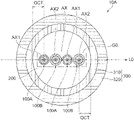
Schematic visualization of the patent's claim structure. Hand-drawn diagrams in progress for each landmark patent.
Where you've seen this
Real-world examples
Data center interconnects
High-density fiber optic cables
5G network infrastructure
Short-reach optical communication modules
Why it matters
The bigger picture
This patent addresses a key challenge in high-density data transmission: how to pack more data paths into a single fiber without signals interfering with each other. By carefully designing the core arrangements and refractive index profiles, this fiber aims to offer both cost-effectiveness and good compatibility for short-distance optical links. This is crucial for applications like data centers or 5G networks where space is limited and high bandwidth is essential.
Filed
June 29, 2020
Granted
October 25, 2022
Market context
Who's building on this
Companies in this space
Sumitomo Electric Industries Ltd., the assigneeassigneeThe entity that owns the patent — usually the inventor's employer or a company.Read more →, is a major global player in optical fiber and cable technology and continues to innovate in this space. Other leading optical fiber manufacturers like Corning, Prysmian Group, and Fujikura are also actively developing and deploying advanced multi-core fiber solutions for high-bandwidth applications.
Market impact
The development of multi-core optical fibers, like the one described, directly addresses the increasing demand for higher data capacity in a smaller physical footprint. This technology enables more efficient use of conduit space and reduces cable bulk, which is particularly impactful for data centers and urban telecommunications infrastructure. It helps facilitate the rollout of high-speed networks by offering a way to scale bandwidth without requiring entirely new cable installations.
Claim 1 — Plain English
What this patent covers
This multi-core optical fiber (MCF) includes several core portions, a shared outer layer called a common cladding, and a protective resin coating. Each core portion itself has a central core, an inner cladding, and a trench layer. The fiber is special because it has at least four core portions arranged in a straight line (a 'linear array group'), where these cores alternate between 'first' and 'second' types. These alternating core types are designed with specific differences: their trench layers have different outer radii, and their refractive index differences relative to the common cladding also vary. For example, the abstract notes that the inner cladding's refractive index is intentionally offset from the common cladding's refractive index, sometimes even reversing their typical magnitude relationship, to better contain light within each core and reduce crosstalk.
The clever bit
The clever part is the specific design of alternating 'first' and 'second' core portions within a linear array, each with carefully controlled refractive index differences and trench layer dimensions. This precise engineering, particularly the 'offset' and 'reversed' refractive index relationship between the inner cladding and common cladding for adjacent cores, is what allows the fiber to minimize crosstalk and maintain signal integrity even when multiple data streams run very close together.
What it does not cover
- Multi-core optical fibers that do not have at least four core portions arranged in a straight line.
- Fibers where the core portions do not alternate between 'first' and 'second' types with differing trench layer outer radii.
- Fibers where the relative refractive index differences of adjacent core portions with respect to the common cladding do not differ by at least 0.001 Λ [%].
- Fibers that do not meet the specified outer diameters for the common cladding (124-181 μm) and resin coating (195-250 μm).
- Fibers that do not achieve the claimed performance metrics, such as a crosstalk of 0.01/km or less at specified bending radii.
- Fibers where the refractive index profile of the inner cladding and common cladding does not show the specific 'reversed' magnitude relationship for adjacent core portions.
Patent timeline
Application submitted to the patent office
Application published, typically 18 months after filing
Patent officially issued
Patent enters public domain
PatentBrief Score
Impact Score
Moderate
Citation count
10/40
Early citations
Claim breadth
12/20
Broad claimsclaimsThe numbered statements at the end of a patent that legally define what the inventor owns.Read more →
Recency
20/20
Granted within 5 years
Assignee scale
0/20
Independent or smaller assigneeassigneeThe entity that owns the patent — usually the inventor's employer or a company.Read more →
PatentBrief Impact Score — based on citation count, claim breadth, recency, and assignee scale. Not a legal assessment.
Heuristic Value Estimate
What this patent might be worth
$70K – $225K
Midpoint $140K · 13.7 yr remaining · industry ×1.5
Heuristic only — blends forward/backward citation counts, claim scope, time remaining, litigation history, and CPC-derived industry baseline. Real valuations need a professional appraisal.
Claim text not yet imported for this patent
The original legal language
Original claims
18 claims as filed with the patent office.
Concepts involved
Citations
Patent lineage
Cite this patent
Hayashi, T. (2022). How a Multi-Core Optical Fiber Reduces Signal Interference (U.S. Patent No. 11,480,727). U.S. Patent and Trademark Office. https://patentbrief.org/patent/us/11480727/multi-core-optical-fiber
Auto-generated from the patent record. Double-check author order and the issue date against the official USPTO document before submitting.
Embed
Add this patent to your site
Drop this plain-English patent card into any blog post or article — free, no signup. It always links back to the full breakdown here.
<div data-patentlens-widget data-patent-number="US11480727"></div>
<script src="https://patentbrief.org/embed.js" async></script>
Stay in the loop
Get a weekly digest of new patents.
One email per week. No spam. Unsubscribe anytime.
Keep exploring
Related patents you should know
US 4683195 · 1987
How to Make Billions of Copies of a DNA Segment
This patent describes the Polymerase Chain Reaction (PCR), a method to rapidly create many copies of a specific piece of DNA or RNA, enabling its detection and analysis.
Cetus Corp
US 8697359 · 2014
How to Edit Genes in Human Cells Using an Engineered CRISPR System
This patent describes an engineered CRISPR-Cas9 system for precisely cutting DNA in eukaryotic cells to change how genes work, opening the door for gene editing in complex organisms.
Massachusetts Institute of Technology
US 7657849 · 2010
How the iPhone's Slide-to-Unlock Gesture Works
Apple's 2010 patent describes unlocking a device by dragging a specific graphical image across the touchscreen along a predefined path, a gesture that became iconic with the original iPhone.
Apple Inc
US 4733665 · 1988
How Doctors Implant a Permanent Stent Using a Balloon
This patent describes the method for placing a permanent, expandable wire mesh tube inside a blood vessel or other body tube using a balloon-tipped catheter to widen it and keep it open.
Expandable Grafts Partnership
US 4965188 · 1990
How to Make Many Copies of a DNA Piece with Heat
This patent describes the Polymerase Chain Reaction (PCR) method, a technique to make millions of copies of a specific DNA segment using a heat-resistant enzyme and repeated temperature changes.
Cetus Corp
US 4235871 · 1980
How to Encapsulate Active Materials in Lipid Bubbles Efficiently
This patent describes a method for trapping biologically active substances inside tiny, multi-layered fat bubbles called liposomes, using a specific water-in-oil emulsion and gel-forming process to improve how much material gets captured.
Individual
Semantically similar
You might also find these interesting
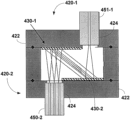
US 11646794 · 2023 · Commscope Inc of North Carolina
Routing Light Between Fiber Cores Using Special Reflectors
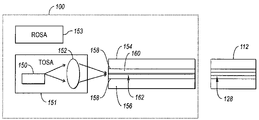
US 7267494 · 2007 · Finisar
How a Special Fiber Stub Cleans Up Light Signals

US 12517303 · 2026 · Microsoft Technology Licensing
Connecting Different Types of Fiber Optic Cables with an Adapter
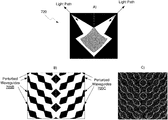
US 11137544 · 2021 · Luxtera
How Tiny Bumps in Light Paths Improve Chip Communication
More to explore
More in Telecom & Wireless
US 5347632 · 1994 · Prodigy Services Co
Prodigy's System for Interactive Online Information and Shopping
US 3906166 · 1975 · Motorola Inc
How Early Cell Phones Handled Calls Across Different Towers
US 4063220 · 1977 · Xerox Corp
How Multiple Computers Share a Network Cable Without Crashing
US 4200770 · 1980 · Leland Stanford Junior University
How to Create a Secret Code Key Without Meeting First
New to patents?
Common Questions
Frequently Asked Questions
What does How a Multi-Core Optical Fiber Reduces Signal Interference cover?
This patent describes a multi-core optical fiber designed for short-distance data transmission, featuring a specific linear arrangement of at least four cores with alternating designs to minimize signal leakage between them.
Who owns patent US 11480727?
Sumitomo Electric Industries owns this patent, granted in 2022.
When does this patent expire?
This patent is expected to expire on June 29, 2040, when the invention enters the public domain.
What is patent US 11480727 cited by?
This patent has been cited by 2 later patents that build on its ideas.
What problem does this patent solve?
This patent addresses a key challenge in high-density data transmission: how to pack more data paths into a single fiber without signals interfering with each other. By carefully designing the core arrangements and refractive index profiles, this fiber aims to offer both cost-effectiveness and good compatibility for short-distance optical links. This is crucial for applications like data centers or 5G networks where space is limited and high bandwidth is essential.
What does this patent NOT cover?
Multi-core optical fibers that do not have at least four core portions arranged in a straight line.
Patent monitoring