How Automated Systems Generate and Track Consumer Dispute Letters
A software system that helps consumers write, format, and send formal complaint letters to businesses by turning simple questionnaire answers into professional, legally-compliant documents.
Original patent title: “System and interface for electronic communication generation and tracking”
A software system that helps consumers write, format, and send formal complaint letters to businesses by turning simple questionnaire answers into professional, legally-compliant documents. Granted to Individual in 2020 with 22 claims and 3 forward citations, and it is expected to expire in 2036.
Coverage
What does this patent actually cover?
This system acts as a digital intermediary between a consumer and a business. It uses an interactive interface to ask the user questions about their dispute, then uses a transformation component to map those answers into specific fields within a pre-existing legal or business template. The system is designed to understand the specific requirements of different businesses, such as a telecommunications company requiring a specific 'notice of dispute' before arbitration. Once the letter is generated, the system can trigger its delivery and even track the status of the communication through postal services or digital messaging APIs.
The gap
What does this patent NOT cover?
- Does not cover general-purpose word processors or email clients that lack automated dispute-specific template mapping.
- Does not cover systems that do not perform automated transformation of user input into business-specific template field entries.
- Does not cover manual letter drafting where the system does not actively validate the content against business-specific requirements.
- Does not cover dispute resolution platforms that act as a neutral third-party mediator rather than a consumer-side communication tool.
These exclusions are unique to PatentBrief — derived from the actual claim language, not patent-office boilerplate.
Key facts
What made this novel
The system doesn't just draft a letter; it dynamically selects a template and applies 'transformation rules' based on the specific business or dispute type, ensuring the final document meets the precise, often hidden, contractual requirements of the recipient.
The Patent Drawing
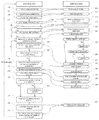
Schematic visualization of the patent's claim structure. Hand-drawn diagrams in progress for each landmark patent.
Where you've seen this
Real-world examples
Automated consumer protection apps
Legal-tech platforms for small claimsclaimsThe numbered statements at the end of a patent that legally define what the inventor owns.Read more →
Customer service automation tools
Why it matters
The bigger picture
Consumers often struggle to navigate the complex, bureaucratic requirements set by large corporations for filing formal complaints. This patent describes a way to lower the barrier to entry for consumers to exercise their rights, potentially forcing companies to address issues that might otherwise be ignored due to the difficulty of the filing process.
Filed
April 25, 2016
Granted
January 21, 2020
Market context
Who's building on this
Companies in this space
The technology is primarily utilized by legal-tech startups focused on consumer advocacy and small claimsclaimsThe numbered statements at the end of a patent that legally define what the inventor owns.Read more → automation. These platforms aim to streamline the 'notice of dispute' process to help individuals bypass the initial hurdles of corporate customer service departments.
Market impact
This patent represents a shift toward automating the 'paperwork' of consumer advocacy. By codifying the requirements for formal disputes, it enables platforms to scale consumer representation, potentially increasing the volume of formal complaints that businesses must process and track.
Claim 1 — Plain English
What this patent covers
This system acts as a digital intermediary between a consumer and a business. It uses an interactive interface to ask the user questions about their dispute, then uses a transformation component to map those answers into specific fields within a pre-existing legal or business template. The system is designed to understand the specific requirements of different businesses, such as a telecommunications company requiring a specific 'notice of dispute' before arbitration. Once the letter is generated, the system can trigger its delivery and even track the status of the communication through postal services or digital messaging APIs.
The clever bit
The system doesn't just draft a letter; it dynamically selects a template and applies 'transformation rules' based on the specific business or dispute type, ensuring the final document meets the precise, often hidden, contractual requirements of the recipient.
What it does not cover
- Does not cover general-purpose word processors or email clients that lack automated dispute-specific template mapping.
- Does not cover systems that do not perform automated transformation of user input into business-specific template field entries.
- Does not cover manual letter drafting where the system does not actively validate the content against business-specific requirements.
- Does not cover dispute resolution platforms that act as a neutral third-party mediator rather than a consumer-side communication tool.
Patent timeline
Application submitted to the patent office
Application published, typically 18 months after filing
Patent officially issued
Patent enters public domain
PatentBrief Score
Impact Score
Early stage
Citation count
12/40
Early citations
Claim breadth
15/20
Broad claimsclaimsThe numbered statements at the end of a patent that legally define what the inventor owns.Read more →
Recency
10/20
Granted 5–10 years ago
Assignee scale
0/20
Independent or smaller assigneeassigneeThe entity that owns the patent — usually the inventor's employer or a company.Read more →
PatentBrief Impact Score — based on citation count, claim breadth, recency, and assignee scale. Not a legal assessment.
Heuristic Value Estimate
What this patent might be worth
$62K – $200K
Midpoint $125K · 9.5 yr remaining · industry ×1.6
Heuristic only — blends forward/backward citation counts, claim scope, time remaining, litigation history, and CPC-derived industry baseline. Real valuations need a professional appraisal.
Claim text not yet imported for this patent
The original legal language
Original claims
22 claims as filed with the patent office.
Concepts involved
Citations
Patent lineage
Cite this patent
Fougner, J. (2020). How Automated Systems Generate and Track Consumer Dispute Letters (U.S. Patent No. 10,540,437). U.S. Patent and Trademark Office. https://patentbrief.org/patent/us/10540437/system-and-interface-for-electronic-communication-generation-and-tracking
Auto-generated from the patent record. Double-check author order and the issue date against the official USPTO document before submitting.
Embed
Add this patent to your site
Drop this plain-English patent card into any blog post or article — free, no signup. It always links back to the full breakdown here.
<div data-patentlens-widget data-patent-number="US10540437"></div>
<script src="https://patentbrief.org/embed.js" async></script>
Stay in the loop
Get a weekly digest of new patents.
One email per week. No spam. Unsubscribe anytime.
Keep exploring
Related patents you should know
US 4683195 · 1987
How to Make Billions of Copies of a DNA Segment
This patent describes the Polymerase Chain Reaction (PCR), a method to rapidly create many copies of a specific piece of DNA or RNA, enabling its detection and analysis.
Cetus Corp
US 8697359 · 2014
How to Edit Genes in Human Cells Using an Engineered CRISPR System
This patent describes an engineered CRISPR-Cas9 system for precisely cutting DNA in eukaryotic cells to change how genes work, opening the door for gene editing in complex organisms.
Massachusetts Institute of Technology
US 7657849 · 2010
How the iPhone's Slide-to-Unlock Gesture Works
Apple's 2010 patent describes unlocking a device by dragging a specific graphical image across the touchscreen along a predefined path, a gesture that became iconic with the original iPhone.
Apple Inc
US 4733665 · 1988
How Doctors Implant a Permanent Stent Using a Balloon
This patent describes the method for placing a permanent, expandable wire mesh tube inside a blood vessel or other body tube using a balloon-tipped catheter to widen it and keep it open.
Expandable Grafts Partnership
US 4965188 · 1990
How to Make Many Copies of a DNA Piece with Heat
This patent describes the Polymerase Chain Reaction (PCR) method, a technique to make millions of copies of a specific DNA segment using a heat-resistant enzyme and repeated temperature changes.
Cetus Corp
US 4235871 · 1980
How to Encapsulate Active Materials in Lipid Bubbles Efficiently
This patent describes a method for trapping biologically active substances inside tiny, multi-layered fat bubbles called liposomes, using a specific water-in-oil emulsion and gel-forming process to improve how much material gets captured.
Individual
Semantically similar
You might also find these interesting
US 10217092 · 2019 · Square Inc
How Digital Receipts Turn One-Time Payments Into Ongoing Customer Relationships
US 8983975 · 2015
How Software Automatically Ranks and Manages Online Customer Feedback
US 12299406 · 2025 · Casetext
How AI Checks Documents for Policy Rules and Compliance
US 9037656 · 2015 · Google Technology Holdings LLC
How a Server Aggregates Comments from Different Websites About One File
More to explore
More in Software & Internet
US 4405829 · 1983 · Massachusetts Institute of Technology
How RSA Public-Key Encryption Keeps Digital Messages Secret
US 6285999 · 2001 · Leland Stanford Junior University
How Websites Get Ranked by Importance
US 5960411 · 1999 · Amazon com Inc
How Amazon's One-Click Ordering Works for Online Purchases
US 7669123 · 2010 · Facebook Inc
Displaying Friends' Activities in a Social Network Feed
New to patents?
Common Questions
Frequently Asked Questions
What does How Automated Systems Generate and Track Consumer Dispute Letters cover?
A software system that helps consumers write, format, and send formal complaint letters to businesses by turning simple questionnaire answers into professional, legally-compliant documents.
Who owns patent US 10540437?
Individual owns this patent, granted in 2020.
When does this patent expire?
This patent is expected to expire on April 25, 2036, when the invention enters the public domain.
What is patent US 10540437 cited by?
This patent has been cited by 3 later patents that build on its ideas.
What problem does this patent solve?
Consumers often struggle to navigate the complex, bureaucratic requirements set by large corporations for filing formal complaints. This patent describes a way to lower the barrier to entry for consumers to exercise their rights, potentially forcing companies to address issues that might otherwise be ignored due to the difficulty of the filing process.
What does this patent NOT cover?
Does not cover general-purpose word processors or email clients that lack automated dispute-specific template mapping.
Same assignee
More from Individual
Patent monitoring