How Batteries Smooth Out Power from Renewable Energy Grids
This patent describes a system that uses an energy storage medium, like a large battery, to stabilize the power flow from an unpredictable energy source, such as a wind farm or solar array, into the main electricity grid.
Original patent title: “Regulation of contribution of secondary energy sources to power grid”
This patent describes a system that uses an energy storage medium, like a large battery, to stabilize the power flow from an unpredictable energy source, such as a wind farm or solar array, into the main electricity grid. Granted to AES in 2014 with 24 claims and 23 forward citations, and it is expected to expire in 2030.
Coverage
What does this patent actually cover?
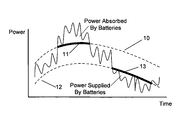
This patent outlines a method for regulating the power an electricity source, like a renewable energy plant, sends to the main grid. It works by constantly checking two things: first, if the power output is outside a normal, predefined range (claimclaimA numbered sentence at the end of a patent that legally defines what the inventor owns. The most important section.Read more → 1a), and second, if the power output is changing too quickly, exceeding a maximum allowed rate (claim 1b). If either of these conditions is met, the system uses an energy storage medium (a battery) to either absorb excess power by charging it, or release stored power by discharging it onto the grid (claim 1). For example, if a solar farm's output suddenly drops due to clouds, the battery would quickly discharge to fill that gap, keeping the grid stable.
The gap
What does this patent NOT cover?
- Does not cover systems that regulate power without using an energy storage medium to transfer energy to or from the grid.
- Does not cover systems where the rate of change of output power is not considered a factor for regulation.
- Does not cover regulation methods that do not check if the output power is outside a predetermined range or if its rate of change exceeds a maximum value.
- Does not cover systems where the charging or discharging of the energy storage medium is not constrained by its capacity or power rating.
- Does not cover regulating the output of a single, stable power source like a traditional coal plant without a secondary, variable source.
These exclusions are unique to PatentBrief — derived from the actual claim language, not patent-office boilerplate.
Key facts
What made this novel
The clever part is not just using a battery, but precisely controlling its charge and discharge based on both the instantaneous power output and its rate of change, while also considering the battery's own limits. This ensures the combined power sent to the grid always stays within acceptable stability parameters.
The Patent Drawing
Schematic visualization of the patent's claim structure. Hand-drawn diagrams in progress for each landmark patent.
Where you've seen this
Real-world examples
Large-scale battery energy storage systems (BESS) co-located with wind farms
Utility-scale solar power plants with integrated battery storage
Grid-scale frequency regulation services using batteries
Microgrids incorporating renewable generation and storage
Why it matters
The bigger picture
As more electricity comes from renewable sources like wind and solar, which can be unpredictable, keeping the power grid stable becomes a big challenge. This patent addresses that by using energy storage to smooth out these fluctuations. It helps integrate intermittent energy sources into the existing grid infrastructure without causing disruptions, making renewable energy more reliable and practical on a large scale.
Filed
March 11, 2010
Granted
December 16, 2014
Market context
Who's building on this
Companies in this space
AES, the original assigneeassigneeThe entity that owns the patent — usually the inventor's employer or a company.Read more →, is a global power company that continues to develop and operate energy storage projects worldwide, often integrating them with renewable energy assets. Other major players like Fluence (a joint venture between Siemens and AES), Tesla, LG Energy Solution, and GE Renewable Energy are actively building and deploying large-scale battery energy storage systems that incorporate similar principles for grid stabilization and renewable energy integration.
Market impact
This patent contributed to the foundational understanding and methods for integrating variable renewable energy sources into the power grid using energy storage. It helped enable the growth of utility-scale battery storage projects, which are now critical for grid stability and reliability. The concepts outlined here are fundamental to the design of modern grid-scale energy storage systems, allowing for greater penetration of wind and solar power without compromising grid performance.
Claim 1 — Plain English
What this patent covers
This patent outlines a method for regulating the power an electricity source, like a renewable energy plant, sends to the main grid. It works by constantly checking two things: first, if the power output is outside a normal, predefined range (claim 1a), and second, if the power output is changing too quickly, exceeding a maximum allowed rate (claim 1b). If either of these conditions is met, the system uses an energy storage medium (a battery) to either absorb excess power by charging it, or release stored power by discharging it onto the grid (claim 1). For example, if a solar farm's output suddenly drops due to clouds, the battery would quickly discharge to fill that gap, keeping the grid stable.
The clever bit
The clever part is not just using a battery, but precisely controlling its charge and discharge based on both the instantaneous power output and its rate of change, while also considering the battery's own limits. This ensures the combined power sent to the grid always stays within acceptable stability parameters.
What it does not cover
- Does not cover systems that regulate power without using an energy storage medium to transfer energy to or from the grid.
- Does not cover systems where the rate of change of output power is not considered a factor for regulation.
- Does not cover regulation methods that do not check if the output power is outside a predetermined range or if its rate of change exceeds a maximum value.
- Does not cover systems where the charging or discharging of the energy storage medium is not constrained by its capacity or power rating.
- Does not cover regulating the output of a single, stable power source like a traditional coal plant without a secondary, variable source.
Patent timeline
Application submitted to the patent office
Application published, typically 18 months after filing
Patent officially issued
Patent enters public domain
PatentBrief Score
Impact Score
Moderate
Citation count
28/40
Moderately cited
Claim breadth
16/20
Broad claimsclaimsThe numbered statements at the end of a patent that legally define what the inventor owns.Read more →
Recency
5/20
Granted 10–20 years ago
Assignee scale
0/20
Independent or smaller assigneeassigneeThe entity that owns the patent — usually the inventor's employer or a company.Read more →
PatentBrief Impact Score — based on citation count, claim breadth, recency, and assignee scale. Not a legal assessment.
Heuristic Value Estimate
What this patent might be worth
$143K – $459K
Midpoint $287K · 3.3 yr remaining · industry ×1.4
Heuristic only — blends forward/backward citation counts, claim scope, time remaining, litigation history, and CPC-derived industry baseline. Real valuations need a professional appraisal.
Claim text not yet imported for this patent
The original legal language
Original claims
24 claims as filed with the patent office.
Concepts involved
Citations
Patent lineage
Cite this patent
Shelton, J. C., Meersman, S., & Geinzer, J. (2014). How Batteries Smooth Out Power from Renewable Energy Grids (U.S. Patent No. 8,914,158). U.S. Patent and Trademark Office. https://patentbrief.org/patent/us/8914158/regulation-of-contribution-of-secondary-energy-sources-to-power-grid
Auto-generated from the patent record. Double-check author order and the issue date against the official USPTO document before submitting.
Embed
Add this patent to your site
Drop this plain-English patent card into any blog post or article — free, no signup. It always links back to the full breakdown here.
<div data-patentlens-widget data-patent-number="US8914158"></div>
<script src="https://patentbrief.org/embed.js" async></script>
Stay in the loop
Get a weekly digest of new patents.
One email per week. No spam. Unsubscribe anytime.
Keep exploring
Related patents you should know
US 4683195 · 1987
How to Make Billions of Copies of a DNA Segment
This patent describes the Polymerase Chain Reaction (PCR), a method to rapidly create many copies of a specific piece of DNA or RNA, enabling its detection and analysis.
Cetus Corp
US 8697359 · 2014
How to Edit Genes in Human Cells Using an Engineered CRISPR System
This patent describes an engineered CRISPR-Cas9 system for precisely cutting DNA in eukaryotic cells to change how genes work, opening the door for gene editing in complex organisms.
Massachusetts Institute of Technology
US 7657849 · 2010
How the iPhone's Slide-to-Unlock Gesture Works
Apple's 2010 patent describes unlocking a device by dragging a specific graphical image across the touchscreen along a predefined path, a gesture that became iconic with the original iPhone.
Apple Inc
US 4733665 · 1988
How Doctors Implant a Permanent Stent Using a Balloon
This patent describes the method for placing a permanent, expandable wire mesh tube inside a blood vessel or other body tube using a balloon-tipped catheter to widen it and keep it open.
Expandable Grafts Partnership
US 4965188 · 1990
How to Make Many Copies of a DNA Piece with Heat
This patent describes the Polymerase Chain Reaction (PCR) method, a technique to make millions of copies of a specific DNA segment using a heat-resistant enzyme and repeated temperature changes.
Cetus Corp
US 4235871 · 1980
How to Encapsulate Active Materials in Lipid Bubbles Efficiently
This patent describes a method for trapping biologically active substances inside tiny, multi-layered fat bubbles called liposomes, using a specific water-in-oil emulsion and gel-forming process to improve how much material gets captured.
Individual
More to explore
More in Energy & Clean Tech
US RE49155 · 2022 · Halliburton Energy Services Inc
Electric or Natural Gas Blending and Pumping for Oil Wells
US 11436484 · 2022 · Nvidia Corp
Nvidia's Method for Training Self-Driving Car AI in Simulations
US 11840398 · 2023 · Titan Trailers Inc
How Titan Trailers Builds Stronger, Smoother Cargo Containers
US 2708656 · 1955
How the First Nuclear Reactor Works
New to patents?
Common Questions
Frequently Asked Questions
What does How Batteries Smooth Out Power from Renewable Energy Grids cover?
This patent describes a system that uses an energy storage medium, like a large battery, to stabilize the power flow from an unpredictable energy source, such as a wind farm or solar array, into the main electricity grid.
Who owns patent US 8914158?
AES owns this patent, granted in 2014.
When does this patent expire?
This patent is expected to expire on March 11, 2030, when the invention enters the public domain.
What is patent US 8914158 cited by?
This patent has been cited by 23 later patents that build on its ideas.
What problem does this patent solve?
As more electricity comes from renewable sources like wind and solar, which can be unpredictable, keeping the power grid stable becomes a big challenge. This patent addresses that by using energy storage to smooth out these fluctuations. It helps integrate intermittent energy sources into the existing grid infrastructure without causing disruptions, making renewable energy more reliable and practical on a large scale.
What does this patent NOT cover?
Does not cover systems that regulate power without using an energy storage medium to transfer energy to or from the grid.
Patent monitoring