Mice Engineered to Develop Cancer for Research
Harvard's 1988 patent on genetically engineered mice that carry cancer-causing genes, designed to help scientists study how cancer develops and test treatments.
Original patent title: “Transgenic non-human mammals”
Harvard's 1988 patent on genetically engineered mice that carry cancer-causing genes, designed to help scientists study how cancer develops and test treatments. Granted to Harvard University in 1988 with 13 claims and 644 forward citations, and it is now in the public domain.
Coverage
What does this patent actually cover?
This patent describes how to create a special kind of mouse, called a transgenic mouse. Scientists can insert a specific gene, known as an oncogene (which can cause cancer), into the mouse's DNA when it's still an embryo. This oncogene becomes part of every cell in the mouse, including the cells that will create future generations (germ cells). The goal is to create mammals that are predisposed to developing cancer, allowing researchers to study the disease's progression and test potential therapies in a living model. For example, claimclaimA numbered sentence at the end of a patent that legally defines what the inventor owns. The most important section.Read more → 12 specifies that the mammal can be a mouse, and claim 6 mentions using a c-myc oncogene.
The gap
What does this patent NOT cover?
- Mice that develop cancer naturally without genetic engineering.
- Transgenic animals that are not mammals (e.g., birds, fish).
- Genetically modified animals where the inserted gene is not an oncogene.
- The use of the engineered animals for purposes other than cancer research.
- Methods of treating cancer in humans or animals, only the creation of the model.
These exclusions are unique to PatentBrief — derived from the actual claim language, not patent-office boilerplate.
Key facts
What made this novel
The key innovation was engineering a mammal that reliably develops cancer from birth, allowing for controlled study, rather than relying on spontaneous mutations or less predictable models. This provided a consistent platform for research that was previously unavailable.
The Patent Drawing
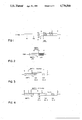
Schematic visualization of the patent's claim structure. Hand-drawn diagrams in progress for each landmark patent.
Where you've seen this
Real-world examples
Oncomice (genetically engineered mice used in cancer research)
Harvard's OncoMouse®
Why it matters
The bigger picture
This patent, often referred to as the 'Oncomouse' patent, was one of the first to allow for the creation of genetically modified animals specifically for disease research. It enabled the development of animal models for studying cancer, which were crucial for advancing our understanding of the disease and for testing new drugs. The patent was also the subject of significant legal and ethical debates regarding patenting life forms.
Filed
June 22, 1984
Granted
April 12, 1988
Market context
Who's building on this
Companies in this space
The original assigneeassigneeThe entity that owns the patent — usually the inventor's employer or a company.Read more →, Harvard University, licensed the technology. Companies specializing in genetically engineered animal models, such as The Jackson Laboratory, have been instrumental in breeding and distributing these mice for research worldwide. Many pharmaceutical companies rely on these models for preclinical drug testing.
Market impact
This patent created a new market for genetically engineered research animals and became a cornerstone for cancer research. It also sparked significant debate and legal challenges regarding the patentability of living organisms, influencing subsequent patent law and policy in biotechnology.
Claim 1 — Plain English
What this patent covers
This patent describes how to create a special kind of mouse, called a transgenic mouse. Scientists can insert a specific gene, known as an oncogene (which can cause cancer), into the mouse's DNA when it's still an embryo. This oncogene becomes part of every cell in the mouse, including the cells that will create future generations (germ cells). The goal is to create mammals that are predisposed to developing cancer, allowing researchers to study the disease's progression and test potential therapies in a living model. For example, claim 12 specifies that the mammal can be a mouse, and claim 6 mentions using a c-myc oncogene.
The clever bit
The key innovation was engineering a mammal that reliably develops cancer from birth, allowing for controlled study, rather than relying on spontaneous mutations or less predictable models. This provided a consistent platform for research that was previously unavailable.
What it does not cover
- Mice that develop cancer naturally without genetic engineering.
- Transgenic animals that are not mammals (e.g., birds, fish).
- Genetically modified animals where the inserted gene is not an oncogene.
- The use of the engineered animals for purposes other than cancer research.
- Methods of treating cancer in humans or animals, only the creation of the model.
Patent timeline
Application submitted to the patent office
Application published, typically 18 months after filing
Patent officially issued
Patent enters public domain
This patent is in the public domain
See the Freedom to Build guide — what is free to use, what is not, and how to cite this patent.
PatentBrief Score
Impact Score
Strong
Citation count
40/40
Highly cited
Claim breadth
9/20
Moderate scope
Recency
0/20
Older than 20 years
Assignee scale
20/20
Major company or institution
PatentBrief Impact Score — based on citation count, claim breadth, recency, and assignee scale. Not a legal assessment.
Heuristic Value Estimate
What this patent might be worth
$83K – $264K
Midpoint $165K · expired or expiring · industry ×2.2
Heuristic only — blends forward/backward citation counts, claim scope, time remaining, litigation history, and CPC-derived industry baseline. Real valuations need a professional appraisal.
Patent Claims
0 independent claims · 1 dependent
Claims are the legal boundaries of the patent. An independent claim stands alone. A dependent claim adds limitations to its parent, narrowing — but not broadening — the scope.
The original legal language
Original claims
13 claims as filed with the patent office.
Concepts involved
Citations
Patent lineage
Cite this patent
Leder, P., & Stewart, T. A. (1988). Mice Engineered to Develop Cancer for Research (U.S. Patent No. 4,736,866). U.S. Patent and Trademark Office. https://patentbrief.org/patent/us/4736866/harvard-oncomouse
Auto-generated from the patent record. Double-check author order and the issue date against the official USPTO document before submitting.
Embed
Add this patent to your site
Drop this plain-English patent card into any blog post or article — free, no signup. It always links back to the full breakdown here.
<div data-patentlens-widget data-patent-number="US4736866"></div>
<script src="https://patentbrief.org/embed.js" async></script>
Stay in the loop
Get a weekly digest of new patents.
One email per week. No spam. Unsubscribe anytime.
Keep exploring
Related patents you should know
US 4683195 · 1987
How to Make Billions of Copies of a DNA Segment
This patent describes the Polymerase Chain Reaction (PCR), a method to rapidly create many copies of a specific piece of DNA or RNA, enabling its detection and analysis.
Cetus Corp
US 8697359 · 2014
How to Edit Genes in Human Cells Using an Engineered CRISPR System
This patent describes an engineered CRISPR-Cas9 system for precisely cutting DNA in eukaryotic cells to change how genes work, opening the door for gene editing in complex organisms.
Massachusetts Institute of Technology
US 7657849 · 2010
How the iPhone's Slide-to-Unlock Gesture Works
Apple's 2010 patent describes unlocking a device by dragging a specific graphical image across the touchscreen along a predefined path, a gesture that became iconic with the original iPhone.
Apple Inc
US 4733665 · 1988
How Doctors Implant a Permanent Stent Using a Balloon
This patent describes the method for placing a permanent, expandable wire mesh tube inside a blood vessel or other body tube using a balloon-tipped catheter to widen it and keep it open.
Expandable Grafts Partnership
US 4965188 · 1990
How to Make Many Copies of a DNA Piece with Heat
This patent describes the Polymerase Chain Reaction (PCR) method, a technique to make millions of copies of a specific DNA segment using a heat-resistant enzyme and repeated temperature changes.
Cetus Corp
US 4235871 · 1980
How to Encapsulate Active Materials in Lipid Bubbles Efficiently
This patent describes a method for trapping biologically active substances inside tiny, multi-layered fat bubbles called liposomes, using a specific water-in-oil emulsion and gel-forming process to improve how much material gets captured.
Individual
Semantically similar
You might also find these interesting
US 12252707 · 2025 · Massachusetts Institute of Technology
How to Make Animals That Can Turn On CRISPR Gene Editing
US 4816567 · 1989 · Genentech Inc
Making Hybrid Antibodies from Different Animals
US 9492534 · 2016 · Genelux Corp
Using Genetically Modified Viruses to Target and Treat Cancer
US 9481728 · 2016 · University of Pennsylvania Penn
How Genetically Modified T-Cells Fight CD19 Cancers
More to explore
More in Biotech & Medicine
US 4683195 · 1987 · Cetus Corp
How to Make Billions of Copies of a DNA Segment
US 8697359 · 2014 · Massachusetts Institute of Technology
How to Edit Genes in Human Cells Using an Engineered CRISPR System
US 4733665 · 1988 · Expandable Grafts Partnership
How Doctors Implant a Permanent Stent Using a Balloon
US 4965188 · 1990 · Cetus Corp
How to Make Many Copies of a DNA Piece with Heat
New to patents?
Common Questions
Frequently Asked Questions
What does Mice Engineered to Develop Cancer for Research cover?
Harvard's 1988 patent on genetically engineered mice that carry cancer-causing genes, designed to help scientists study how cancer develops and test treatments.
Who owns patent US 4736866?
Harvard University owns this patent, granted in 1988.
When does this patent expire?
This patent has expired and is now in the public domain — anyone can use the invention freely.
What is patent US 4736866 cited by?
This patent has been cited by 644 later patents that build on its ideas.
What problem does this patent solve?
This patent, often referred to as the 'Oncomouse' patent, was one of the first to allow for the creation of genetically modified animals specifically for disease research. It enabled the development of animal models for studying cancer, which were crucial for advancing our understanding of the disease and for testing new drugs. The patent was also the subject of significant legal and ethical debates regarding patenting life forms.
What does this patent NOT cover?
Mice that develop cancer naturally without genetic engineering.
Patent monitoring