How the First Automatic Implantable Defibrillator Works
A 1970 invention by Medtronic that monitors heart rhythms and automatically delivers an electric shock to restart the heart if it detects a dangerous malfunction.
Original patent title: “Electronic standby defibrillator”
A 1970 invention by Medtronic that monitors heart rhythms and automatically delivers an electric shock to restart the heart if it detects a dangerous malfunction. Granted to Medtronic Inc in 1971 with 71 forward citations, and it is now in the public domain.
Coverage
What does this patent actually cover?
The device acts as a continuous heart monitor that tracks electrical activity to identify life-threatening arrhythmias. When the system detects an abnormal heart rhythm, it triggers a high-voltage discharge to shock the heart back into a normal sinus rhythm. If the first shock fails to restore normal function within a set interval, the mechanism is designed to deliver subsequent shocks. The device remains inactive as long as the heart's electrical activity stays within normal parameters.
The gap
What does this patent NOT cover?
- Does not cover external defibrillators that require manual operation by a human.
- Does not cover devices that monitor blood pressure or oxygen levels rather than electrical heart activity.
- Does not cover pacemakers that only provide low-voltage stimulation for slow heart rates.
These exclusions are unique to PatentBrief — derived from the actual claim language, not patent-office boilerplate.
Key facts
What made this novel
The invention shifted the paradigm from external, reactive emergency care to an autonomous, internal system that waits in a standby state until it detects a specific, lethal electrical signature.
The Patent Drawing
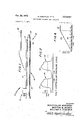
Schematic visualization of the patent's claim structure. Hand-drawn diagrams in progress for each landmark patent.
Where you've seen this
Real-world examples
Modern implantable cardioverter-defibrillators (ICDs)
Subcutaneous ICDs (S-ICD)
Why it matters
The bigger picture
This patent represents the foundational technology for the Implantable Cardioverter Defibrillator (ICD). It transformed the treatment of sudden cardiac arrest by enabling a device to provide life-saving intervention without requiring a doctor or bystander to be present.
Filed
February 9, 1970
Granted
October 26, 1971
Market context
Who's building on this
Companies in this space
Medtronic remains a dominant force in this space, having commercialized the technology derived from this early work. Other major medical device companies like Boston Scientific and Abbott Laboratories continue to advance ICD technology with smaller leads and smarter sensing algorithms.
Market impact
This patent laid the groundwork for a multi-billion dollar market in cardiac rhythm management. It effectively created the category of implantable life-support devices, shifting the standard of care for patients at high risk of sudden cardiac death.
Claim 1 — Plain English
What this patent covers
The device acts as a continuous heart monitor that tracks electrical activity to identify life-threatening arrhythmias. When the system detects an abnormal heart rhythm, it triggers a high-voltage discharge to shock the heart back into a normal sinus rhythm. If the first shock fails to restore normal function within a set interval, the mechanism is designed to deliver subsequent shocks. The device remains inactive as long as the heart's electrical activity stays within normal parameters.
The clever bit
The invention shifted the paradigm from external, reactive emergency care to an autonomous, internal system that waits in a standby state until it detects a specific, lethal electrical signature.
What it does not cover
- Does not cover external defibrillators that require manual operation by a human.
- Does not cover devices that monitor blood pressure or oxygen levels rather than electrical heart activity.
- Does not cover pacemakers that only provide low-voltage stimulation for slow heart rates.
Patent timeline
Application submitted to the patent office
Application published, typically 18 months after filing
Patent officially issued
Patent enters public domain
This patent is in the public domain
See the Freedom to Build guide — what is free to use, what is not, and how to cite this patent.
PatentBrief Score
Impact Score
Moderate
Citation count
37/40
Highly cited
Claim breadth
0/20
Narrow claimsclaimsThe numbered statements at the end of a patent that legally define what the inventor owns.Read more →
Recency
0/20
Older than 20 years
Assignee scale
20/20
Major company or institution
PatentBrief Impact Score — based on citation count, claim breadth, recency, and assignee scale. Not a legal assessment.
Heuristic Value Estimate
What this patent might be worth
$40K – $127K
Midpoint $79K · expired or expiring · industry ×2.2
Heuristic only — blends forward/backward citation counts, claim scope, time remaining, litigation history, and CPC-derived industry baseline. Real valuations need a professional appraisal.
Claim text not yet imported for this patent
Concepts involved
Citations
Patent lineage
Cite this patent
Staewen, W. S., Mower, M. M., & Mirowski, M. (1971). How the First Automatic Implantable Defibrillator Works (U.S. Patent No. 3,614,954). U.S. Patent and Trademark Office. https://patentbrief.org/patent/us/3614954/implantable-defibrillator-mirowski
Auto-generated from the patent record. Double-check author order and the issue date against the official USPTO document before submitting.
Embed
Add this patent to your site
Drop this plain-English patent card into any blog post or article — free, no signup. It always links back to the full breakdown here.
<div data-patentlens-widget data-patent-number="US3614954"></div>
<script src="https://patentbrief.org/embed.js" async></script>
Stay in the loop
Get a weekly digest of new patents.
One email per week. No spam. Unsubscribe anytime.
Keep exploring
Related patents you should know
US 4683195 · 1987
How to Make Billions of Copies of a DNA Segment
This patent describes the Polymerase Chain Reaction (PCR), a method to rapidly create many copies of a specific piece of DNA or RNA, enabling its detection and analysis.
Cetus Corp
US 8697359 · 2014
How to Edit Genes in Human Cells Using an Engineered CRISPR System
This patent describes an engineered CRISPR-Cas9 system for precisely cutting DNA in eukaryotic cells to change how genes work, opening the door for gene editing in complex organisms.
Massachusetts Institute of Technology
US 7657849 · 2010
How the iPhone's Slide-to-Unlock Gesture Works
Apple's 2010 patent describes unlocking a device by dragging a specific graphical image across the touchscreen along a predefined path, a gesture that became iconic with the original iPhone.
Apple Inc
US 4733665 · 1988
How Doctors Implant a Permanent Stent Using a Balloon
This patent describes the method for placing a permanent, expandable wire mesh tube inside a blood vessel or other body tube using a balloon-tipped catheter to widen it and keep it open.
Expandable Grafts Partnership
US 4965188 · 1990
How to Make Many Copies of a DNA Piece with Heat
This patent describes the Polymerase Chain Reaction (PCR) method, a technique to make millions of copies of a specific DNA segment using a heat-resistant enzyme and repeated temperature changes.
Cetus Corp
US 4235871 · 1980
How to Encapsulate Active Materials in Lipid Bubbles Efficiently
This patent describes a method for trapping biologically active substances inside tiny, multi-layered fat bubbles called liposomes, using a specific water-in-oil emulsion and gel-forming process to improve how much material gets captured.
Individual
Semantically similar
You might also find these interesting
US 3057356 · 1962 · Wilson Greatbatch Technologies Inc
The First Implantable Cardiac Pacemaker
US 4173796 · 1979 · University of Utah
How Jarvik's Artificial Heart Uses Electric Motors to Pump Blood
US 4063048 · 1977
How Early Cochlear Implants Used Digital Signals to Restore Hearing
US 2702035 · 1955 · JEFFERSON MEDICAL COLLEGE
How the First Heart-Lung Machine Oxygenated Blood
More to explore
More in Biotech & Medicine
US 4683195 · 1987 · Cetus Corp
How to Make Billions of Copies of a DNA Segment
US 8697359 · 2014 · Massachusetts Institute of Technology
How to Edit Genes in Human Cells Using an Engineered CRISPR System
US 4733665 · 1988 · Expandable Grafts Partnership
How Doctors Implant a Permanent Stent Using a Balloon
US 4965188 · 1990 · Cetus Corp
How to Make Many Copies of a DNA Piece with Heat
New to patents?
Common Questions
Frequently Asked Questions
What does How the First Automatic Implantable Defibrillator Works cover?
A 1970 invention by Medtronic that monitors heart rhythms and automatically delivers an electric shock to restart the heart if it detects a dangerous malfunction.
Who owns patent US 3614954?
Medtronic Inc owns this patent, granted in 1971.
When does this patent expire?
This patent has expired and is now in the public domain — anyone can use the invention freely.
What is patent US 3614954 cited by?
This patent has been cited by 71 later patents that build on its ideas.
What problem does this patent solve?
This patent represents the foundational technology for the Implantable Cardioverter Defibrillator (ICD). It transformed the treatment of sudden cardiac arrest by enabling a device to provide life-saving intervention without requiring a doctor or bystander to be present.
What does this patent NOT cover?
Does not cover external defibrillators that require manual operation by a human.
Patent monitoring