AI Predicts 3D Protein Shapes from Genetic Code
This patent describes how a computer uses self-attention neural networks to predict the complex three-dimensional shape of a protein based on its simple amino acid sequence, a process crucial for understanding biology and developing new medicines.
Original patent title: “Protein Structure Prediction from Amino Acid Sequences Using Self-Attention Neural Networks”
This patent describes how a computer uses self-attention neural networks to predict the complex three-dimensional shape of a protein based on its simple amino acid sequence, a process crucial for understanding biology and developing new medicines. Owned by DeepMind Technologies with 23 claims, and it is expected to expire in 2044.
Coverage
What does this patent actually cover?
This method, performed by computers, predicts a protein's 3D structure from its amino acid sequence. First, it takes the amino acid sequence and creates an initial 'embedding' for every possible pair of amino acids in that sequence (ClaimclaimA numbered sentence at the end of a patent that legally defines what the inventor owns. The most important section.Read more → 1). Optionally, this initial embedding can be improved by comparing the protein's sequence to similar proteins from other species, creating a 'multiple sequence alignment' (Claim 2). Next, these initial pair embeddings are fed into a 'pair embedding neural network' that uses multiple 'self-attention neural network layers' to refine them into 'final embeddings' (Claim 1). Each self-attention layer updates an embedding by looking at other related embeddings, sometimes focusing only on pairs in the same 'row' or 'column' of a 2D arrangement (ClaimsclaimsThe numbered statements at the end of a patent that legally define what the inventor owns.Read more → 3-6). Finally, the computer determines the protein's predicted 3D structure using these refined final embeddings (Claim 1). For example, if you input the sequence for insulin, the system would output its predicted folded shape.
The gap
What does this patent NOT cover?
- Does not cover methods that determine protein structure using physical experiments like X-ray crystallography or cryo-electron microscopy.
- Does not cover protein structure prediction systems that do not use self-attention neural network layers for processing pair embeddings.
- Does not cover methods that predict protein structure without first generating embeddings for pairs of amino acids.
- Does not cover systems that predict protein function or interactions without determining the 3D structure.
- Does not cover predictions based on inputs other than an amino acid sequence, such as a protein's physical properties or environment.
These exclusions are unique to PatentBrief — derived from the actual claim language, not patent-office boilerplate.
Key facts
What made this novel
The innovation lies in using 'self-attention neural networks' specifically on 'pair embeddings' of amino acids. This allows the system to efficiently learn complex relationships between distant parts of a protein, which is crucial for accurately predicting how the entire chain folds into a 3D shape, especially with the alternating row-wise and column-wise attention layers.
The Patent Drawing
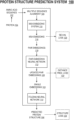
Schematic visualization of the patent's claim structure. Hand-drawn diagrams in progress for each landmark patent.
Where you've seen this
Real-world examples
DeepMind's AlphaFold
AlphaFold 2
Protein structure prediction services
Computational drug discovery platforms
Why it matters
The bigger picture
Understanding a protein's 3D shape is fundamental to knowing how it works. This technology speeds up scientific discovery in fields like drug design, where knowing a protein's structure helps scientists create molecules that can interact with it. It also aids in understanding diseases caused by misfolded proteins and designing new enzymes for industrial applications.
Filed
August 23, 2024
Market context
Who's building on this
Companies in this space
DeepMind Technologies Ltd, a subsidiary of Alphabet (Google), is the assigneeassigneeThe entity that owns the patent — usually the inventor's employer or a company.Read more → and a leader in this field with its AlphaFold system. Many academic research groups and pharmaceutical companies are actively using and building upon the principles of AI-driven protein structure prediction for drug discovery and fundamental biological research.
Market impact
This technology has profoundly impacted the fields of biology and drug discovery by providing accurate protein structure predictions that were previously only obtainable through costly and time-consuming experimental methods. It has accelerated research into disease mechanisms, enabled the design of new therapeutics, and created new avenues for biotechnology innovation, making computational approaches central to modern biological science.
Claim 1 — Plain English
What this patent covers
This method, performed by computers, predicts a protein's 3D structure from its amino acid sequence. First, it takes the amino acid sequence and creates an initial 'embedding' for every possible pair of amino acids in that sequence (Claim 1). Optionally, this initial embedding can be improved by comparing the protein's sequence to similar proteins from other species, creating a 'multiple sequence alignment' (Claim 2). Next, these initial pair embeddings are fed into a 'pair embedding neural network' that uses multiple 'self-attention neural network layers' to refine them into 'final embeddings' (Claim 1). Each self-attention layer updates an embedding by looking at other related embeddings, sometimes focusing only on pairs in the same 'row' or 'column' of a 2D arrangement (Claims 3-6). Finally, the computer determines the protein's predicted 3D structure using these refined final embeddings (Claim 1). For example, if you input the sequence for insulin, the system would output its predicted folded shape.
The clever bit
The innovation lies in using 'self-attention neural networks' specifically on 'pair embeddings' of amino acids. This allows the system to efficiently learn complex relationships between distant parts of a protein, which is crucial for accurately predicting how the entire chain folds into a 3D shape, especially with the alternating row-wise and column-wise attention layers.
What it does not cover
- Does not cover methods that determine protein structure using physical experiments like X-ray crystallography or cryo-electron microscopy.
- Does not cover protein structure prediction systems that do not use self-attention neural network layers for processing pair embeddings.
- Does not cover methods that predict protein structure without first generating embeddings for pairs of amino acids.
- Does not cover systems that predict protein function or interactions without determining the 3D structure.
- Does not cover predictions based on inputs other than an amino acid sequence, such as a protein's physical properties or environment.
Patent timeline
Application submitted to the patent office
Patent enters public domain
PatentBrief Score
Impact Score
Limited data
Citation count
0/40
No citations yet
Claim breadth
15/20
Broad claimsclaimsThe numbered statements at the end of a patent that legally define what the inventor owns.Read more →
Recency
0/20
Older than 20 years
Assignee scale
0/20
Independent or smaller assigneeassigneeThe entity that owns the patent — usually the inventor's employer or a company.Read more →
PatentBrief Impact Score — based on citation count, claim breadth, recency, and assignee scale. Not a legal assessment.
Heuristic Value Estimate
What this patent might be worth
$31K – $100K
Midpoint $62K · 17.9 yr remaining · industry ×1.6
Heuristic only — blends forward/backward citation counts, claim scope, time remaining, litigation history, and CPC-derived industry baseline. Real valuations need a professional appraisal.
Claim text not yet imported for this patent
The original legal language
Original claims
23 claims as filed with the patent office.
Concepts involved
Cite this patent
Jumper, J., Senior, A. W., Bates, R. J., Pritzel, A., Evans, R. A., Figurnov, M., & Green, T. F. G. AI Predicts 3D Protein Shapes from Genetic Code (U.S. Patent No. 20,240,412,809). U.S. Patent and Trademark Office. https://patentbrief.org/patent/us/20240412809/protein-structure-prediction-from-amino-acid-sequences-using-self-attention-neur
Auto-generated from the patent record. Double-check author order and the issue date against the official USPTO document before submitting.
Embed
Add this patent to your site
Drop this plain-English patent card into any blog post or article — free, no signup. It always links back to the full breakdown here.
<div data-patentlens-widget data-patent-number="US20240412809"></div>
<script src="https://patentbrief.org/embed.js" async></script>
Stay in the loop
Get a weekly digest of new patents.
One email per week. No spam. Unsubscribe anytime.
Keep exploring
Related patents you should know
US 4683195 · 1987
How to Make Billions of Copies of a DNA Segment
This patent describes the Polymerase Chain Reaction (PCR), a method to rapidly create many copies of a specific piece of DNA or RNA, enabling its detection and analysis.
Cetus Corp
US 8697359 · 2014
How to Edit Genes in Human Cells Using an Engineered CRISPR System
This patent describes an engineered CRISPR-Cas9 system for precisely cutting DNA in eukaryotic cells to change how genes work, opening the door for gene editing in complex organisms.
Massachusetts Institute of Technology
US 7657849 · 2010
How the iPhone's Slide-to-Unlock Gesture Works
Apple's 2010 patent describes unlocking a device by dragging a specific graphical image across the touchscreen along a predefined path, a gesture that became iconic with the original iPhone.
Apple Inc
US 4733665 · 1988
How Doctors Implant a Permanent Stent Using a Balloon
This patent describes the method for placing a permanent, expandable wire mesh tube inside a blood vessel or other body tube using a balloon-tipped catheter to widen it and keep it open.
Expandable Grafts Partnership
US 4965188 · 1990
How to Make Many Copies of a DNA Piece with Heat
This patent describes the Polymerase Chain Reaction (PCR) method, a technique to make millions of copies of a specific DNA segment using a heat-resistant enzyme and repeated temperature changes.
Cetus Corp
US 4235871 · 1980
How to Encapsulate Active Materials in Lipid Bubbles Efficiently
This patent describes a method for trapping biologically active substances inside tiny, multi-layered fat bubbles called liposomes, using a specific water-in-oil emulsion and gel-forming process to improve how much material gets captured.
Individual
Semantically similar
You might also find these interesting

US 12437843 · 2025 · GDM Holding
Using AI to Predict Protein Shapes for Drug Discovery

US 12412637 · 2025 · International Business Machines
Computer Model Designs Proteins by Matching Structure to Sequence
US 11176462 · 2021 · RO5
Predicting How Molecules Interact with Proteins Using Two AI Streams
US 20210174903 · Protein Evolution
How to Predict Protein Shapes Better Using Lab Tests and Computers
More to explore
More in Biotech & Medicine
US 4683195 · 1987 · Cetus Corp
How to Make Billions of Copies of a DNA Segment
US 8697359 · 2014 · Massachusetts Institute of Technology
How to Edit Genes in Human Cells Using an Engineered CRISPR System
US 4733665 · 1988 · Expandable Grafts Partnership
How Doctors Implant a Permanent Stent Using a Balloon
US 4965188 · 1990 · Cetus Corp
How to Make Many Copies of a DNA Piece with Heat
New to patents?
Common Questions
Frequently Asked Questions
What does AI Predicts 3D Protein Shapes from Genetic Code cover?
This patent describes how a computer uses self-attention neural networks to predict the complex three-dimensional shape of a protein based on its simple amino acid sequence, a process crucial for understanding biology and developing new medicines.
Who owns patent US 20240412809?
This patent is owned by DeepMind Technologies.
When does this patent expire?
This patent is expected to expire on August 23, 2044, when the invention enters the public domain.
What problem does this patent solve?
Understanding a protein's 3D shape is fundamental to knowing how it works. This technology speeds up scientific discovery in fields like drug design, where knowing a protein's structure helps scientists create molecules that can interact with it. It also aids in understanding diseases caused by misfolded proteins and designing new enzymes for industrial applications.
What does this patent NOT cover?
Does not cover methods that determine protein structure using physical experiments like X-ray crystallography or cryo-electron microscopy.
Patent monitoring