How Toyota's Fuel Cell Frame Manages Fluid Flow
This patent describes a specific design for the frame of a fuel cell, focusing on how it uses raised channels to efficiently guide fluids like hydrogen and oxygen to the core reaction area.
Original patent title: “Fuel cell”
This patent describes a specific design for the frame of a fuel cell, focusing on how it uses raised channels to efficiently guide fluids like hydrogen and oxygen to the core reaction area. Owned by Toyota Motor with 6 claims, and it is expected to expire in 2041.
Coverage
What does this patent actually cover?
This fuel cell design includes a central "membrane electrode gas diffusion layer assembly" (where electricity is made) surrounded by a "frame member." This frame member has an opening to hold the assembly and also contains "frame member-side manifolds" for fluid distribution. A key feature is a "fluid introduction and derivation site" located between the main opening and these manifolds. This site uses "convexities" (raised bumps or ridges) to create specific flow paths that deliver fluid horizontally. Crucially, the patent specifies that the thickness of these convexities is larger than the thickness of the frame member's main "skeleton." For example, this design ensures that reactants like hydrogen gas are evenly distributed to the membrane, improving the fuel cell's performance.
The gap
What does this patent NOT cover?
- Does not cover fuel cells where the frame member's fluid-routing convexities are not thicker than its main skeleton.
- Does not cover fuel cell designs where the fluid introduction and derivation site is not positioned between the opening and the frame member-side manifolds.
- Does not cover fuel cells that do not use a frame member disposed around the membrane electrode gas diffusion layer assembly.
- Does not cover fluid flow paths within the frame member that are not formed by convexities.
- Does not cover fuel cells where the flow paths between the convexities are not one of the specified linear pectinate, curved pectinate, linear slit, or curved slit forms.
These exclusions are unique to PatentBrief — derived from the actual claim language, not patent-office boilerplate.
Key facts
What made this novel
The cleverness lies in the specific structural integration of fluid flow paths directly into the frame member using convexities that are thicker than the frame's skeleton. This design likely optimizes fluid distribution while maintaining structural integrity and potentially simplifying manufacturing compared to more complex separate channeling systems.
The Patent Drawing
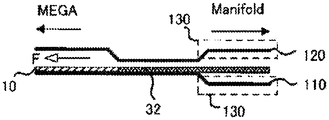
Schematic visualization of the patent's claim structure. Hand-drawn diagrams in progress for each landmark patent.
Where you've seen this
Real-world examples
Toyota Mirai fuel cell vehicle
Hyundai Nexo fuel cell vehicle
Honda Clarity Fuel Cell
Stationary fuel cell power generators
Forklifts powered by fuel cells
Why it matters
The bigger picture
The efficient and uniform distribution of reactant fluids is critical for fuel cell performance, durability, and cost. This patent aims to improve these aspects by precisely controlling fluid flow within the fuel cell's structural frame. Better fluid management can lead to more compact, powerful, and longer-lasting fuel cell stacks, which are essential for applications like hydrogen-powered vehicles and stationary power generation.
Filed
November 16, 2021
Market context
Who's building on this
Companies in this space
Toyota Motor Corp, the assigneeassigneeThe entity that owns the patent — usually the inventor's employer or a company.Read more →, is a major developer of fuel cell technology, notably with its Mirai vehicle. Other companies like Hyundai, Honda, Ballard Power Systems, and Plug Power are also actively developing and commercializing fuel cell systems for various applications, and would be focused on similar structural and fluid management innovations.
Market impact
Improvements in fuel cell component design, such as those described here, contribute to the overall viability and competitiveness of fuel cell technology. By potentially enhancing efficiency, durability, or manufacturability, such innovations help reduce the cost and increase the adoption of fuel cell electric vehicles and stationary power solutions, slowly expanding the market for hydrogen-based energy systems.
Claim 1 — Plain English
What this patent covers
This fuel cell design includes a central "membrane electrode gas diffusion layer assembly" (where electricity is made) surrounded by a "frame member." This frame member has an opening to hold the assembly and also contains "frame member-side manifolds" for fluid distribution. A key feature is a "fluid introduction and derivation site" located between the main opening and these manifolds. This site uses "convexities" (raised bumps or ridges) to create specific flow paths that deliver fluid horizontally. Crucially, the patent specifies that the thickness of these convexities is larger than the thickness of the frame member's main "skeleton." For example, this design ensures that reactants like hydrogen gas are evenly distributed to the membrane, improving the fuel cell's performance.
The clever bit
The cleverness lies in the specific structural integration of fluid flow paths directly into the frame member using convexities that are thicker than the frame's skeleton. This design likely optimizes fluid distribution while maintaining structural integrity and potentially simplifying manufacturing compared to more complex separate channeling systems.
What it does not cover
- Does not cover fuel cells where the frame member's fluid-routing convexities are not thicker than its main skeleton.
- Does not cover fuel cell designs where the fluid introduction and derivation site is not positioned between the opening and the frame member-side manifolds.
- Does not cover fuel cells that do not use a frame member disposed around the membrane electrode gas diffusion layer assembly.
- Does not cover fluid flow paths within the frame member that are not formed by convexities.
- Does not cover fuel cells where the flow paths between the convexities are not one of the specified linear pectinate, curved pectinate, linear slit, or curved slit forms.
Patent timeline
Application submitted to the patent office
Patent enters public domain
PatentBrief Score
Impact Score
Limited data
Citation count
0/40
No citations yet
Claim breadth
4/20
Moderate scope
Recency
0/20
Older than 20 years
Assignee scale
0/20
Independent or smaller assigneeassigneeThe entity that owns the patent — usually the inventor's employer or a company.Read more →
PatentBrief Impact Score — based on citation count, claim breadth, recency, and assignee scale. Not a legal assessment.
Heuristic Value Estimate
What this patent might be worth
$21K – $67K
Midpoint $42K · 15.0 yr remaining · industry ×1.4
Heuristic only — blends forward/backward citation counts, claim scope, time remaining, litigation history, and CPC-derived industry baseline. Real valuations need a professional appraisal.
Claim text not yet imported for this patent
The original legal language
Original claims
6 claims as filed with the patent office.
Concepts involved
Citations
Patent lineage
Cite this patent
Nonoyama, N., Otsu, W., & Aono, H. How Toyota's Fuel Cell Frame Manages Fluid Flow (U.S. Patent No. 20,220,166,034). U.S. Patent and Trademark Office. https://patentbrief.org/patent/us/20220166034/fuel-cell
Auto-generated from the patent record. Double-check author order and the issue date against the official USPTO document before submitting.
Embed
Add this patent to your site
Drop this plain-English patent card into any blog post or article — free, no signup. It always links back to the full breakdown here.
<div data-patentlens-widget data-patent-number="US20220166034"></div>
<script src="https://patentbrief.org/embed.js" async></script>
Stay in the loop
Get a weekly digest of new patents.
One email per week. No spam. Unsubscribe anytime.
Keep exploring
Related patents you should know
US 4683195 · 1987
How to Make Billions of Copies of a DNA Segment
This patent describes the Polymerase Chain Reaction (PCR), a method to rapidly create many copies of a specific piece of DNA or RNA, enabling its detection and analysis.
Cetus Corp
US 8697359 · 2014
How to Edit Genes in Human Cells Using an Engineered CRISPR System
This patent describes an engineered CRISPR-Cas9 system for precisely cutting DNA in eukaryotic cells to change how genes work, opening the door for gene editing in complex organisms.
Massachusetts Institute of Technology
US 7657849 · 2010
How the iPhone's Slide-to-Unlock Gesture Works
Apple's 2010 patent describes unlocking a device by dragging a specific graphical image across the touchscreen along a predefined path, a gesture that became iconic with the original iPhone.
Apple Inc
US 4733665 · 1988
How Doctors Implant a Permanent Stent Using a Balloon
This patent describes the method for placing a permanent, expandable wire mesh tube inside a blood vessel or other body tube using a balloon-tipped catheter to widen it and keep it open.
Expandable Grafts Partnership
US 4965188 · 1990
How to Make Many Copies of a DNA Piece with Heat
This patent describes the Polymerase Chain Reaction (PCR) method, a technique to make millions of copies of a specific DNA segment using a heat-resistant enzyme and repeated temperature changes.
Cetus Corp
US 4235871 · 1980
How to Encapsulate Active Materials in Lipid Bubbles Efficiently
This patent describes a method for trapping biologically active substances inside tiny, multi-layered fat bubbles called liposomes, using a specific water-in-oil emulsion and gel-forming process to improve how much material gets captured.
Individual
Semantically similar
You might also find these interesting
US 10468695 · 2019 · SolidPower SA
How Fuel Cells Get Even Gas Flow with Special Layers
US 10950878 · 2021 · Hyundai Motor
How a Fuel Cell Humidifier Controls Air Moisture with a Smart Valve
US 11646431 · 2023 · Kolon Industries
How a Fuel Cell Humidifier Adjusts Air Moisture with a Bypass
US 20200266464 · Hyundai Motor
How a Fuel Cell Humidifier Safely Mixes Exhaust Gases
More to explore
More in Energy & Clean Tech
US RE49155 · 2022 · Halliburton Energy Services Inc
Electric or Natural Gas Blending and Pumping for Oil Wells
US 11436484 · 2022 · Nvidia Corp
Nvidia's Method for Training Self-Driving Car AI in Simulations
US 11840398 · 2023 · Titan Trailers Inc
How Titan Trailers Builds Stronger, Smoother Cargo Containers
US 2708656 · 1955
How the First Nuclear Reactor Works
New to patents?
Common Questions
Frequently Asked Questions
What does How Toyota's Fuel Cell Frame Manages Fluid Flow cover?
This patent describes a specific design for the frame of a fuel cell, focusing on how it uses raised channels to efficiently guide fluids like hydrogen and oxygen to the core reaction area.
Who owns patent US 20220166034?
This patent is owned by Toyota Motor.
When does this patent expire?
This patent is expected to expire on November 16, 2041, when the invention enters the public domain.
What problem does this patent solve?
The efficient and uniform distribution of reactant fluids is critical for fuel cell performance, durability, and cost. This patent aims to improve these aspects by precisely controlling fluid flow within the fuel cell's structural frame. Better fluid management can lead to more compact, powerful, and longer-lasting fuel cell stacks, which are essential for applications like hydrogen-powered vehicles and stationary power generation.
What does this patent NOT cover?
Does not cover fuel cells where the frame member's fluid-routing convexities are not thicker than its main skeleton.
Same assignee
More from Toyota Motor
Patent monitoring