Managing 5G Signal Boosters in Smart Networks
This patent describes a system for remotely monitoring and adjusting 5G signal booster devices, called repeaters, which are part of an Internet of Things network to improve wireless coverage and performance.
Original patent title: “RF signal repeater device management for 5G wireless networks”
This patent describes a system for remotely monitoring and adjusting 5G signal booster devices, called repeaters, which are part of an Internet of Things network to improve wireless coverage and performance. Granted to Pivotal Commware in 2024 with 18 claims and 5 forward citations, and it is expected to expire in 2042.
Coverage
What does this patent actually cover?
This patent outlines a method for overseeing and controlling many radio frequency (RF) signal repeater devices within one or more wireless networks. The system first 'validates' each repeater, confirming it's a registered member of an Internet of Things (IoT) network (ClaimclaimA numbered sentence at the end of a patent that legally defines what the inventor owns. The most important section.Read more → 1). It then figures out if a repeater should act as a 'donor unit device' (receiving signals from a base station) or a 'service unit device' (sending signals to user phones). Based on these roles and 'key performance indicators' (KPIs) like signal strength or device temperature (Claim 7), the system 'configures' the repeaters. This configuration uses 'heatmap audits' and 'raster scan searches' to find and fix areas with poor wireless communication, especially for 5th generation (5G) or higher protocols, including millimeter wave (ClaimsclaimsThe numbered statements at the end of a patent that legally define what the inventor owns.Read more → 1, 4, 5). For example, if a specific area shows weak 5G signal on a heatmap, the system can automatically adjust a nearby repeater's power level or mode to boost coverage.
The gap
What does this patent NOT cover?
- Does not cover management of wireless networks that do not employ RF signal repeater devices as members of an IoT network (ClaimclaimA numbered sentence at the end of a patent that legally defines what the inventor owns. The most important section.Read more → 1).
- Does not cover management systems that do not determine specific operating modes like donor or service unit for repeaters (ClaimclaimA numbered sentence at the end of a patent that legally defines what the inventor owns. The most important section.Read more → 1).
- Does not cover configuration methods that do not rely on key performance indicators (KPIs) or heatmap audits with raster scan searches (ClaimclaimA numbered sentence at the end of a patent that legally defines what the inventor owns. The most important section.Read more → 1).
- Does not cover wireless networks operating exclusively on 4th generation (4G) or older communication protocols (ClaimclaimA numbered sentence at the end of a patent that legally defines what the inventor owns. The most important section.Read more → 4).
- Does not cover systems that manage repeaters without validating them using cryptographic information (ClaimclaimA numbered sentence at the end of a patent that legally defines what the inventor owns. The most important section.Read more → 2).
These exclusions are unique to PatentBrief — derived from the actual claim language, not patent-office boilerplate.
Key facts
What made this novel
The noveltynoveltyThe requirement that an invention be different from anything publicly known before its priority date.Read more → lies in combining IoT network validation, dynamic assignment of repeater operating modes (donor or service), and KPI-driven configuration, all informed by 'heatmap audits' that include 'raster scan searches' for 5G and millimeter wave repeaters. This allows for intelligent, automated optimization of complex and distributed 5G repeater deployments, which was previously a labor-intensive task.
The Patent Drawing
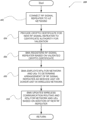
Schematic visualization of the patent's claim structure. Hand-drawn diagrams in progress for each landmark patent.
Where you've seen this
Real-world examples
Pivotal Commware's own 5G repeater deployments
Private 5G networks in factories or campuses
Smart city infrastructure for extended 5G coverage
Enterprise wireless networks for large buildings
Why it matters
The bigger picture
5G networks, particularly those using high-frequency millimeter wave signals, often struggle with limited range and obstacles like buildings. RF signal repeaters are essential for extending coverage and ensuring consistent high-speed connectivity. This patent's automated approach to monitoring and optimizing these repeaters is crucial for efficiently deploying and maintaining robust 5G infrastructure in dense urban areas, large venues, and private networks. This capability helps network operators deliver on the promise of widespread 5G access.
Filed
August 19, 2022
Granted
April 30, 2024
Market context
Who's building on this
Companies in this space
Pivotal Commware, the assigneeassigneeThe entity that owns the patent — usually the inventor's employer or a company.Read more →, is actively developing and deploying 5G repeater solutions that leverage this type of intelligent management. Other major telecommunications infrastructure providers like Ericsson, Nokia, and Samsung, along with specialized small cell and repeater companies, are also working on similar technologies to optimize 5G network performance and coverage.
Market impact
This patent enables more efficient and scalable deployment of 5G networks, especially for millimeter wave technology, which is critical for high-capacity applications. By automating the monitoring and configuration of repeaters, it reduces operational costs for network operators and accelerates the expansion of reliable 5G coverage. This capability is essential for the widespread adoption of 5G and the proliferation of Internet of Things (IoT) devices that rely on robust wireless connectivity.
Claim 1 — Plain English
What this patent covers
This patent outlines a method for overseeing and controlling many radio frequency (RF) signal repeater devices within one or more wireless networks. The system first 'validates' each repeater, confirming it's a registered member of an Internet of Things (IoT) network (Claim 1). It then figures out if a repeater should act as a 'donor unit device' (receiving signals from a base station) or a 'service unit device' (sending signals to user phones). Based on these roles and 'key performance indicators' (KPIs) like signal strength or device temperature (Claim 7), the system 'configures' the repeaters. This configuration uses 'heatmap audits' and 'raster scan searches' to find and fix areas with poor wireless communication, especially for 5th generation (5G) or higher protocols, including millimeter wave (Claims 1, 4, 5). For example, if a specific area shows weak 5G signal on a heatmap, the system can automatically adjust a nearby repeater's power level or mode to boost coverage.
The clever bit
The novelty lies in combining IoT network validation, dynamic assignment of repeater operating modes (donor or service), and KPI-driven configuration, all informed by 'heatmap audits' that include 'raster scan searches' for 5G and millimeter wave repeaters. This allows for intelligent, automated optimization of complex and distributed 5G repeater deployments, which was previously a labor-intensive task.
What it does not cover
- Does not cover management of wireless networks that do not employ RF signal repeater devices as members of an IoT network (Claim 1).
- Does not cover management systems that do not determine specific operating modes like donor or service unit for repeaters (Claim 1).
- Does not cover configuration methods that do not rely on key performance indicators (KPIs) or heatmap audits with raster scan searches (Claim 1).
- Does not cover wireless networks operating exclusively on 4th generation (4G) or older communication protocols (Claim 4).
- Does not cover systems that manage repeaters without validating them using cryptographic information (Claim 2).
Patent timeline
Application submitted to the patent office
Application published, typically 18 months after filing
Patent officially issued
Patent enters public domain
PatentBrief Score
Impact Score
Moderate
Citation count
16/40
Early citations
Claim breadth
12/20
Broad claimsclaimsThe numbered statements at the end of a patent that legally define what the inventor owns.Read more →
Recency
20/20
Granted within 5 years
Assignee scale
0/20
Independent or smaller assigneeassigneeThe entity that owns the patent — usually the inventor's employer or a company.Read more →
PatentBrief Impact Score — based on citation count, claim breadth, recency, and assignee scale. Not a legal assessment.
Heuristic Value Estimate
What this patent might be worth
$82K – $262K
Midpoint $164K · 15.7 yr remaining · industry ×1.4
Heuristic only — blends forward/backward citation counts, claim scope, time remaining, litigation history, and CPC-derived industry baseline. Real valuations need a professional appraisal.
Claim text not yet imported for this patent
The original legal language
Original claims
18 claims as filed with the patent office.
Concepts involved
Citations
Patent lineage
Cite this patent
Vidal, C. J. M., Katko, A. R., Deutsch, B. M., Black, E. J., González, J. P. O., & Cavcic, M. (2024). Managing 5G Signal Boosters in Smart Networks (U.S. Patent No. 11,973,568). U.S. Patent and Trademark Office. https://patentbrief.org/patent/us/11973568/rf-signal-repeater-device-management-for-5g-wireless-networks
Auto-generated from the patent record. Double-check author order and the issue date against the official USPTO document before submitting.
Embed
Add this patent to your site
Drop this plain-English patent card into any blog post or article — free, no signup. It always links back to the full breakdown here.
<div data-patentlens-widget data-patent-number="US11973568"></div>
<script src="https://patentbrief.org/embed.js" async></script>
Stay in the loop
Get a weekly digest of new patents.
One email per week. No spam. Unsubscribe anytime.
Keep exploring
Related patents you should know
US 4683195 · 1987
How to Make Billions of Copies of a DNA Segment
This patent describes the Polymerase Chain Reaction (PCR), a method to rapidly create many copies of a specific piece of DNA or RNA, enabling its detection and analysis.
Cetus Corp
US 8697359 · 2014
How to Edit Genes in Human Cells Using an Engineered CRISPR System
This patent describes an engineered CRISPR-Cas9 system for precisely cutting DNA in eukaryotic cells to change how genes work, opening the door for gene editing in complex organisms.
Massachusetts Institute of Technology
US 7657849 · 2010
How the iPhone's Slide-to-Unlock Gesture Works
Apple's 2010 patent describes unlocking a device by dragging a specific graphical image across the touchscreen along a predefined path, a gesture that became iconic with the original iPhone.
Apple Inc
US 4733665 · 1988
How Doctors Implant a Permanent Stent Using a Balloon
This patent describes the method for placing a permanent, expandable wire mesh tube inside a blood vessel or other body tube using a balloon-tipped catheter to widen it and keep it open.
Expandable Grafts Partnership
US 4965188 · 1990
How to Make Many Copies of a DNA Piece with Heat
This patent describes the Polymerase Chain Reaction (PCR) method, a technique to make millions of copies of a specific DNA segment using a heat-resistant enzyme and repeated temperature changes.
Cetus Corp
US 4235871 · 1980
How to Encapsulate Active Materials in Lipid Bubbles Efficiently
This patent describes a method for trapping biologically active substances inside tiny, multi-layered fat bubbles called liposomes, using a specific water-in-oil emulsion and gel-forming process to improve how much material gets captured.
Individual
Semantically similar
You might also find these interesting
US 12739647 · 2026
Optimizing Network Resources with Real-time Environmental Awareness
US 10841023 · 2020 · Verizon Patent and Licensing
How Your 5G Home Internet Box Finds the Best Signal
US 12231284 · 2025 · Telefonaktiebolaget LM Ericsson AB
How 5G Networks Intelligently Switch Your Phone's Connection Beams
US 12739717 · 2026
How Cellular Networks Reconfigure Without Dropping Your Call
More to explore
More in Telecom & Wireless
US 5347632 · 1994 · Prodigy Services Co
Prodigy's System for Interactive Online Information and Shopping
US 3906166 · 1975 · Motorola Inc
How Early Cell Phones Handled Calls Across Different Towers
US 4063220 · 1977 · Xerox Corp
How Multiple Computers Share a Network Cable Without Crashing
US 4200770 · 1980 · Leland Stanford Junior University
How to Create a Secret Code Key Without Meeting First
New to patents?
Common Questions
Frequently Asked Questions
What does Managing 5G Signal Boosters in Smart Networks cover?
This patent describes a system for remotely monitoring and adjusting 5G signal booster devices, called repeaters, which are part of an Internet of Things network to improve wireless coverage and performance.
Who owns patent US 11973568?
Pivotal Commware owns this patent, granted in 2024.
When does this patent expire?
This patent is expected to expire on August 19, 2042, when the invention enters the public domain.
What is patent US 11973568 cited by?
This patent has been cited by 5 later patents that build on its ideas.
What problem does this patent solve?
5G networks, particularly those using high-frequency millimeter wave signals, often struggle with limited range and obstacles like buildings. RF signal repeaters are essential for extending coverage and ensuring consistent high-speed connectivity. This patent's automated approach to monitoring and optimizing these repeaters is crucial for efficiently deploying and maintaining robust 5G infrastructure in dense urban areas, large venues, and private networks. This capability helps network operators deliver on the promise of widespread 5G access.
What does this patent NOT cover?
Does not cover management of wireless networks that do not employ RF signal repeater devices as members of an IoT network (Claim 1).
Patent monitoring