High-Flying Aircraft Relays Satellite Internet to Ground Users
This patent describes a communication system that uses satellites, high-altitude aircraft, and ground stations to send data, specifically using lasers for space links and cloud-penetrating radio waves for ground links.
Original patent title: “Adaptive communication system”
This patent describes a communication system that uses satellites, high-altitude aircraft, and ground stations to send data, specifically using lasers for space links and cloud-penetrating radio waves for ground links. Granted to Space Systems Loral in 2020 with 23 claims and 12 forward citations, and it is expected to expire in 2037.
Coverage
What does this patent actually cover?
The system connects ground users to satellites using a special relay aircraft. This aircraft flies above the clouds and has two main parts: a laser communications module and a Radio Frequency (RF) communications module. When data comes from a satellite via laser, the aircraft's laser module receives it, and its RF module converts that data into cloud-penetrating RF signals to send to ground terminals (ClaimclaimA numbered sentence at the end of a patent that legally defines what the inventor owns. The most important section.Read more → 1). Conversely, data from ground terminals arrives as RF, gets converted by the aircraft into laser signals, and is then sent up to the satellite (Claim 1). Ground terminals can even pick the fastest path, either directly to the satellite with lasers or through the aircraft and then the satellite (Claim 1). For example, if a ground terminal needs to send data to another ground terminal, it could send an RF signal to the aircraft, which converts it to laser for the satellite, and the satellite then relays it to the destination.
The gap
What does this patent NOT cover?
- Communication systems where satellites use traditional RF communication for all links, as the claimsclaimsThe numbered statements at the end of a patent that legally define what the inventor owns.Read more → emphasize laser communication for satellite links (ClaimclaimA numbered sentence at the end of a patent that legally defines what the inventor owns. The most important section.Read more → 1, 6).
- Relay systems where the aircraft operates below cloud level, as it's specified to fly "at altitudes above clouds" (ClaimclaimA numbered sentence at the end of a patent that legally defines what the inventor owns. The most important section.Read more → 1).
- Systems where the ground terminal cannot select between a direct laser path to the satellite and a relayed path through the aircraft (ClaimclaimA numbered sentence at the end of a patent that legally defines what the inventor owns. The most important section.Read more → 1).
- Systems where the relay aircraft does not convert between laser and RF signals, but simply repeats one type of signal (ClaimclaimA numbered sentence at the end of a patent that legally defines what the inventor owns. The most important section.Read more → 1).
- Systems where the satellite demodulates the received laser communication before relaying it (ClaimclaimA numbered sentence at the end of a patent that legally defines what the inventor owns. The most important section.Read more → 1).
These exclusions are unique to PatentBrief — derived from the actual claim language, not patent-office boilerplate.
Key facts
What made this novel
The noveltynoveltyThe requirement that an invention be different from anything publicly known before its priority date.Read more → lies in combining laser satellite links with cloud-penetrating RF ground links via a high-altitude aircraft, allowing ground terminals to dynamically choose the optimal communication path based on speed, effectively bypassing weather-related optical interference.
The Patent Drawing
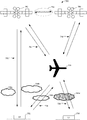
Schematic visualization of the patent's claim structure. Hand-drawn diagrams in progress for each landmark patent.
Where you've seen this
Real-world examples
Satellite internet services (e.g., Starlink, Project Kuiper) when paired with high-altitude platforms
High-altitude platform stations (HAPS) for telecommunications
Disaster relief communication networks
Military or government secure communication links
Why it matters
The bigger picture
This patent addresses challenges in satellite communication, especially for areas with frequent cloud cover that can block laser signals to the ground. By introducing a high-altitude aircraft as an intermediary, it creates a flexible and robust network. This approach could improve internet access in remote regions or provide resilient communication during emergencies.
Filed
September 20, 2017
Granted
July 7, 2020
Market context
Who's building on this
Companies in this space
Companies like Airbus (with its Zephyr HAPS) and various defense contractors explore high-altitude platforms for communication. Major satellite internet providers like SpaceX (Starlink) and Amazon (Project Kuiper) are building extensive LEO constellations, and while they primarily use RF, the concept of hybrid relays is relevant for extending reach and resilience.
Market impact
This patent supports the development of more resilient and high-bandwidth communication networks, especially for areas lacking traditional infrastructure or where direct satellite-to-ground laser links are unreliable due to weather. It enables a more flexible architecture for internet service providers and defense applications, potentially lowering latency and increasing availability in challenging environments.
Claim 1 — Plain English
What this patent covers
The system connects ground users to satellites using a special relay aircraft. This aircraft flies above the clouds and has two main parts: a laser communications module and a Radio Frequency (RF) communications module. When data comes from a satellite via laser, the aircraft's laser module receives it, and its RF module converts that data into cloud-penetrating RF signals to send to ground terminals (Claim 1). Conversely, data from ground terminals arrives as RF, gets converted by the aircraft into laser signals, and is then sent up to the satellite (Claim 1). Ground terminals can even pick the fastest path, either directly to the satellite with lasers or through the aircraft and then the satellite (Claim 1). For example, if a ground terminal needs to send data to another ground terminal, it could send an RF signal to the aircraft, which converts it to laser for the satellite, and the satellite then relays it to the destination.
The clever bit
The novelty lies in combining laser satellite links with cloud-penetrating RF ground links via a high-altitude aircraft, allowing ground terminals to dynamically choose the optimal communication path based on speed, effectively bypassing weather-related optical interference.
What it does not cover
- Communication systems where satellites use traditional RF communication for all links, as the claims emphasize laser communication for satellite links (Claim 1, 6).
- Relay systems where the aircraft operates below cloud level, as it's specified to fly "at altitudes above clouds" (Claim 1).
- Systems where the ground terminal cannot select between a direct laser path to the satellite and a relayed path through the aircraft (Claim 1).
- Systems where the relay aircraft does not convert between laser and RF signals, but simply repeats one type of signal (Claim 1).
- Systems where the satellite demodulates the received laser communication before relaying it (Claim 1).
Patent timeline
Application submitted to the patent office
Application published, typically 18 months after filing
Patent officially issued
Patent enters public domain
PatentBrief Score
Impact Score
Moderate
Citation count
22/40
Moderately cited
Claim breadth
15/20
Broad claimsclaimsThe numbered statements at the end of a patent that legally define what the inventor owns.Read more →
Recency
10/20
Granted 5–10 years ago
Assignee scale
0/20
Independent or smaller assigneeassigneeThe entity that owns the patent — usually the inventor's employer or a company.Read more →
PatentBrief Impact Score — based on citation count, claim breadth, recency, and assignee scale. Not a legal assessment.
Heuristic Value Estimate
What this patent might be worth
$109K – $349K
Midpoint $218K · 11.0 yr remaining · industry ×1.4
Heuristic only — blends forward/backward citation counts, claim scope, time remaining, litigation history, and CPC-derived industry baseline. Real valuations need a professional appraisal.
Claim text not yet imported for this patent
The original legal language
Original claims
23 claims as filed with the patent office.
Concepts involved
Citations
Patent lineage
Cite this patent
Turner, A. E., & Burr, D. (2020). High-Flying Aircraft Relays Satellite Internet to Ground Users (U.S. Patent No. 10,707,961). U.S. Patent and Trademark Office. https://patentbrief.org/patent/us/10707961/adaptive-communication-system
Auto-generated from the patent record. Double-check author order and the issue date against the official USPTO document before submitting.
Embed
Add this patent to your site
Drop this plain-English patent card into any blog post or article — free, no signup. It always links back to the full breakdown here.
<div data-patentlens-widget data-patent-number="US10707961"></div>
<script src="https://patentbrief.org/embed.js" async></script>
Stay in the loop
Get a weekly digest of new patents.
One email per week. No spam. Unsubscribe anytime.
Keep exploring
Related patents you should know
US 4683195 · 1987
How to Make Billions of Copies of a DNA Segment
This patent describes the Polymerase Chain Reaction (PCR), a method to rapidly create many copies of a specific piece of DNA or RNA, enabling its detection and analysis.
Cetus Corp
US 8697359 · 2014
How to Edit Genes in Human Cells Using an Engineered CRISPR System
This patent describes an engineered CRISPR-Cas9 system for precisely cutting DNA in eukaryotic cells to change how genes work, opening the door for gene editing in complex organisms.
Massachusetts Institute of Technology
US 7657849 · 2010
How the iPhone's Slide-to-Unlock Gesture Works
Apple's 2010 patent describes unlocking a device by dragging a specific graphical image across the touchscreen along a predefined path, a gesture that became iconic with the original iPhone.
Apple Inc
US 4733665 · 1988
How Doctors Implant a Permanent Stent Using a Balloon
This patent describes the method for placing a permanent, expandable wire mesh tube inside a blood vessel or other body tube using a balloon-tipped catheter to widen it and keep it open.
Expandable Grafts Partnership
US 4965188 · 1990
How to Make Many Copies of a DNA Piece with Heat
This patent describes the Polymerase Chain Reaction (PCR) method, a technique to make millions of copies of a specific DNA segment using a heat-resistant enzyme and repeated temperature changes.
Cetus Corp
US 4235871 · 1980
How to Encapsulate Active Materials in Lipid Bubbles Efficiently
This patent describes a method for trapping biologically active substances inside tiny, multi-layered fat bubbles called liposomes, using a specific water-in-oil emulsion and gel-forming process to improve how much material gets captured.
Individual
Semantically similar
You might also find these interesting
US 8135338 · 2012 · Space Systems Loral
How Satellites Handle Super Fast User Data Using Shared Antennas
US 10998965 · 2021 · Asia Satellite Telecommunications Co
How High-Altitude Satellites Relay Data for Fast-Moving Low-Orbit Satellites
US 11902010 · 2024 · Telesat Technology
How LEO Satellites Switch Beams for Speed and Avoid Interference
US 12464567 · 2025 · Lockheed Martin Corp
How Satellites Sync Timing for Faster 5G Internet Connections
More to explore
More in Telecom & Wireless
US 5347632 · 1994 · Prodigy Services Co
Prodigy's System for Interactive Online Information and Shopping
US 3906166 · 1975 · Motorola Inc
How Early Cell Phones Handled Calls Across Different Towers
US 4063220 · 1977 · Xerox Corp
How Multiple Computers Share a Network Cable Without Crashing
US 4200770 · 1980 · Leland Stanford Junior University
How to Create a Secret Code Key Without Meeting First
New to patents?
Common Questions
Frequently Asked Questions
What does High-Flying Aircraft Relays Satellite Internet to Ground Users cover?
This patent describes a communication system that uses satellites, high-altitude aircraft, and ground stations to send data, specifically using lasers for space links and cloud-penetrating radio waves for ground links.
Who owns patent US 10707961?
Space Systems Loral owns this patent, granted in 2020.
When does this patent expire?
This patent is expected to expire on September 20, 2037, when the invention enters the public domain.
What is patent US 10707961 cited by?
This patent has been cited by 12 later patents that build on its ideas.
What problem does this patent solve?
This patent addresses challenges in satellite communication, especially for areas with frequent cloud cover that can block laser signals to the ground. By introducing a high-altitude aircraft as an intermediary, it creates a flexible and robust network. This approach could improve internet access in remote regions or provide resilient communication during emergencies.
What does this patent NOT cover?
Communication systems where satellites use traditional RF communication for all links, as the claims emphasize laser communication for satellite links (Claim 1, 6).
Same assignee
More from Space Systems Loral
Patent monitoring