Intellectual property (IP)
Definition
The legal category covering intangible creations of the mind that receive some form of legal protection. The four main types are patents (inventions), copyrightcopyrightLegal protection for original creative works (books, code, art). Automatic at creation. Different from patents, which protect inventions.Read more → (creative works), trademarks (brand identifiers), and trade secrets (confidential business information). Each type has different rules, durations, and protections — and they can overlap on the same product.
Where this comes up
In practice
Patents that use “Intellectual property (IP)”
See the concept in real landmark patents, each explained in plain English.
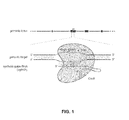
US 8697359 · 2014 · Massachusetts Institute of Technology
How to Edit Genes in Human Cells Using an Engineered CRISPR System
US 5521184 · 1996 · Ciba Geigy Corp
New Pyrimidine Chemical Compounds for Treating Tumors
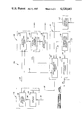
US 4528643 · 1985 · FPDC Inc
How Stores Make Custom Products On-Demand with Remote Approval
US 6884879 · 2005 · Genentech Inc
How Genentech Created Antibodies to Stop Tumor Growth
US 10275117 · 2019 · Apple Inc
How the Apple Watch Uses the Digital Crown to Flip Objects
US 10472419 · 2019 · Novartis AG
How Novartis Engineered Antibodies to Block the TIM-3 Immune Checkpoint
US 9845355 · 2017 · Genentech Inc
How Genentech's Antibody Targets Cancerous B Cells
US 6567533 · 2003 · Digimarc Corp
How Digital Images Hide Invisible Markers to Track Rotation and Scaling
US 8822430 · 2014 · Gilead Pharmasset LLC
Chemical Compounds for Treating Hepatitis C Virus
Related terms
Keep going
See intellectual property (ip) in real patents:
Search PatentBrief →