How 5G Networks Coordinate AI Models Across Different Devices
A method for 5G networks to translate AI requirements into network performance settings so that AI models can run efficiently across cloud, edge, and local devices.
Original patent title: “Providing distributed ai models in communication networks and related nodes/devices”
A method for 5G networks to translate AI requirements into network performance settings so that AI models can run efficiently across cloud, edge, and local devices. Owned by Telefonaktiebolaget LM Ericsson AB with 27 claims and 17 forward citations, and it is expected to expire in 2040.
Coverage
What does this patent actually cover?
This patent describes a 'translation node' that acts as a bridge between an AI application and the underlying cellular network. It takes information about how an AI model is structured—specifically, its Model Deployment Map (MDM)—and converts that into concrete Quality of Service (QoS) parameters like required bandwidth or latency. By providing these parameters alongside the AI model, the network can intelligently decide where to run specific parts of the model, such as on a local device, an edge server, or a centralized cloud. For example, if an AI model for a self-driving car needs a specific inference time to be safe, this system ensures the network allocates the necessary resources to meet that target.
The gap
What does this patent NOT cover?
- Does not cover the internal architecture or training methods of the AI models themselves.
- Does not cover hardware-specific AI acceleration techniques like custom NPU or GPU chip designs.
- Does not cover general network routing protocols that do not involve AI model distribution.
- Does not cover user-level application interfaces or how the AI results are presented to the end user.
These exclusions are unique to PatentBrief — derived from the actual claim language, not patent-office boilerplate.
Key facts
What made this novel
The innovation lies in treating the 'Model Deployment Map' as a network-aware object, allowing the network to proactively adjust its QoS parameters based on the specific needs of the AI model's distributed components.
The Patent Drawing
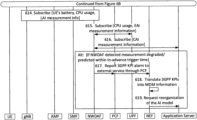
Schematic visualization of the patent's claim structure. Hand-drawn diagrams in progress for each landmark patent.
Where you've seen this
Real-world examples
5G network slicing for industrial IoT applications
Autonomous vehicle sensor fusion processing
Cloud-based augmented reality headsets
Real-time remote surgery telepresence
Why it matters
The bigger picture
As AI moves from centralized data centers to the 'edge' (closer to users), managing the network becomes a bottleneck. This patent addresses the friction between AI software requirements and cellular network capabilities, which is essential for low-latency applications like autonomous vehicles, remote robotics, and real-time augmented reality.
Filed
November 26, 2020
Market context
Who's building on this
Companies in this space
Ericsson is a primary driver here, as they are heavily invested in 5G infrastructure. Other major network equipment providers like Nokia and Huawei, as well as cloud-native 5G software vendors, are actively developing similar orchestration layers to manage AI workloads across distributed network environments.
Market impact
This technology supports the ongoing shift toward 'AI-native' 5G networks. By formalizing how AI models communicate their needs to the network, it enables service providers to offer specialized, high-performance connectivity tiers for AI-heavy enterprise applications, potentially creating new revenue streams beyond basic data plans.
Claim 1 — Plain English
What this patent covers
This patent describes a 'translation node' that acts as a bridge between an AI application and the underlying cellular network. It takes information about how an AI model is structured—specifically, its Model Deployment Map (MDM)—and converts that into concrete Quality of Service (QoS) parameters like required bandwidth or latency. By providing these parameters alongside the AI model, the network can intelligently decide where to run specific parts of the model, such as on a local device, an edge server, or a centralized cloud. For example, if an AI model for a self-driving car needs a specific inference time to be safe, this system ensures the network allocates the necessary resources to meet that target.
The clever bit
The innovation lies in treating the 'Model Deployment Map' as a network-aware object, allowing the network to proactively adjust its QoS parameters based on the specific needs of the AI model's distributed components.
What it does not cover
- Does not cover the internal architecture or training methods of the AI models themselves.
- Does not cover hardware-specific AI acceleration techniques like custom NPU or GPU chip designs.
- Does not cover general network routing protocols that do not involve AI model distribution.
- Does not cover user-level application interfaces or how the AI results are presented to the end user.
Patent timeline
Application submitted to the patent office
Patent enters public domain
PatentBrief Score
Impact Score
Strong
Citation count
25/40
Moderately cited
Claim breadth
18/20
Very broad protection
Recency
0/20
Older than 20 years
Assignee scale
20/20
Major company or institution
PatentBrief Impact Score — based on citation count, claim breadth, recency, and assignee scale. Not a legal assessment.
Heuristic Value Estimate
What this patent might be worth
$197K – $629K
Midpoint $393K · 14.1 yr remaining · industry ×1.4
Heuristic only — blends forward/backward citation counts, claim scope, time remaining, litigation history, and CPC-derived industry baseline. Real valuations need a professional appraisal.
Claim text not yet imported for this patent
The original legal language
Original claims
27 claims as filed with the patent office.
Concepts involved
Citations
Patent lineage
Cite this patent
CONDOLUCI, M., Jin, Y., & Fu, Z. How 5G Networks Coordinate AI Models Across Different Devices (U.S. Patent No. 20,230,412,513). U.S. Patent and Trademark Office. https://patentbrief.org/patent/us/20230412513/providing-distributed-ai-models-in-communication-networks-and-related-nodesdevic
Auto-generated from the patent record. Double-check author order and the issue date against the official USPTO document before submitting.
Embed
Add this patent to your site
Drop this plain-English patent card into any blog post or article — free, no signup. It always links back to the full breakdown here.
<div data-patentlens-widget data-patent-number="US20230412513"></div>
<script src="https://patentbrief.org/embed.js" async></script>
Stay in the loop
Get a weekly digest of new patents.
One email per week. No spam. Unsubscribe anytime.
Keep exploring
Related patents you should know
US 4683195 · 1987
How to Make Billions of Copies of a DNA Segment
This patent describes the Polymerase Chain Reaction (PCR), a method to rapidly create many copies of a specific piece of DNA or RNA, enabling its detection and analysis.
Cetus Corp
US 8697359 · 2014
How to Edit Genes in Human Cells Using an Engineered CRISPR System
This patent describes an engineered CRISPR-Cas9 system for precisely cutting DNA in eukaryotic cells to change how genes work, opening the door for gene editing in complex organisms.
Massachusetts Institute of Technology
US 7657849 · 2010
How the iPhone's Slide-to-Unlock Gesture Works
Apple's 2010 patent describes unlocking a device by dragging a specific graphical image across the touchscreen along a predefined path, a gesture that became iconic with the original iPhone.
Apple Inc
US 4733665 · 1988
How Doctors Implant a Permanent Stent Using a Balloon
This patent describes the method for placing a permanent, expandable wire mesh tube inside a blood vessel or other body tube using a balloon-tipped catheter to widen it and keep it open.
Expandable Grafts Partnership
US 4965188 · 1990
How to Make Many Copies of a DNA Piece with Heat
This patent describes the Polymerase Chain Reaction (PCR) method, a technique to make millions of copies of a specific DNA segment using a heat-resistant enzyme and repeated temperature changes.
Cetus Corp
US 4235871 · 1980
How to Encapsulate Active Materials in Lipid Bubbles Efficiently
This patent describes a method for trapping biologically active substances inside tiny, multi-layered fat bubbles called liposomes, using a specific water-in-oil emulsion and gel-forming process to improve how much material gets captured.
Individual
Semantically similar
You might also find these interesting
US 12033006 · 2024 · Armada Systems
Running AI Models Locally on Edge Devices with Cloud Updates

US 20250363357 · Ubotica Technologies
How to Update AI on Small Devices with Slow Internet
US 12245052 · 2025 · Intel
Using AI to Manage Wireless Network Resources Smarter

US 12574477 · 2026 · Deep Sentinel
Training AI Models Across Different Computers
More to explore
More in Telecom & Wireless
US 5347632 · 1994 · Prodigy Services Co
Prodigy's System for Interactive Online Information and Shopping
US 3906166 · 1975 · Motorola Inc
How Early Cell Phones Handled Calls Across Different Towers
US 4063220 · 1977 · Xerox Corp
How Multiple Computers Share a Network Cable Without Crashing
US 4200770 · 1980 · Leland Stanford Junior University
How to Create a Secret Code Key Without Meeting First
New to patents?
Common Questions
Frequently Asked Questions
What does How 5G Networks Coordinate AI Models Across Different Devices cover?
A method for 5G networks to translate AI requirements into network performance settings so that AI models can run efficiently across cloud, edge, and local devices.
Who owns patent US 20230412513?
This patent is owned by Telefonaktiebolaget LM Ericsson AB.
When does this patent expire?
This patent is expected to expire on November 26, 2040, when the invention enters the public domain.
What is patent US 20230412513 cited by?
This patent has been cited by 17 later patents that build on its ideas.
What problem does this patent solve?
As AI moves from centralized data centers to the 'edge' (closer to users), managing the network becomes a bottleneck. This patent addresses the friction between AI software requirements and cellular network capabilities, which is essential for low-latency applications like autonomous vehicles, remote robotics, and real-time augmented reality.
What does this patent NOT cover?
Does not cover the internal architecture or training methods of the AI models themselves.
Same assignee
More from Telefonaktiebolaget LM Ericsson AB
Patent monitoring