How Netscape's SSL Encrypted Web Connections Work
This 1997 patent describes the software and methods Netscape used to secure internet communications by encrypting data between web browsers and servers.
Original patent title: “Secure socket layer application program apparatus and method”
What this patent covers
The actual claim
This patent details a computer program product and method for securing information sent over a network, like the internet. It focuses on encrypting and decrypting data that travels between a web browser (client application) and a web server (server application). The core idea is to provide a way for applications to talk to the network securely. It does this by offering a 'socket application program interface' for applications to use, then encrypting the information before sending it to the network's transport layer services, and finally decrypting information received from those services. This ensures that sensitive data, like login details or credit card numbers, is scrambled and unreadable to anyone intercepting it.
What this patent does NOT cover
The boundaries
- Does not cover the physical network hardware itself, only the software and methods for securing data transfer.
- Does not cover the specific encryption algorithms used, only the process of encrypting and decrypting.
- Does not cover applications that do not use a socket application program interface.
- Does not cover unencrypted data transfer between client and server.
- Does not cover methods for establishing the initial secure connection or key exchange, focusing on the data transfer itself.
These exclusions are unique to PatentBrief — derived from the actual claim language, not patent-office boilerplate.
What made this novel
The innovation was creating a standardized software layer that applications could easily plug into for secure communication, abstracting away the complex encryption and network details. It made secure web browsing accessible to everyday users and businesses.
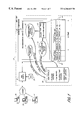
The Patent Drawing
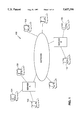
Schematic visualization of the patent's claim structure. Hand-drawn diagrams in progress for each landmark patent.
Where you've seen this
Real-world examples
Netscape Navigator web browser
Early secure online shopping websites
Secure email clients
The foundation for modern TLS/SSL protocols
Why it matters
The bigger picture
This patent is foundational to the security of the early World Wide Web. Netscape Navigator was the dominant browser when this was filed, and its implementation of Secure Sockets Layer (SSL) became a de facto standard for secure online transactions. It enabled the widespread adoption of e-commerce by providing a trusted way to transmit sensitive information.
Filed
August 25, 1995
Granted
August 12, 1997
Market context
Who's building on this
Companies in this space
The principles established by this patent are fundamental to virtually all secure internet communication today. While Netscape is no longer a dominant force, the protocols derived from SSL, primarily Transport Layer Security (TLS), are implemented by every major browser (Google Chrome, Mozilla Firefox, Apple Safari, Microsoft Edge) and web server (Apache, Nginx, IIS). Cloud providers like Amazon Web Services and Microsoft Azure also rely heavily on these security mechanisms.
Market impact
This patent, along with Netscape's implementation, was instrumental in making the internet safe for commerce. It created the expectation of secure connections (HTTPS) for sensitive transactions and paved the way for the massive growth of e-commerce and online banking. It established a critical security layer that became essential for the internet's commercial viability.
Claim 1 — Plain English
What this patent covers
This patent details a computer program product and method for securing information sent over a network, like the internet. It focuses on encrypting and decrypting data that travels between a web browser (client application) and a web server (server application). The core idea is to provide a way for applications to talk to the network securely. It does this by offering a 'socket application program interface' for applications to use, then encrypting the information before sending it to the network's transport layer services, and finally decrypting information received from those services. This ensures that sensitive data, like login details or credit card numbers, is scrambled and unreadable to anyone intercepting it.
The clever bit
The innovation was creating a standardized software layer that applications could easily plug into for secure communication, abstracting away the complex encryption and network details. It made secure web browsing accessible to everyday users and businesses.
What it does not cover
- Does not cover the physical network hardware itself, only the software and methods for securing data transfer.
- Does not cover the specific encryption algorithms used, only the process of encrypting and decrypting.
- Does not cover applications that do not use a socket application program interface.
- Does not cover unencrypted data transfer between client and server.
- Does not cover methods for establishing the initial secure connection or key exchange, focusing on the data transfer itself.
Patent Journey
From filing to expiry
Patent Filed
1995
Patent Granted
1997 · 2yr after filing
Highly Cited
383 patents cite this
Patent Expired
2015
PatentBrief Score
Impact Score
Moderate
Citation count
40/40
Highly cited
Claim breadth
4/20
Moderate scope
Recency
0/20
Older than 20 years
Assignee scale
0/20
Independent or smaller assigneeassigneeThe entity that owns the patent — usually the inventor's employer or a company.Read more →
PatentBrief Impact Score — based on citation count, claim breadth, recency, and assignee scale. Not a legal assessment.
Heuristic Value Estimate
What this patent might be worth
$38K – $120K
Midpoint $75K · expired or expiring · industry baseline
Heuristic only — blends forward/backward citation counts, claim scope, time remaining, litigation history, and CPC-derived industry baseline. Real valuations need a professional appraisal.
The original legal language
Original claims
6 claims as filed with the patent office.
Citations
Patent lineage
Cite this patent
Elgamal, T., & Hickman, K. E. B. (1997). How Netscape's SSL Encrypted Web Connections Work (U.S. Patent No. 5,657,390). U.S. Patent and Trademark Office. https://patentbrief.org/patent/us/5657390/secure-socket-layer-application-program-apparatus-and-method
Auto-generated from the patent record. Double-check author order and the issue date against the official USPTO document before submitting.
Embed
Add this patent to your site
Drop this plain-English patent card into any blog post or article — free, no signup. It always links back to the full breakdown here.
<div data-patentlens-widget data-patent-number="US5657390"></div>
<script src="https://patentbrief.org/embed.js" async></script>
Stay in the loop
Get a weekly digest of new patents.
One email per week. No spam. Unsubscribe anytime.
Keep exploring
Related patents you should know
US 8697359 · 2014
How to Use CRISPR-Cas9 to Edit Genes in Human Cells
This patent describes a method and system for precisely altering gene expression in eukaryotic cells, including human cells, using an engineered CRISPR-Cas9 system that targets and cleaves specific DNA sequences.
Massachusetts Institute of Technology
US 4683195 · 1987
How to Make Many Copies of a Specific DNA Segment
This patent describes the Polymerase Chain Reaction (PCR), a fundamental process for making millions of copies of a specific DNA or RNA segment from a tiny sample, enabling its detection.
Cetus Corp
US 7657849 · 2010
How the iPhone's Slide-to-Unlock Gesture Worked
Apple's 2010 patent on unlocking a device by dragging a specific graphical image along a predefined path on a touchscreen, a gesture iconic with early iPhones.
Apple Inc
US 4405829 · 1983
How RSA Public-Key Encryption Secures Digital Messages
This patent describes the RSA public-key cryptographic system, a method for securely sending digital messages by using a public key to encrypt and a private key to decrypt, based on the mathematical difficulty of factoring large numbers.
Massachusetts Institute of Technology
US 7479949 · 2009
How Touchscreens Tell the Difference Between Your Finger Gestures
Apple's 2009 patent describes how a touchscreen device uses clever rules, called heuristics, to figure out whether your finger movement means you want to scroll, pan, or switch items, often by looking at the very start of your touch.
Apple Inc
US 5347632 · 1994
How Early Online Services Delivered Applications Using Networked 'Objects'
This patent describes a system for early interactive computer networks, like Prodigy, that allowed personal computers to display information and perform services by fetching and storing small pieces of application code and data called 'objects' from a central network.
Prodigy Services Co
Semantically similar
You might also find these interesting
US 4405829 · 1983 · Massachusetts Institute of Technology
How RSA Public-Key Encryption Secures Digital Messages
US 4200770 · 1980 · Leland Stanford Junior University
How Computers Agree on a Secret Code Without Meeting First
US 5774670 · 1998 · Netscape Communications Corp
The HTTP Cookie — How Websites Remember Who You Are
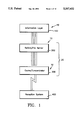
US 5347632 · 1994 · Prodigy Services Co
How Early Online Services Delivered Applications Using Networked 'Objects'
More to explore
More in Software & Internet
US 6285999 · 2001 · Leland Stanford Junior University
How Websites Get Ranked by Counting Links and Their Importance
US 5960411 · 1999 · Amazon com Inc
How Amazon's One-Click Online Ordering System Works
US 4558302 · 1985 · Sperry Corp
How Computers Shrink Data Using a Dynamic Dictionary
US 6266649 · 2001 · Amazon com Inc
How Online Stores Suggest 'You Might Also Like' Products
Common Questions
Frequently Asked Questions
What does How Netscape's SSL Encrypted Web Connections Work cover?
This 1997 patent describes the software and methods Netscape used to secure internet communications by encrypting data between web browsers and servers.
Who owns patent US 5657390?
Netscape Communications Corp owns this patent, granted in 1997.
When does this patent expire?
This patent has expired and is now in the public domain — anyone can use the invention freely.
What is patent US 5657390 cited by?
This patent has been cited by 383 later patents that build on its ideas.
What problem does this patent solve?
This patent is foundational to the security of the early World Wide Web. Netscape Navigator was the dominant browser when this was filed, and its implementation of Secure Sockets Layer (SSL) became a de facto standard for secure online transactions. It enabled the widespread adoption of e-commerce by providing a trusted way to transmit sensitive information.
Related reading
Same assignee
More from Netscape Communications Corp
Patent monitoring