How the iPhone's Slide-to-Unlock Gesture Works
Apple's 2010 patent describes unlocking a device by dragging a specific graphical image across the touchscreen along a predefined path, a gesture that became iconic with the original iPhone.
Original patent title: “Unlocking a device by performing gestures on an unlock image”
Apple's 2010 patent describes unlocking a device by dragging a specific graphical image across the touchscreen along a predefined path, a gesture that became iconic with the original iPhone. Granted to Apple Inc in 2010 with 39 claims and 1,269 forward citations, and it is now in the public domain.
Coverage
What does this patent actually cover?
This patent describes a method for unlocking an electronic device with a touch-sensitive display. While the device is locked in a 'user-interface lock state,' it displays an 'unlock image,' which is a graphical, interactive object (ClaimclaimA numbered sentence at the end of a patent that legally defines what the inventor owns. The most important section.Read more → 1). To unlock the device, a user must make contact with the display and move this unlock image along a 'predefined displayed path' (Claim 1). If the detected contact corresponds to this specific 'predefined gesture,' the device transitions to an unlocked state (Claim 1). If the contact does not match the predefined gesture, the device remains locked and prevents other actions (Claim 2). For example, a user might drag a horizontal slider image across the screen to a specific endpoint (Claim 5, Claim 10).
The gap
What does this patent NOT cover?
- Unlocking methods that do not involve moving a graphical 'unlock image' on the display.
- Unlocking gestures that do not follow a 'predefined displayed path' (e.g., drawing a freeform pattern or shape).
- Unlocking by simply tapping or pressing an image without moving it along a path.
- Unlocking mechanisms that do not require continuous contact with the display, such as voice commands or biometric scans (ClaimclaimA numbered sentence at the end of a patent that legally defines what the inventor owns. The most important section.Read more → 4).
- Unlocking by moving an image to a predefined location without following a specific displayed path.
These exclusions are unique to PatentBrief — derived from the actual claim language, not patent-office boilerplate.
Key facts
What made this novel
The noveltynoveltyThe requirement that an invention be different from anything publicly known before its priority date.Read more → lay in combining a visible, interactive 'unlock image' with a specific, 'predefined displayed path' that the user had to follow with continuous contact to unlock the device. This design made it intuitive for users while effectively preventing accidental unlocks from incidental screen touches.
The Patent Drawing
Animated diagram — the unlock image moves along the predefined horizontal path described in Claim 1. Tap to replay.
Where you've seen this
Real-world examples
Original iPhone lock screen
Early iPod Touch lock screens
Many early Android smartphone lock screens featuring a slider
Why it matters
The bigger picture
This patent was a foundational element for the user experience of the original iPhone and subsequent touch-screen devices. It provided a simple yet effective way to prevent accidental device interactions while allowing quick access. The 'slide-to-unlock' mechanism became a widely recognized interaction model and was a key subject in major patent infringementinfringementMaking, using, selling, or importing a patented invention without permission from the patent holder.Read more → lawsuits in the smartphone industry.
Filed
December 23, 2005
Granted
February 2, 2010
Market context
Who's building on this
Companies in this space
Apple Inc., as the original assigneeassigneeThe entity that owns the patent — usually the inventor's employer or a company.Read more →, continues to develop and refine user interface interactions for its devices, building on foundational patents like this one. Other major smartphone manufacturers, such as Samsung and Google, have also developed their own variations of lock screen interactions, often navigating around or licensing technologies related to these core concepts.
Market impact
This patent significantly influenced the design of smartphone lock screens, establishing a widely adopted paradigm for secure and intuitive device access. Its existence led to extensive litigationlitigationA lawsuit over patent infringement. Litigated patents often signal commercial importance.Read more →, notably between Apple and Samsung, shaping competitive strategies and encouraging innovation in alternative unlock methods, such as pattern unlocks and biometric authentication, to avoid infringementinfringementMaking, using, selling, or importing a patented invention without permission from the patent holder.Read more →.
Claim 1 — Plain English
What this patent covers
This patent describes a method for unlocking an electronic device with a touch-sensitive display. While the device is locked in a 'user-interface lock state,' it displays an 'unlock image,' which is a graphical, interactive object (Claim 1). To unlock the device, a user must make contact with the display and move this unlock image along a 'predefined displayed path' (Claim 1). If the detected contact corresponds to this specific 'predefined gesture,' the device transitions to an unlocked state (Claim 1). If the contact does not match the predefined gesture, the device remains locked and prevents other actions (Claim 2). For example, a user might drag a horizontal slider image across the screen to a specific endpoint (Claim 5, Claim 10).
The clever bit
The novelty lay in combining a visible, interactive 'unlock image' with a specific, 'predefined displayed path' that the user had to follow with continuous contact to unlock the device. This design made it intuitive for users while effectively preventing accidental unlocks from incidental screen touches.
What it does not cover
- Unlocking methods that do not involve moving a graphical 'unlock image' on the display.
- Unlocking gestures that do not follow a 'predefined displayed path' (e.g., drawing a freeform pattern or shape).
- Unlocking by simply tapping or pressing an image without moving it along a path.
- Unlocking mechanisms that do not require continuous contact with the display, such as voice commands or biometric scans (Claim 4).
- Unlocking by moving an image to a predefined location without following a specific displayed path.
Patent timeline
Application submitted to the patent office
Application published, typically 18 months after filing
Patent officially issued
Patent enters public domain
This patent is in the public domain
See the Freedom to Build guide — what is free to use, what is not, and how to cite this patent.
PatentBrief Score
Impact Score
High impact
Citation count
40/40
Highly cited
Claim breadth
20/20
Very broad protection
Recency
5/20
Granted 10–20 years ago
Assignee scale
20/20
Major company or institution
PatentBrief Impact Score — based on citation count, claim breadth, recency, and assignee scale. Not a legal assessment.
Heuristic Value Estimate
What this patent might be worth
$144K – $461K
Midpoint $288K · expired or expiring · industry ×1.6
Heuristic only — blends forward/backward citation counts, claim scope, time remaining, litigation history, and CPC-derived industry baseline. Real valuations need a professional appraisal.
Patent Claims
0 independent claims · 1 dependent
Claims are the legal boundaries of the patent. An independent claim stands alone. A dependent claim adds limitations to its parent, narrowing — but not broadening — the scope.
The original legal language
Original claims
39 claims as filed with the patent office.
Concepts involved
Citations
Patent lineage
Cite this patent
Anzures, F. A., Forstall, S., Ording, B., Chaudhri, I., Os, M. V., Christie, G., & Lemay, S. O. (2010). How the iPhone's Slide-to-Unlock Gesture Works (U.S. Patent No. 7,657,849). U.S. Patent and Trademark Office. https://patentbrief.org/patent/us/7657849/slide-to-unlock
Auto-generated from the patent record. Double-check author order and the issue date against the official USPTO document before submitting.
Embed
Add this patent to your site
Drop this plain-English patent card into any blog post or article — free, no signup. It always links back to the full breakdown here.
<div data-patentlens-widget data-patent-number="US7657849"></div>
<script src="https://patentbrief.org/embed.js" async></script>
Stay in the loop
Get a weekly digest of new patents.
One email per week. No spam. Unsubscribe anytime.
Keep exploring
Related patents you should know
US 4683195 · 1987
How to Make Billions of Copies of a DNA Segment
This patent describes the Polymerase Chain Reaction (PCR), a method to rapidly create many copies of a specific piece of DNA or RNA, enabling its detection and analysis.
Cetus Corp
US 8697359 · 2014
How to Edit Genes in Human Cells Using an Engineered CRISPR System
This patent describes an engineered CRISPR-Cas9 system for precisely cutting DNA in eukaryotic cells to change how genes work, opening the door for gene editing in complex organisms.
Massachusetts Institute of Technology
US 4733665 · 1988
How Doctors Implant a Permanent Stent Using a Balloon
This patent describes the method for placing a permanent, expandable wire mesh tube inside a blood vessel or other body tube using a balloon-tipped catheter to widen it and keep it open.
Expandable Grafts Partnership
US 4965188 · 1990
How to Make Many Copies of a DNA Piece with Heat
This patent describes the Polymerase Chain Reaction (PCR) method, a technique to make millions of copies of a specific DNA segment using a heat-resistant enzyme and repeated temperature changes.
Cetus Corp
US 4235871 · 1980
How to Encapsulate Active Materials in Lipid Bubbles Efficiently
This patent describes a method for trapping biologically active substances inside tiny, multi-layered fat bubbles called liposomes, using a specific water-in-oil emulsion and gel-forming process to improve how much material gets captured.
Individual
US 4405829 · 1983
How RSA Public-Key Encryption Keeps Digital Messages Secret
This patent describes the foundational RSA algorithm, a method for securely sending messages where anyone can encrypt a message using a public key, but only the intended recipient can decrypt it using a secret private key.
Massachusetts Institute of Technology
Semantically similar
You might also find these interesting
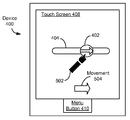
US 8046721 · 2011 · Apple Inc
How the iPhone's Slide-to-Unlock Gesture Works
US 7479949 · 2009 · Apple Inc
How Touchscreens Understand Your Finger Swipes and Scrolls
US 7812826 · 2010 · Apple Inc
How Multi-Touch Gestures Like Pinch-to-Zoom Work on Smartphones
US 11449194 · 2022 · Apple Inc
How Smartphones Let You Rearrange and Organize Your Home Screen Icons
More to explore
More in Consumer Electronics
US 7479949 · 2009 · Apple Inc
How Touchscreens Understand Your Finger Swipes and Scrolls
US 4528643 · 1985 · FPDC Inc
How Stores Make Custom Products On-Demand with Remote Approval
US 7469381 · 2008 · Apple Inc
How Touchscreens Show and Snap Back When You Scroll Past an Edge
US 5471515 · 1995 · California Institute of Technology
How a Modern Camera Sensor Captures Light and Converts It to Data
New to patents?
Common Questions
Frequently Asked Questions
What does How the iPhone's Slide-to-Unlock Gesture Works cover?
Apple's 2010 patent describes unlocking a device by dragging a specific graphical image across the touchscreen along a predefined path, a gesture that became iconic with the original iPhone.
Who owns patent US 7657849?
Apple Inc owns this patent, granted in 2010.
When does this patent expire?
This patent has expired and is now in the public domain — anyone can use the invention freely.
What is patent US 7657849 cited by?
This patent has been cited by 1269 later patents that build on its ideas.
What problem does this patent solve?
This patent was a foundational element for the user experience of the original iPhone and subsequent touch-screen devices. It provided a simple yet effective way to prevent accidental device interactions while allowing quick access. The 'slide-to-unlock' mechanism became a widely recognized interaction model and was a key subject in major patent infringement lawsuits in the smartphone industry.
What does this patent NOT cover?
Unlocking methods that do not involve moving a graphical 'unlock image' on the display.
Same assignee
More from Apple Inc
Patent monitoring